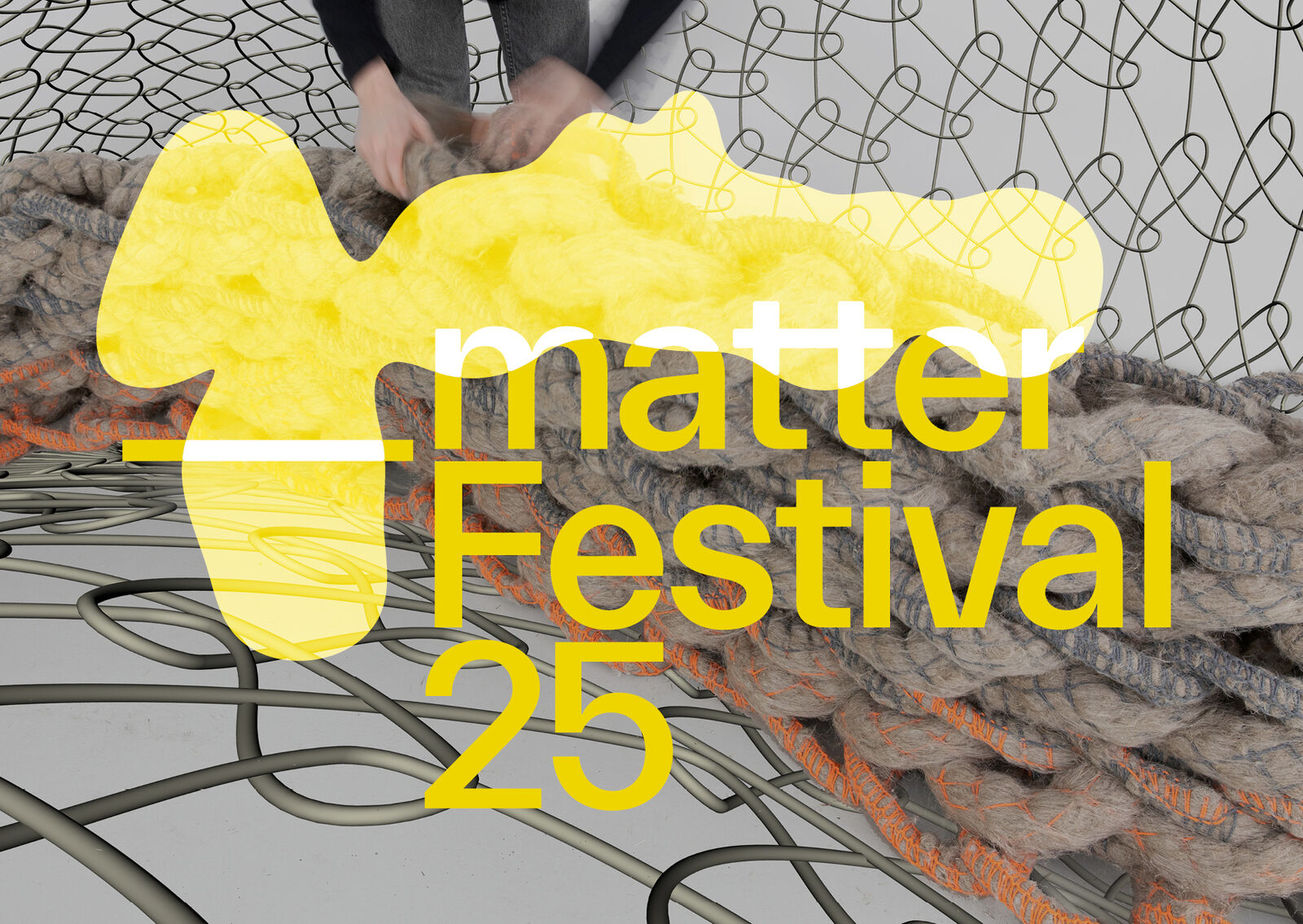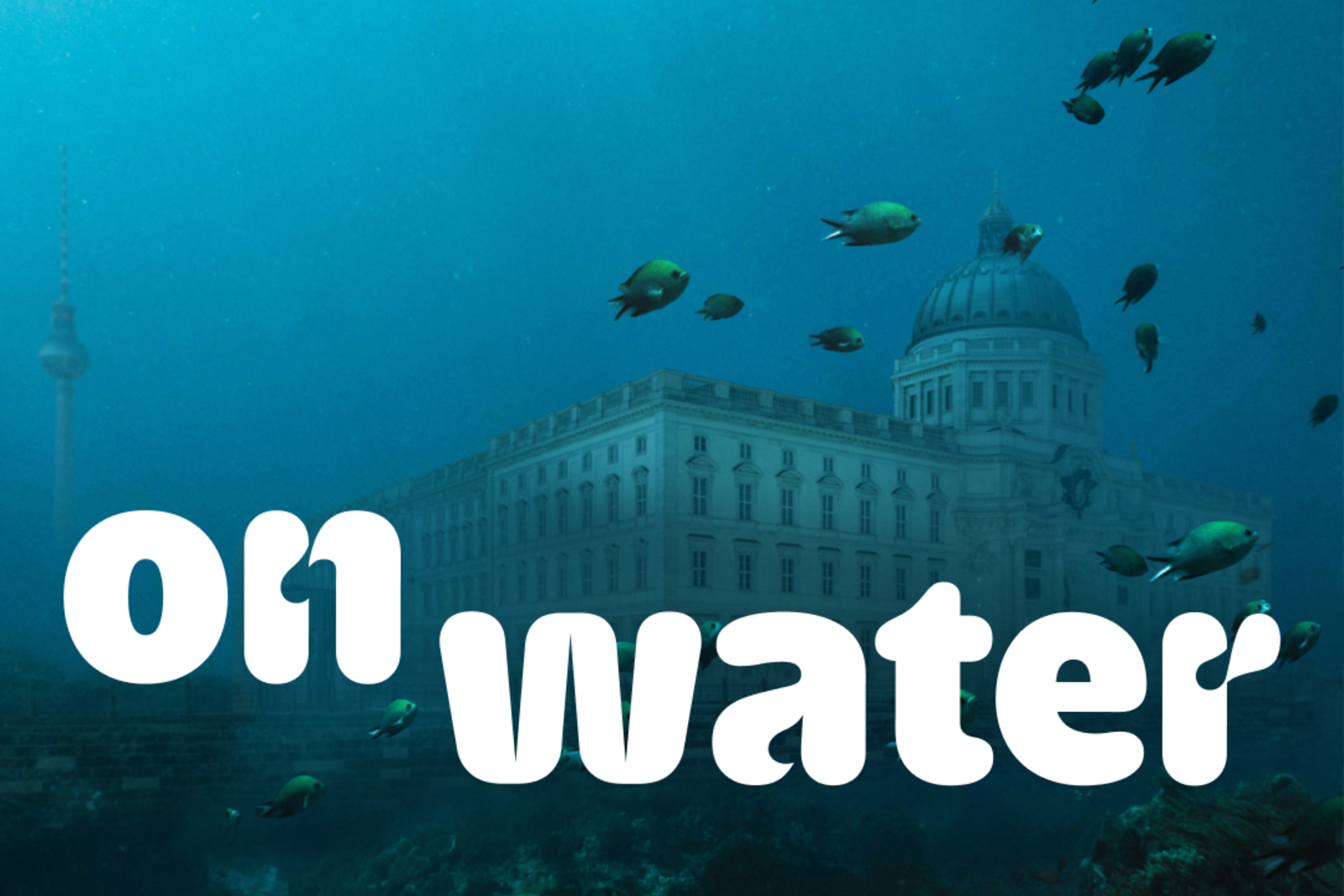
Key Visual On Water Ausstellung, Humboldt Lab 2025. Copyright: Berlin University Alliance
On Water. WasserWissen in Berlin
Exhibition at Humboldt Lab shows works by Dimitra Almpani-Lekka and Rasa Weber
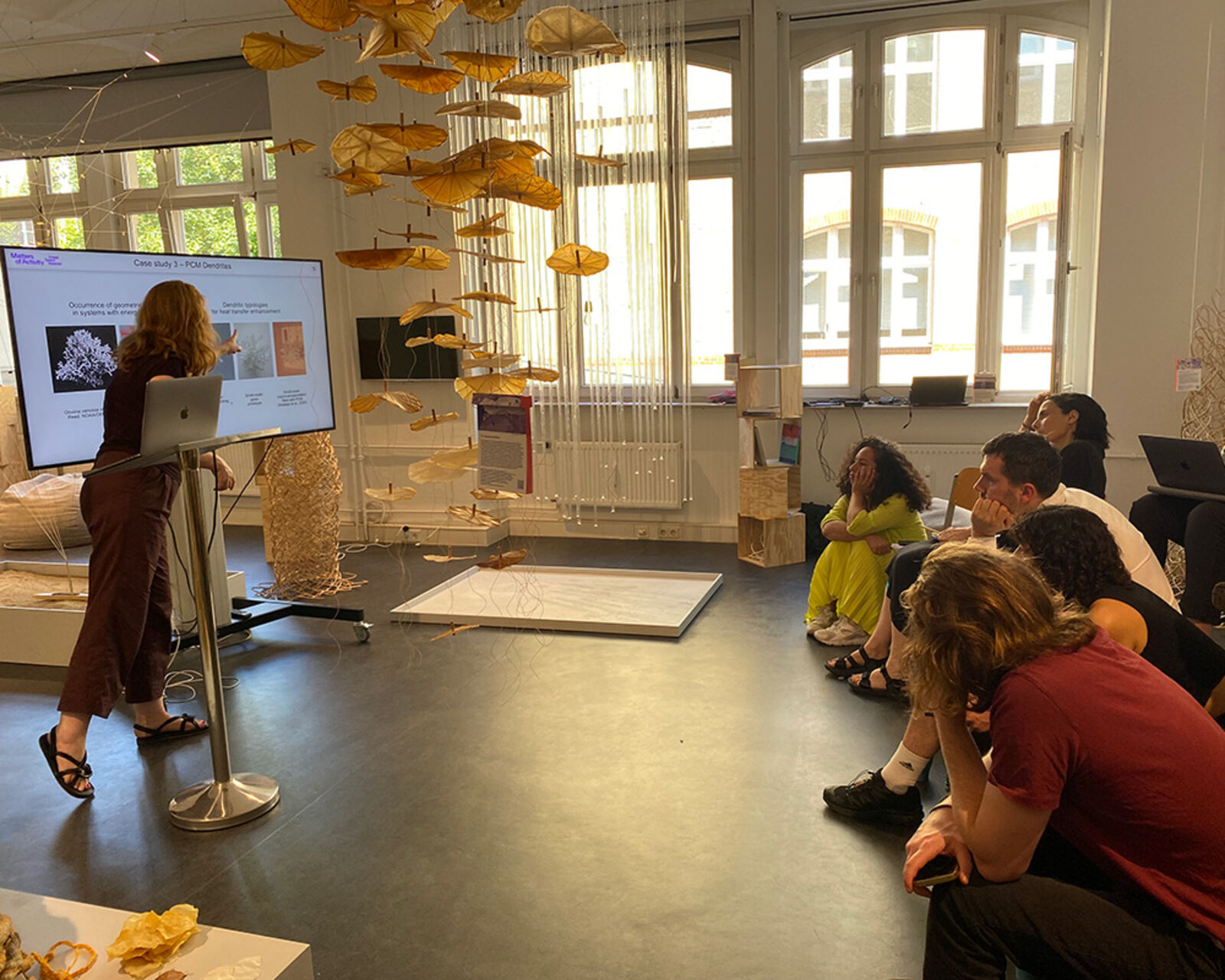
Material Form Function | Object Space Agency | Biodesign | Clay | More-Than-Human | Water | Science Communication Water is life, but it can also destroy. The exhibition »On Water. WasserWissen in Berlin« will show current research projects of the Berlin University Alliance (BUA) on the topic of water from October 10, 2025, in the Humboldt Labor. These will be flanked by artistic positions that deal with the element of water and vividly convey its versatility. MoA researchers Dimitra Almpani-Lekka and Rasa Weber contribute to the exhibition with objects from their research on rainwater harvesting and artificial reefs.
more
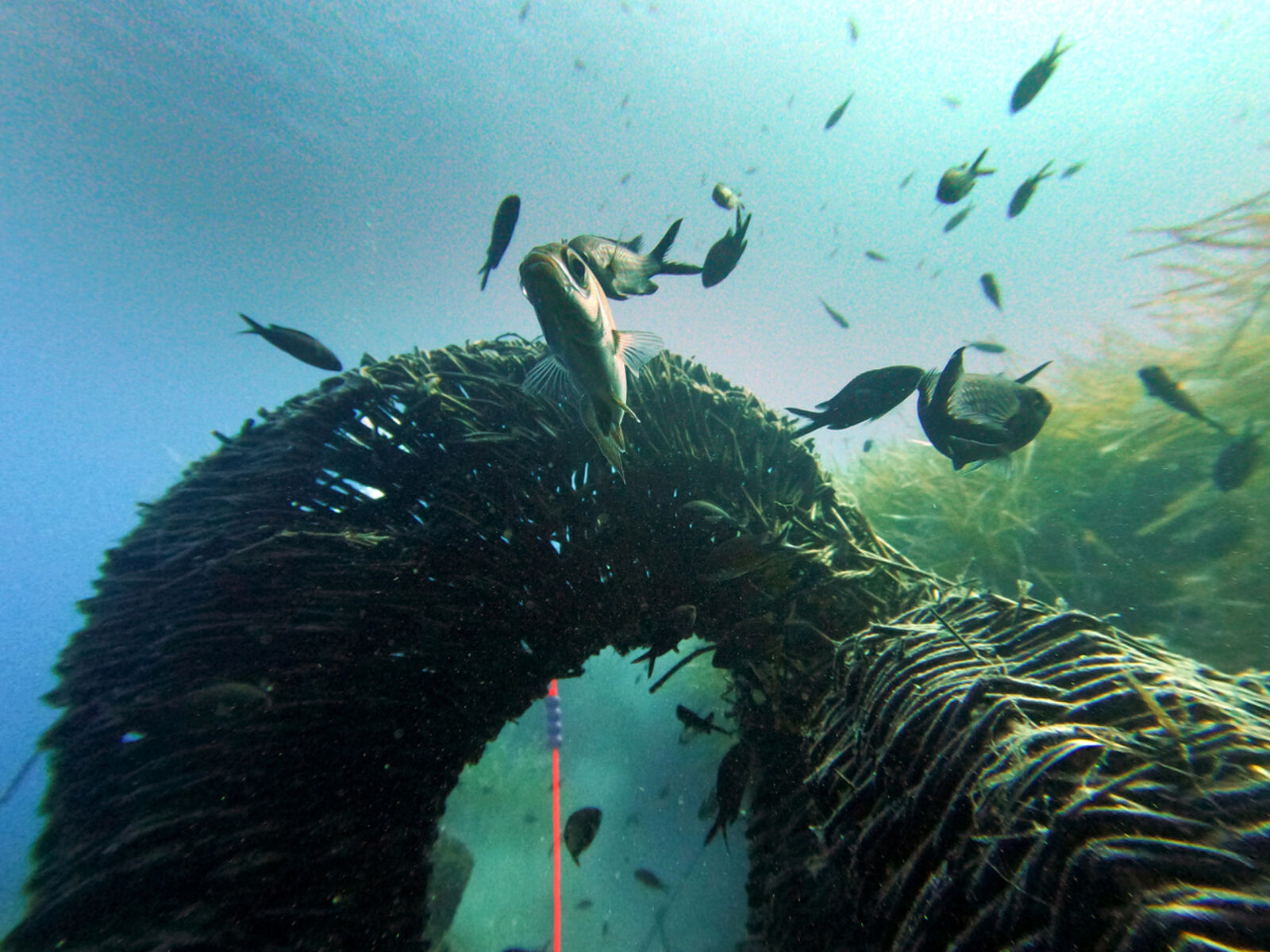
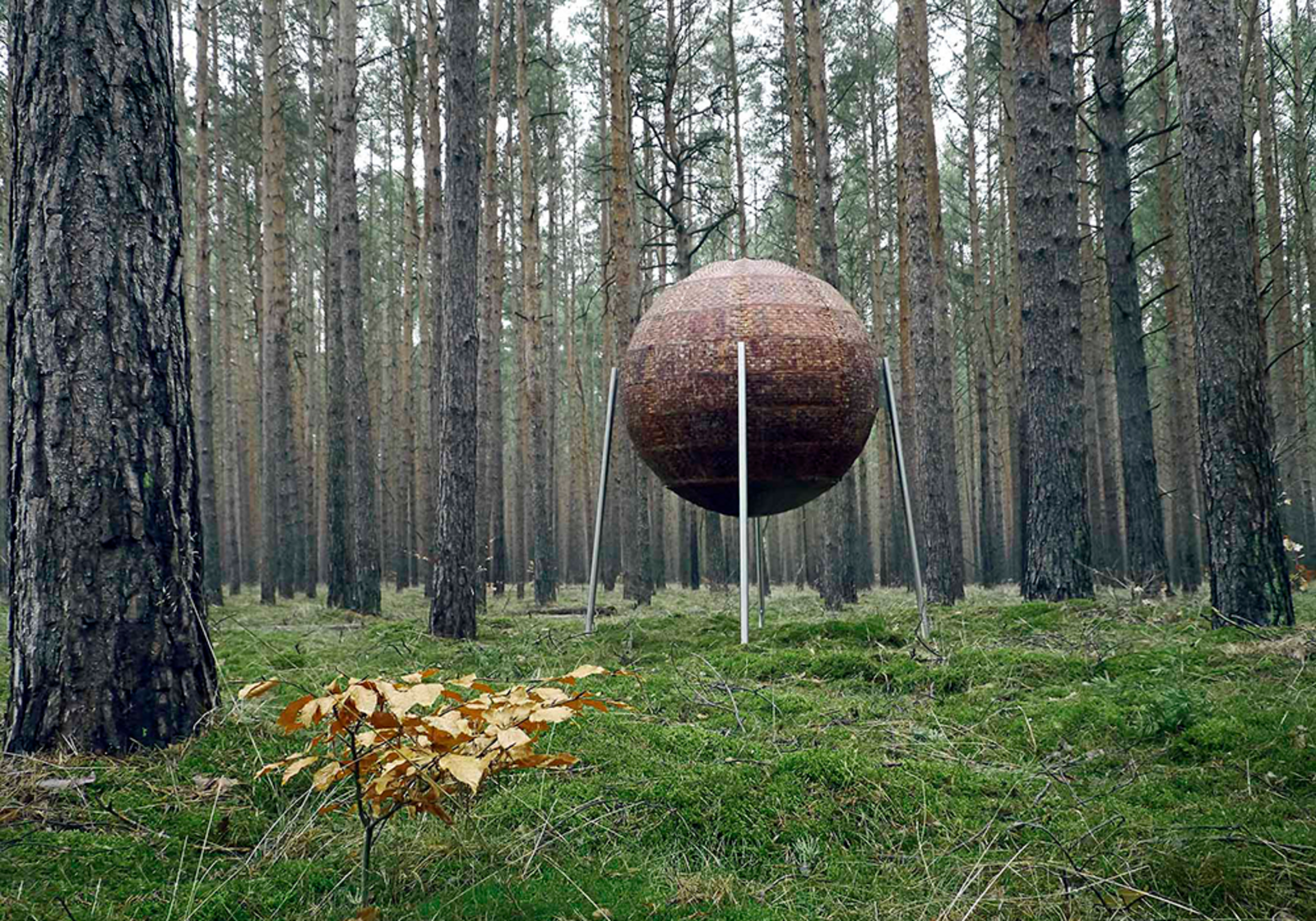
»Syntopolis« reef prototype in STARESO. Design: Rasa Weber, rasaweber.com. Co-Design and Production: Atelier Marie Drouet. Photo: Till Timmermann
Die Spree fließt Queer
Artist Talk und Workshop zur Eröffnung der neuen Ausstellung im Humboldt Lab
Material Form Function | Biodesign | Climate | More-Than-Human | Ocean | Prototype / Model | Science Communication Anlässlich der Eröffnung der neuen Ausstellung im Humboldt Lab spricht Daniel Tyradellis mit MoA Mitglied Rasa Weber und Jakob Kukula darüber, wie künstlerische und immersive Praktiken unsichtbare Unterwasserökologien sichtbar machen, politische Diskurse erweitern und strukturellen Wandel anstoßen können. Im anschließenden Workshop mit Rasa Weber erfahren Besucher:innen, wie ein künstliches Riff entsteht und wirken mithilfe traditioneller Handwerkstechniken an der Fertigstellung eines solchen mit.
more
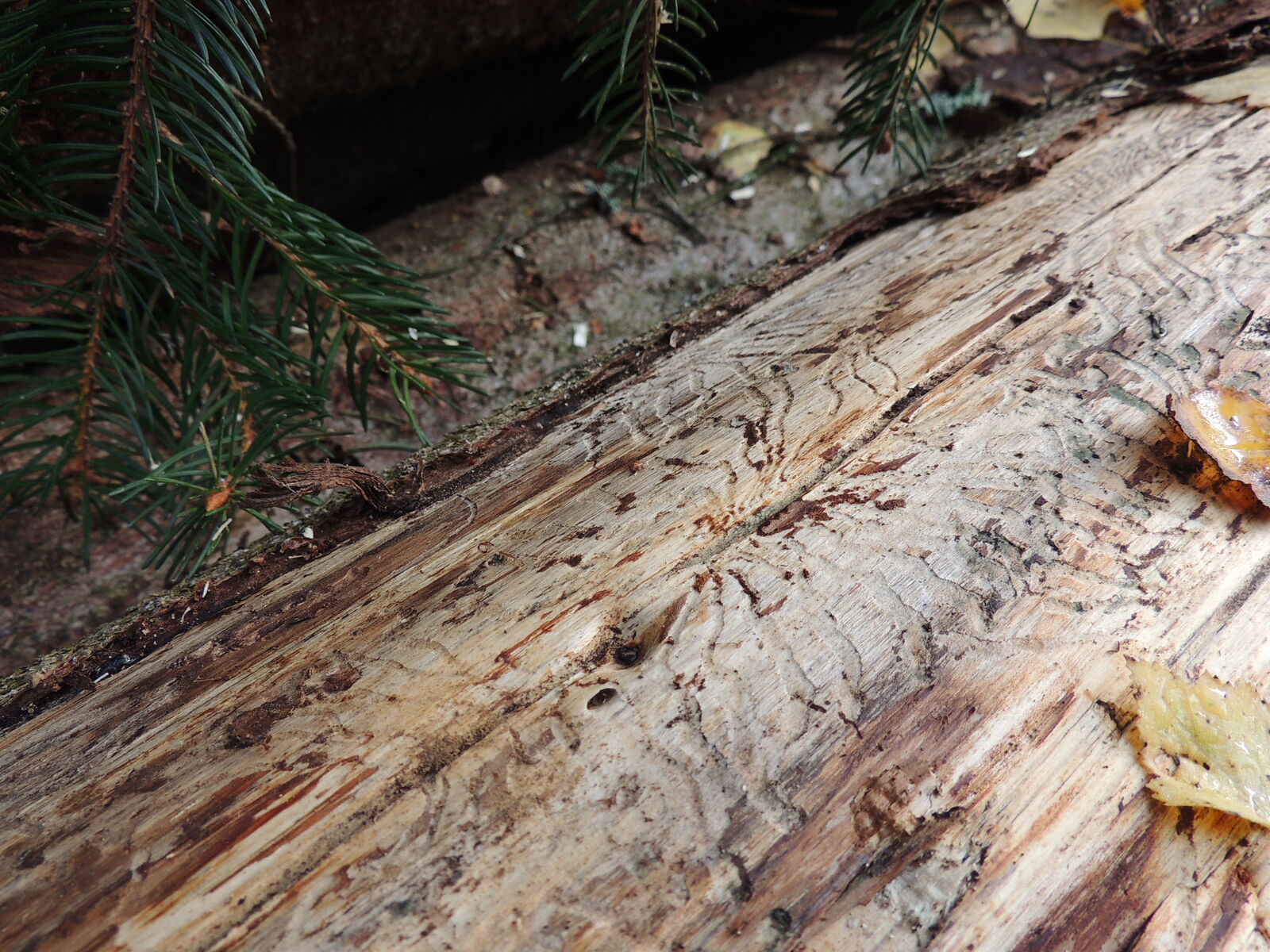
Beetle-infested Spruce. Copyright: Pelin Asa, MPICI
Symbiotic Wood
Visual Essay by Cluster members published on .able
Material Form Function | Publications | Biodesign | More-Than-Human | Tree Bark | Wood We'd like to congratulate all contributing authors, inlcuding numerous Cluster members, on the newest .able publication: »Symbiotic Wood« is an invitation to rethink our relationship with forests and materials, not as resources to control, but as ecosystems we share. In the face of climate change and collapsing monocultures, the project explores how beetle- and fungi-affected spruce wood can open up new ways of designing: less predictable, more situated, and radically collaborative. Through layered insights, from microscopic wood patterns to cultural history as well as artistic design prototyping, this visual article reveals how material science, design, and art can engage with nonhuman agencies and multispecies entanglements.
more
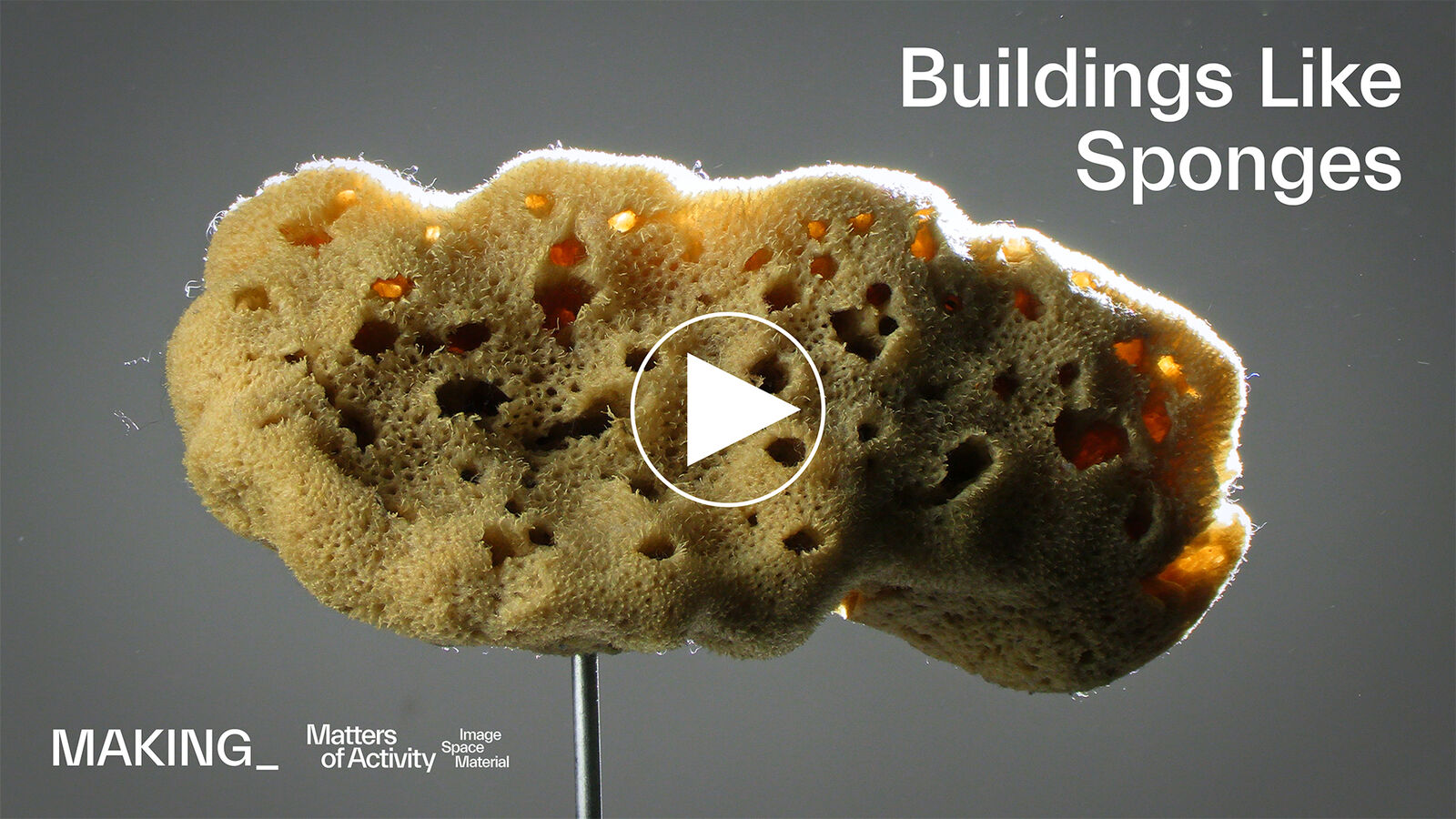
MAKING facades host life with Dimitra Almpani-Lekka
MAKING Facades Host Life
The new episode with Dimitra Almpani-Lekka explores how sponges and their porosity could hold the key to the future of architecture
Object Space Agency | Biodesign | Climate | Clay | Prototype / Model | Water | More-Than-Human | MAKING_ | Science Communication Imagine a home whose surface absorbs rainwater like a sponge. This innovation could improve the abilities of urban areas to adapt to both heat and floods in the future. Don't miss the latest episode of MAKING_ where Dimitra Almpani-Lekka reveals how she takes the principles of sponges and applies them to clay tiles to create prototypes for bioreceptive facades and buildings.
more
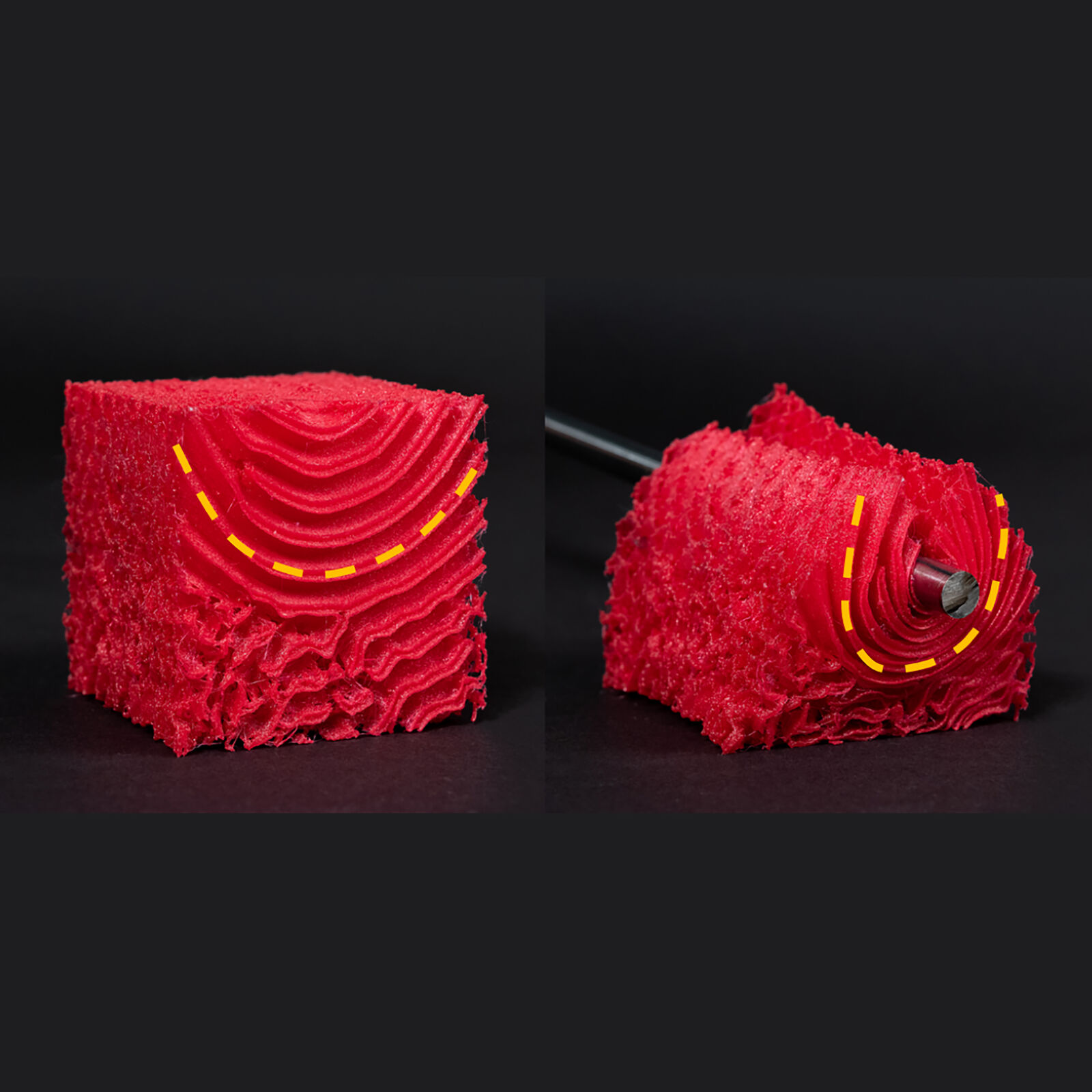
Inverse problem for fabrication: From a 3D model a deposition plan is optimized for a 3D printed plate, such that once dipped into water the plate deforms into the target shape. This is achieved by optimizing the shape of the plate and the orientation of the plastic deposition trajectories. Copyright: Thibault Tricard, Vincent Tavernier, David Jourdan, Cédric Zanni, Jonàs Martínez, Pierre-Alexandre Hugron, Fabrice Neyret, Camille Schreck, Sylvain Lefebvre
Morphing Structural Materials – From Biology to Physics to Architecture
Advanced Course at International Centre for Mechanical Sciences in Udine, September 2025 – Register Now!
Material Form Function | Biodesign | Prototype / Model | Teaching Matter is rarely completely static: often matter can morph. This is true for all living systems that grow, adapt, and change shape. Indeed, cells divide, leaves and fungi grow, octopuses transform, and wings reshape to control flight. But it is also true that bread rises and that pasta swells. While morphing is omnipresent in the living, it is not confined to it. Harnessing morphing capacities has many potential applications, from machines and robots to architecture. The goal of this course with lectures by MoA members Peter Fratzl and Karola Dierichs, is to review the current and fast-growing knowledge about structural materials that change shape or develop spontaneous internal stresses that improve their properties.
more
Beetle Galleries in Spruce Wood. Photo: Pelin Asa, Max Planck Institute of Colloids and Interfaces, Matters of Activity, 2024; Graphic Design: NODE Berlin Oslo
Symbiotic Wood
Exhibition, Symposium, Roundtable and Tour
Material Form Function | _matter Festival 2025 | Wood | More-Than-Human | Biodesign | Science Communication Climate change and monocultures have left forests vulnerable to insects and fungi. Beetle-infested wood is deemed less valuable from a traditional human-centric perspective. The group show »Symbiotic Wood« at Kunstgewerbemuseum focuses on this ›more-than-human‹ material that is co-owned with other species. It features contributions by artists, designers, architects, and cultural historians. Exhibition extended until 23 November 2025!
more
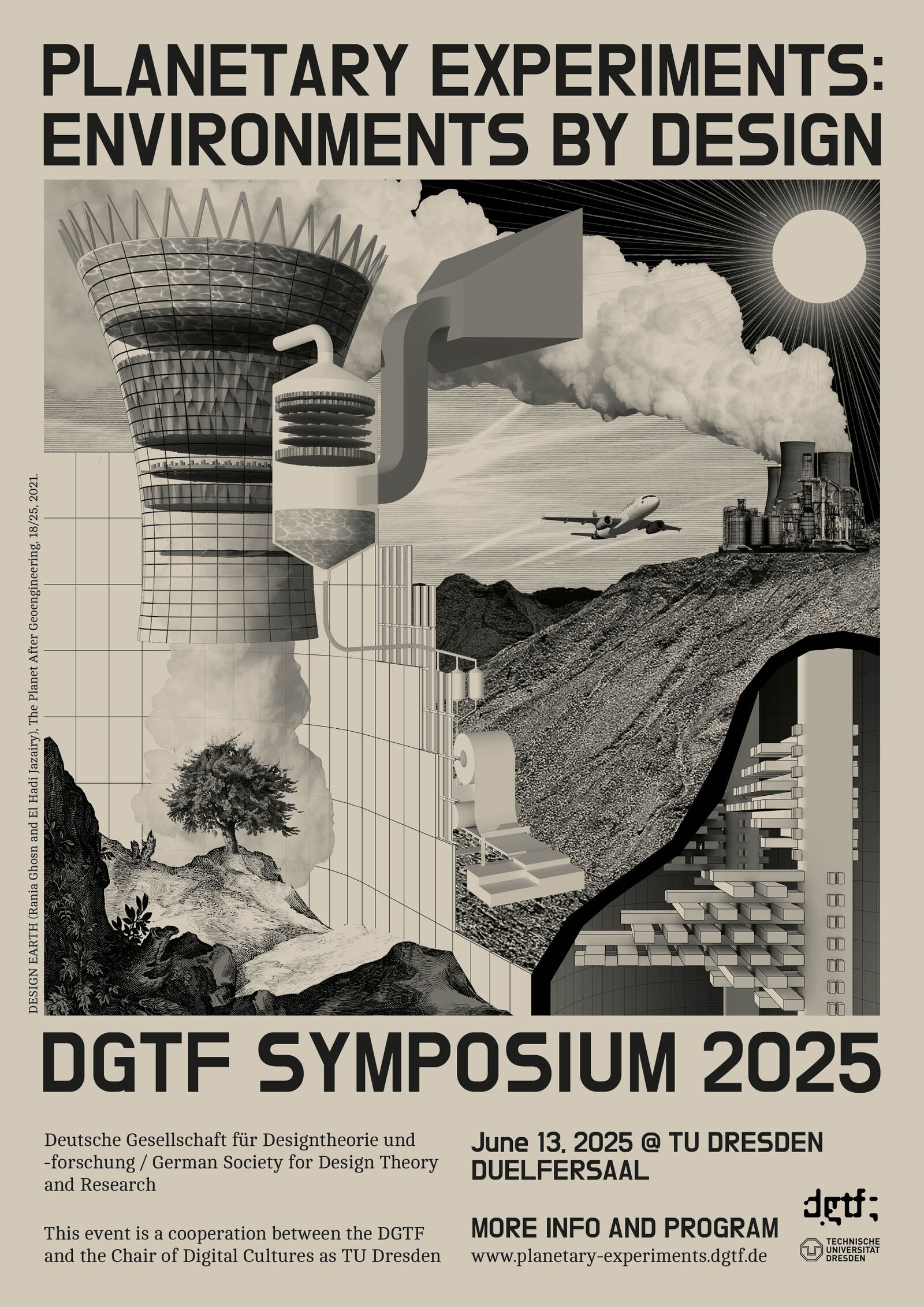
DESIGN EARTH (Rania Ghosn and El Hadi Jazairy), The Planet After Geoengineering, 18/25, 2021
Planetary Experiments: Environments by Design
Annual Conference of DGTF, Organized by Michaela Büsse Among Others
Biodesign | Climate | More-Than-Human | Speculative Design The German Society for Design Theory and Research (DGTF), in collaboration with the Chair of Digital Cultures TU Dresden, invites participants to critically engage with the theme »Planetary Experiments: Environments by Design«. This conference, organized by Michaela Büsse among others, explores the diverse perspectives and practices of design research and theory in addressing the far-reaching ecological, social and technological challenges of our time. Over the course of one day and in a hybrid setup (Dresden & remote), they will bring together scholars and practitioners, like Cluster member Rasa Weber, to engage in keynote talks, panel discussions and practice presentations that critically explore the concept of »Planetary Experiments«.
more
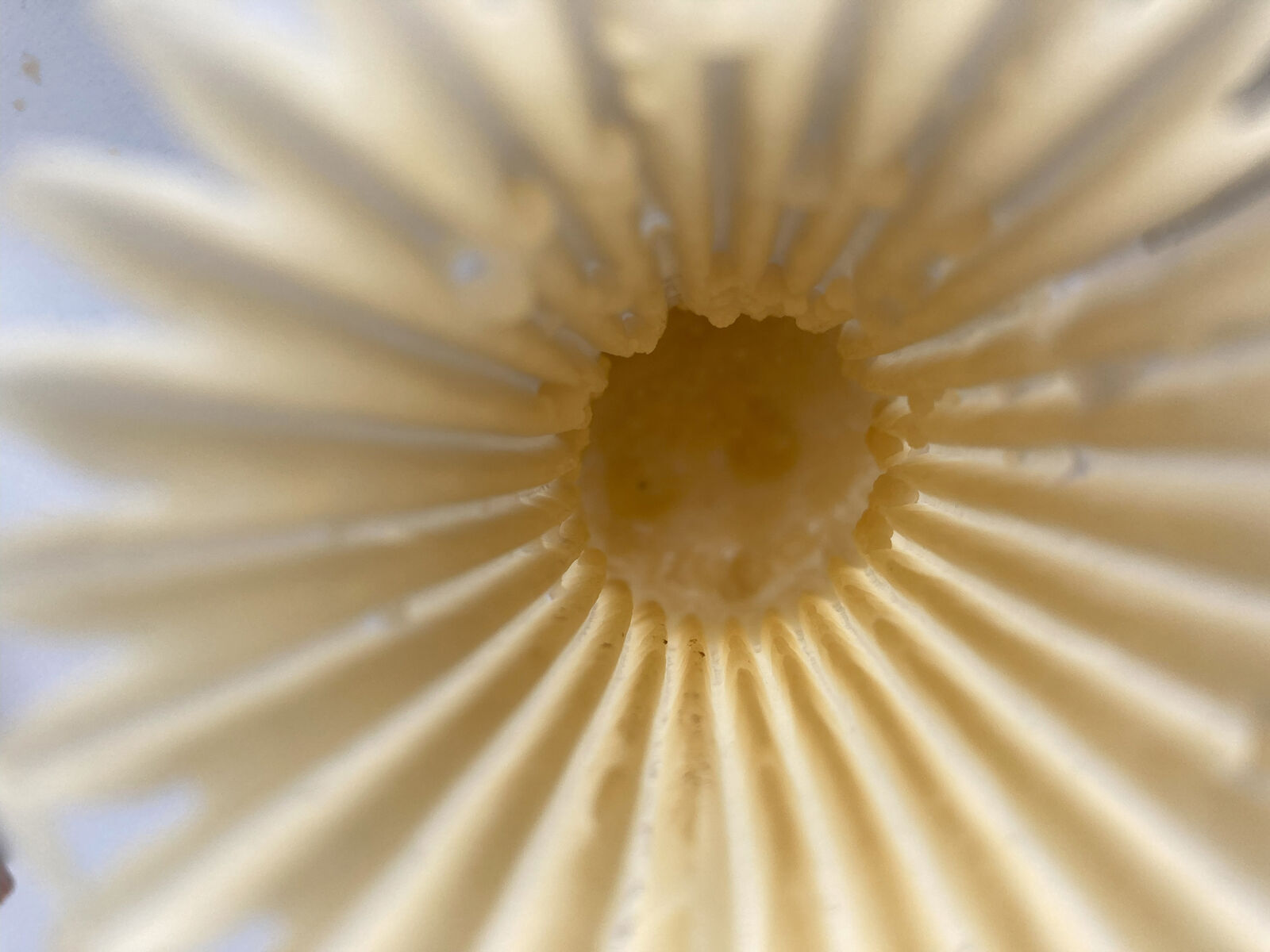
Beeswax Luminaire. Copyright: Junpyo Kwon, Pelin Asa, Karola Dierichs / MoA, MPICI, KHB
Beeswax Luminaires
New Publication on Sustainable Lighting Through Materials Design
Material Form Function | Publications | Wax | Biodesign Biogenic materials like beeswax have potential for sustainable manufacturing by reducing environmental impact. An interdisciplinary team from the Department of Mechanical Engineering of Ajou University in Korea, the Cluster »Matters of Activity« at Humboldt-Universität in Berlin and the Department of Biomaterials of Max Planck Institute of Colloids and Interfaces in Potsdam-Golm introduces »Beeswax Luminaires«, a sustainable lighting solution made from natural beeswax and water via ice-casting. Their findings are now published in the latest Issue of »Materials & Design«. We congratulate the first authors Junpyo Kwon and Pelin Asa as well as Mourad Jaffar-Bandjee, Shahrouz Amini, Peter Fratzl, and Karola Dierichs.
more
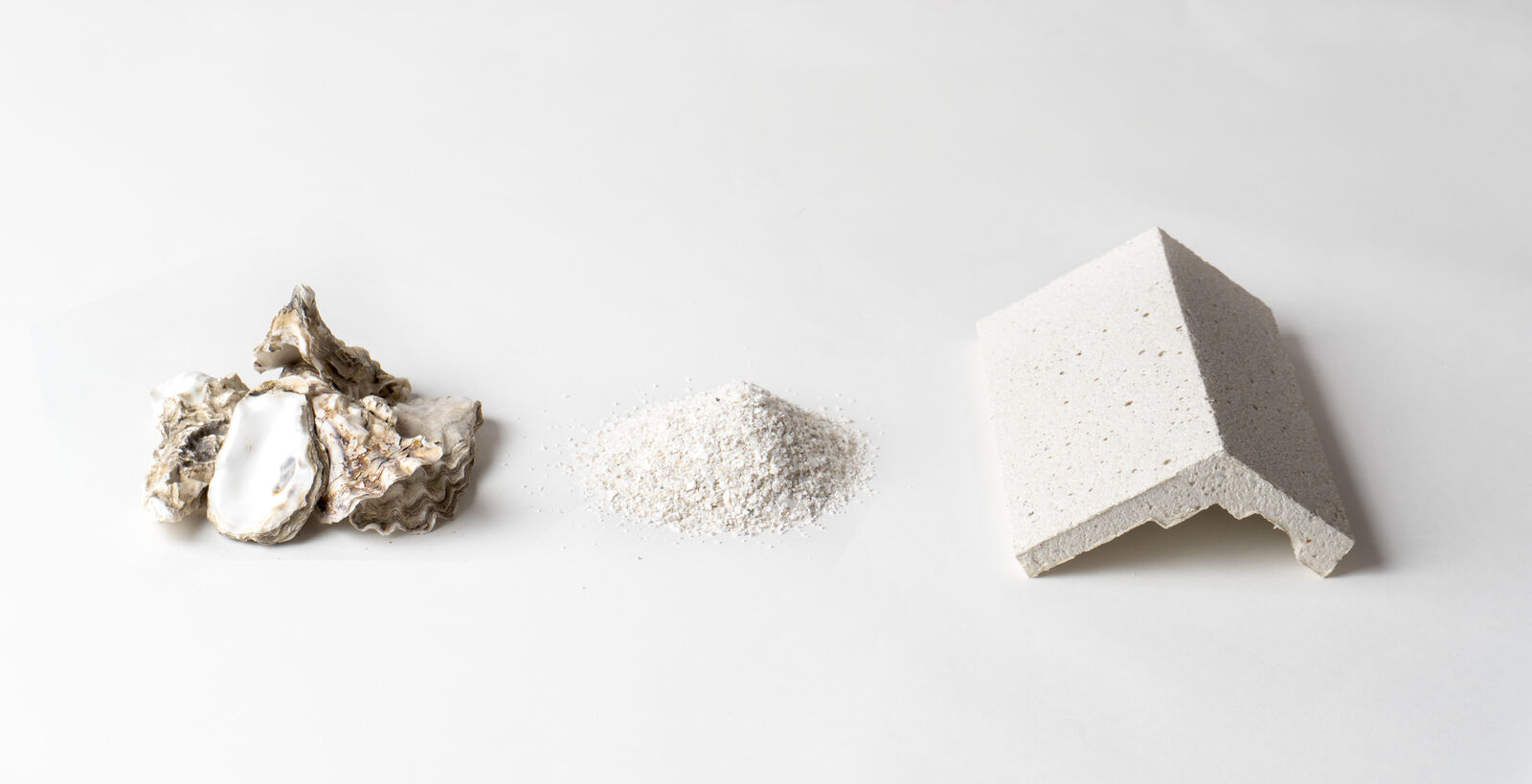
CONQ, Heidi Jalkh & Angie Dub
CONQ at Biennale Architettura 2025
Associated Member Heidi Jalkh Presents Marine Biobased Building Materials in Venice
Material Form Function | Circular Economies | Biodesign | Ocean | Prototype / Model | Climate Cluster member Heidi Jalkh and Angie Dub have been invited to contribute to the Biennale Architettura 2025, curated by Carlo Ratti. The theme of the 19th International Architecture Exhibition is »Intelligens. Natural. Artificial. Collective«. Their project »CONQ – Marine biobased building materials«, will be part of the Arsenale Exhibition: Matter Makes Sense. The Venice Biennale will be open to the public from Saturday, May 10th to Sunday, November 23th, 2025.
more
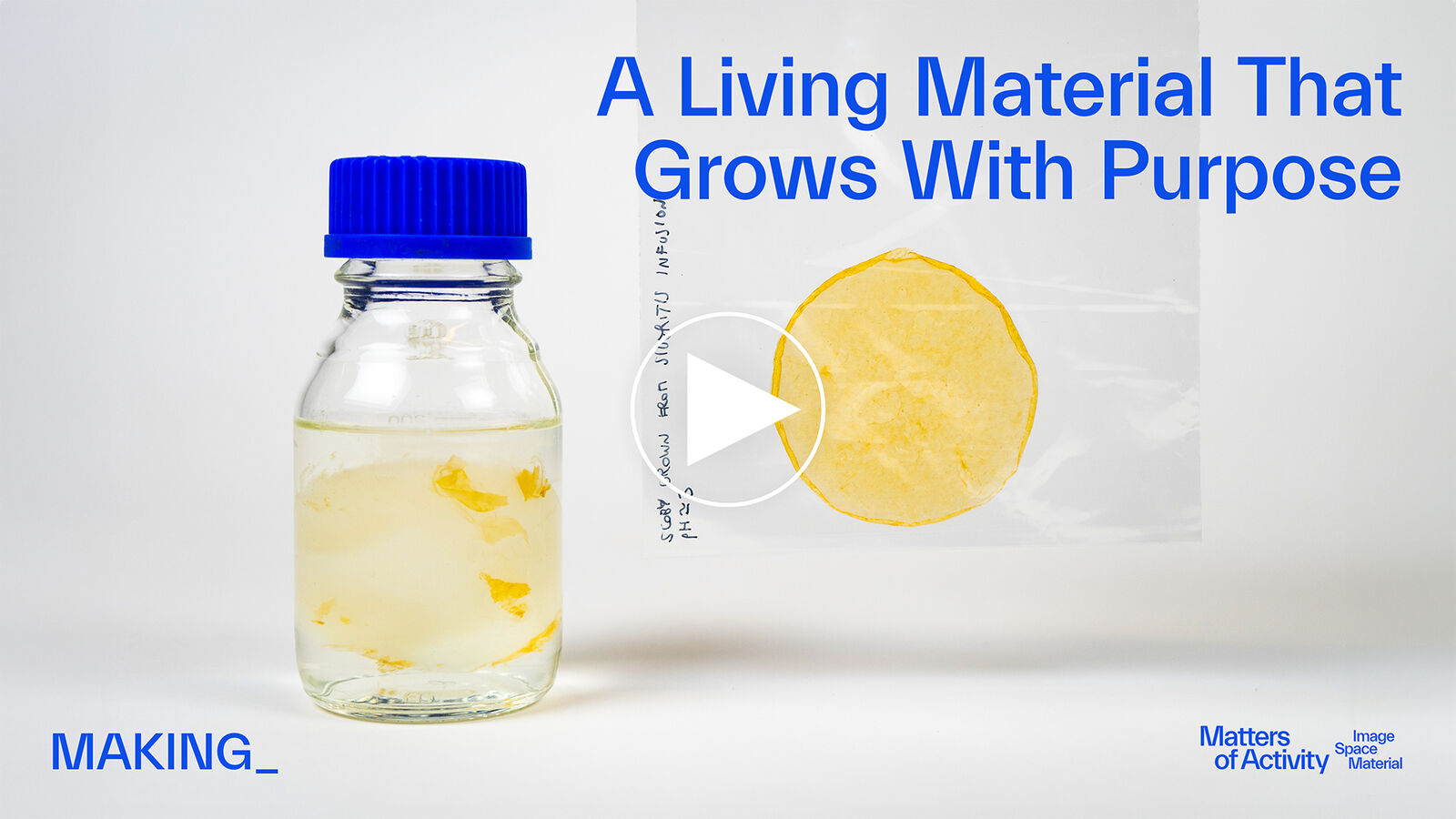
MAKING Scoby Grow with Emma Sicher. Copyright: Matters of Activity
MAKING Scoby Grow
New Episode with Emma Sicher
Weaving | MAKING_ | Cellulose | Biodesign | More-Than-Human | Bacteria | Biofilm | Science Communication Remember that cup of tea you left forgotten on your table for weeks? Don’t worry – you might have created something amazing without even realizing it! Meet the SCOBY – a symbiotic structure made of bacteria and yeast, a true powerhouse of bio-design! Find out more and watch the newest episode of »MAKING_«!
more
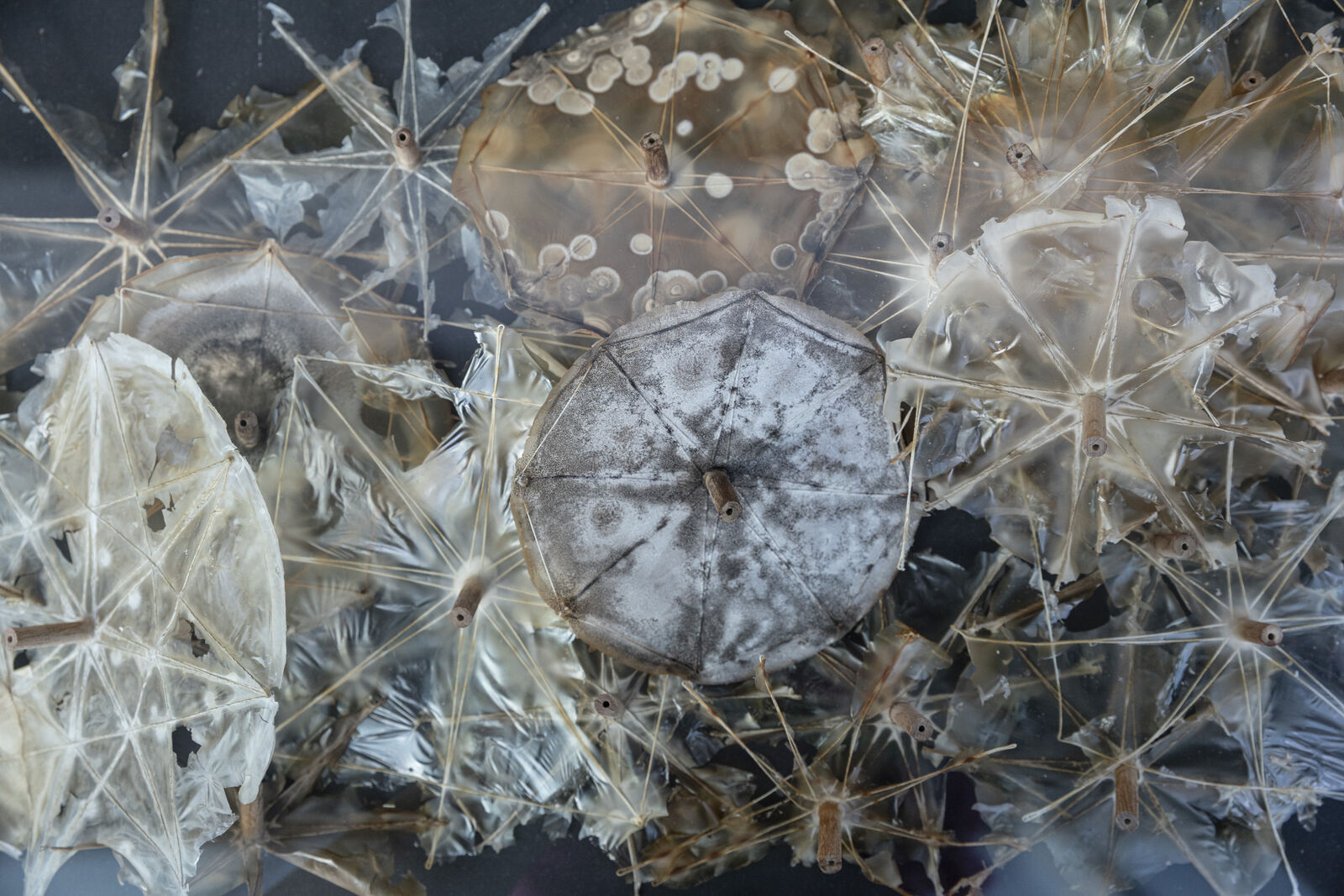
Co-Weaving Biofilms, Bastian Beyer, Iva Rešetar, Moritz Liedtke, Regine Hengge, Installation for Bauhaus Museum Dessau, 2025, photo: Michelle Mantel. Copyright: Matters of Activity
Bauhaus Ecologies
Installation »Bacterial Cellulose: Co-Weaving Biofilms« Featured at Exhibition in Dessau
Material Form Function | Weaving | Bacteria | Bauhaus | Biodesign | Biofilm | Cellulose Was the historic Bauhaus interested in ecology? Presumably in a different context than today. The exhibition »Bauhaus Ecologies«, on view from April 11th to November 2nd, 2025 at Bauhaus Museum Dessau, explores approaches to ecological thinking in modern design. We are thrilled to share that the exhibition also features the installation »Bacterial Cellulose: Co-Weaving Biofilms« developed in the Cluster of Excellence »Matters of Activity«. The project of architects Bastian Beyer and Iva Rešetar and microbiologist Regine Hengge presents the latest results of research at the interface between design, materials science, and biology.
more
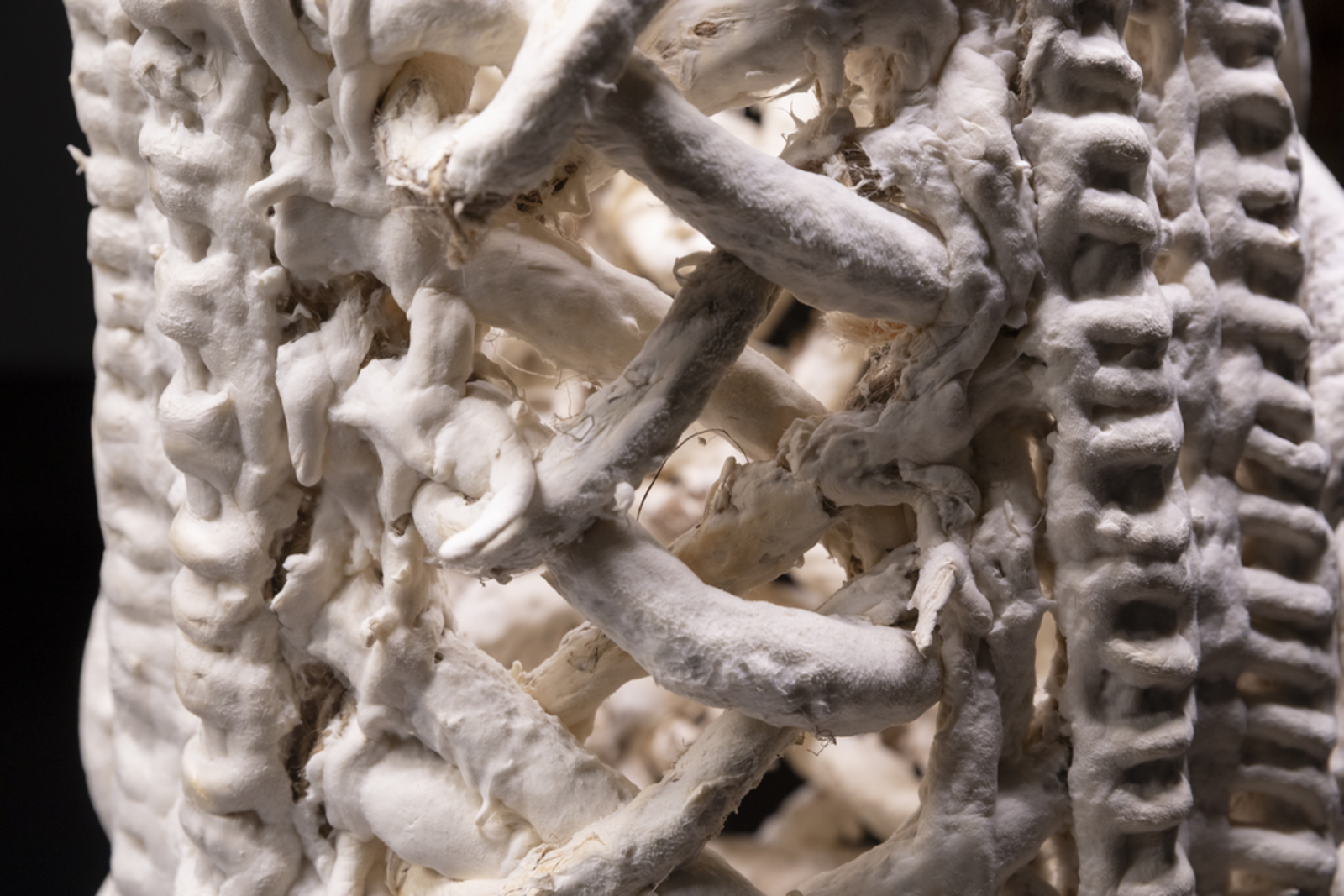
Project »Myko.Plektonik«, Natalija Miodragović & Dimitra Almpani-Lekka. Photo: Michelle Mantel. Copyright: Matters of Activtiy
Active Matter and Environmental Relations
Charlett Wenig and Natalija Miodragović, Together with Alice Jarry, are Panelists at »In.Site2 and Sustainability Across Disciplines«
Weaving | Material Form Function | Object Space Agency | Biodesign | Tree Bark | Forest | Fungi/Mycelium | Circular Economies | Climate In this conversation, designers Alice Jarry (Concordia, CA), Charlett Wenig and architect Natalija Miodragović discuss with »pk langshaw« how engagement with living, semi-living, and sustainable materials that sense, react, and transform with their environment can deploy regenerative and resilient relations and constitute future-forward opportunities for material practices. The whole conference is hosted in Montreal from on March 17th–21st, but will also be available via Zoom.
more
Rethinking Raw Materials: Design, Brains and the Future
Cluster Member Emma Sicher Gives Talk at Futurium
Weaving | Climate | Brain | Biodesign | Cellulose | Biofilm | Bacteria Moderator Pireeni Sundaralingam, a cognitive scientist, and her guests, Emma Sicher, MoA Pre-Doctoral Researcher and Anna Yona, founder and managing director of »Wildling« will discuss the future of sustainable design and the unconventional use of raw materials at Berlin’s ›House of Futures‹. Emma is a designer investigating materials and foods at the intersection of microbiology and anthropology to envision relational futures. What would happen if we used different materials for our clothes and our shoes? How could our food systems or our buildings use completely different raw materials? A ticket is required, but the admission is free of charge.
more
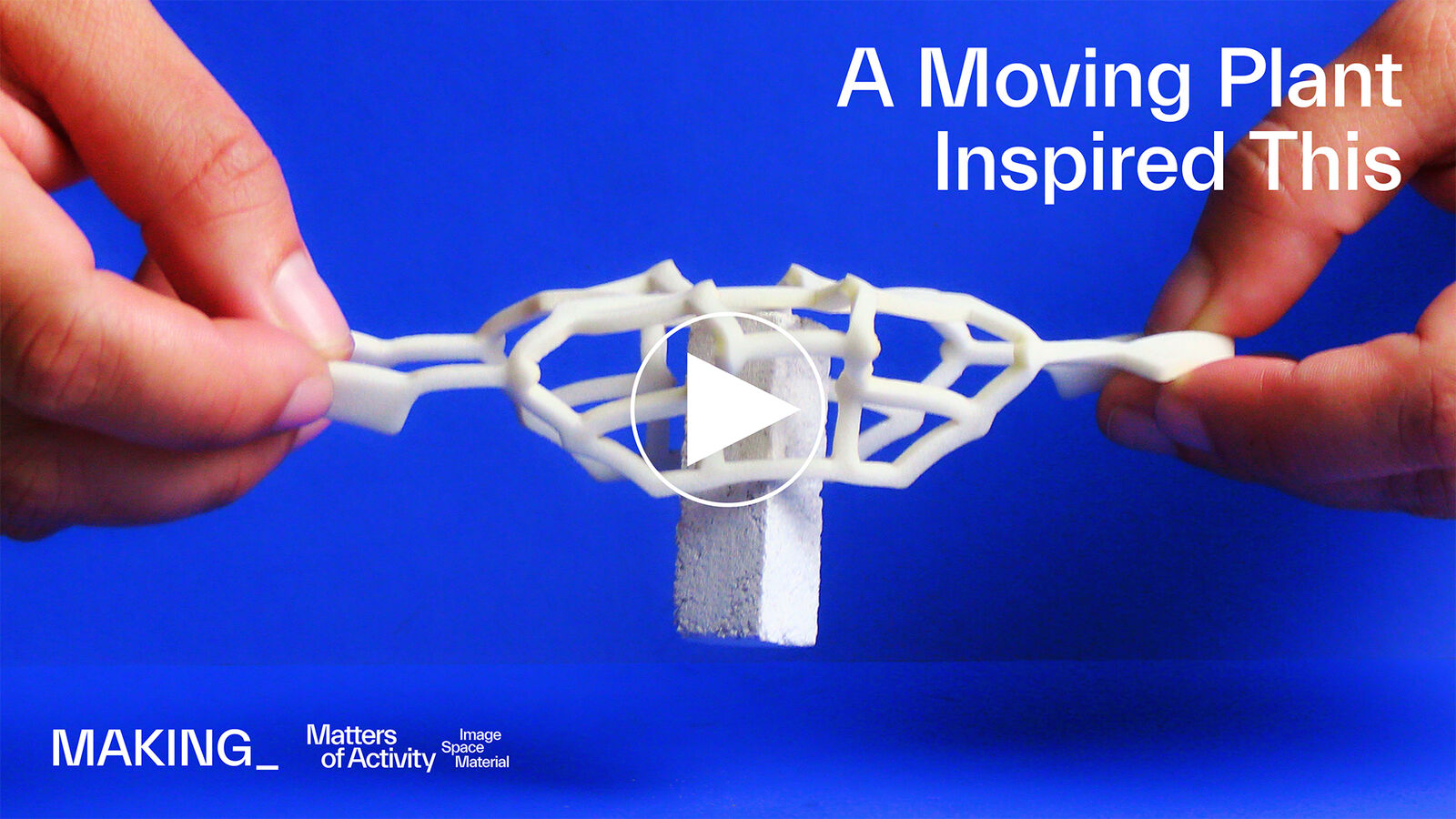
MAKING Material Move with Heidi Jalkh. Copyright: Matters of Activity (with a special thanks to Max Planck Gesellschaft for the ice plant footage)
MAKING Material Move
The New Episode with Heidi Jalkh Explores Auxetic Materials
Material Form Function | MAKING_ | Science Communication | Biodesign | Master Open Design | Prototype / Model Just a single drop of water and the ice plants’ leaves spring to life! No muscles, no motors. What's the secret? It’s all in the plant’s structure. Researchers like Heidi Jalkh are diving deep into how plants move to design smarter materials for the future. From everyday stuff like EVA foam, she creates bioinspired, so-called auxetic materials that can even lift rocks. »My aim was to make it be alive«, Heidi says. Unlocking nature’s magic recipe book to motion could change the way we build, create, and design.
more
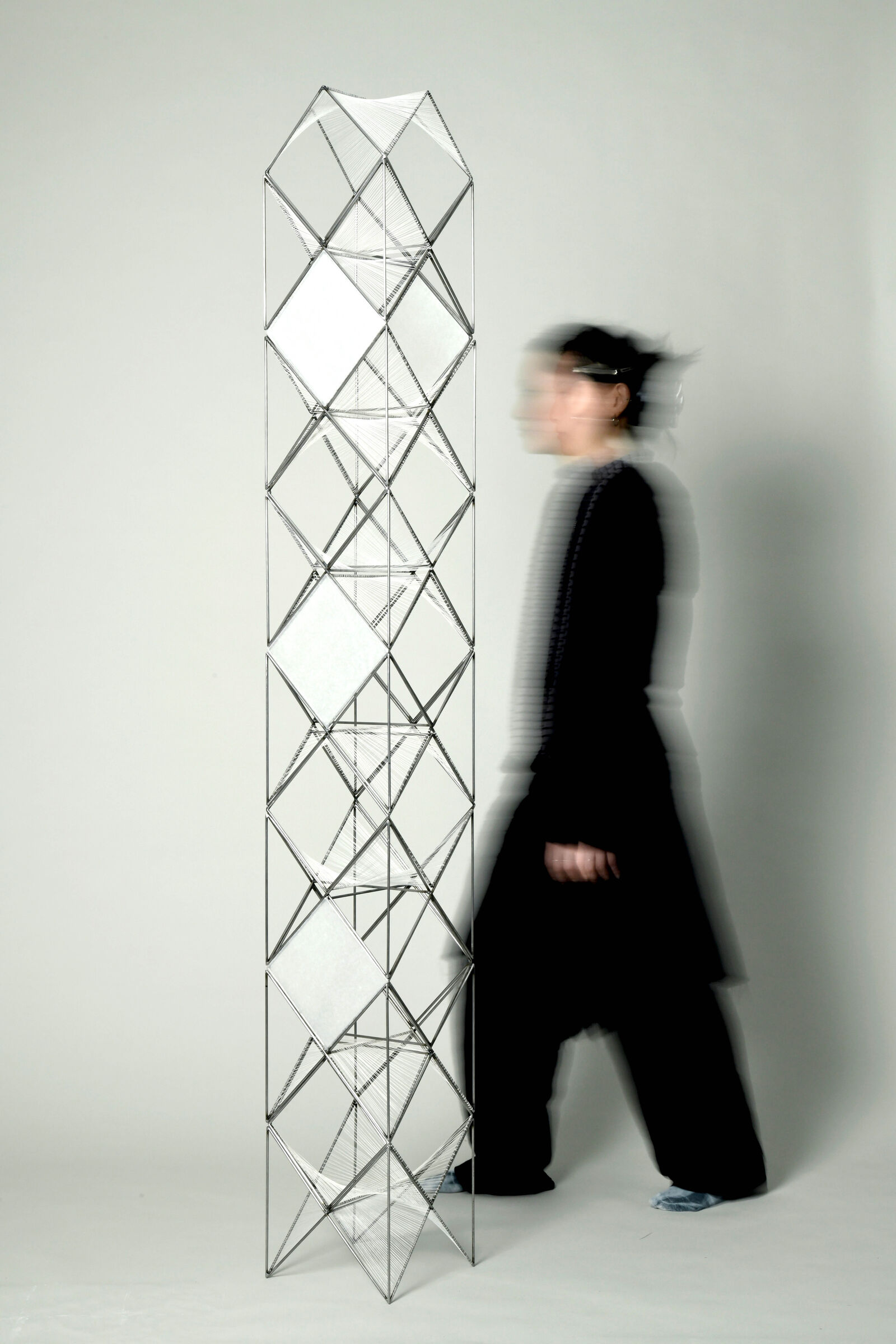
Topo Lock, Boyoung Chung, weissensee school of art and design
Scaling Nature (4) – Tiles and Tissues
Final Review and Presentation of MoA Design Research Studio
MoA Design Research Studio | Biodesign | Tessellation Tiles and tissues are elements of tessellated systems found in nature, serving as strategies to enable movement, protection, growth, or adaptation in living beings. This concept appears across all scales and various species of plants, animals, and even in geological formations. Tessellations and tiles also shape our built environment. Such principles allow for specific assembly and repair while providing stability or flexibility according to need. From exploring natural and geometrical strategies, the students developed concepts of material systems for a spatial context, that will be presented and on display starting February 11th.
more
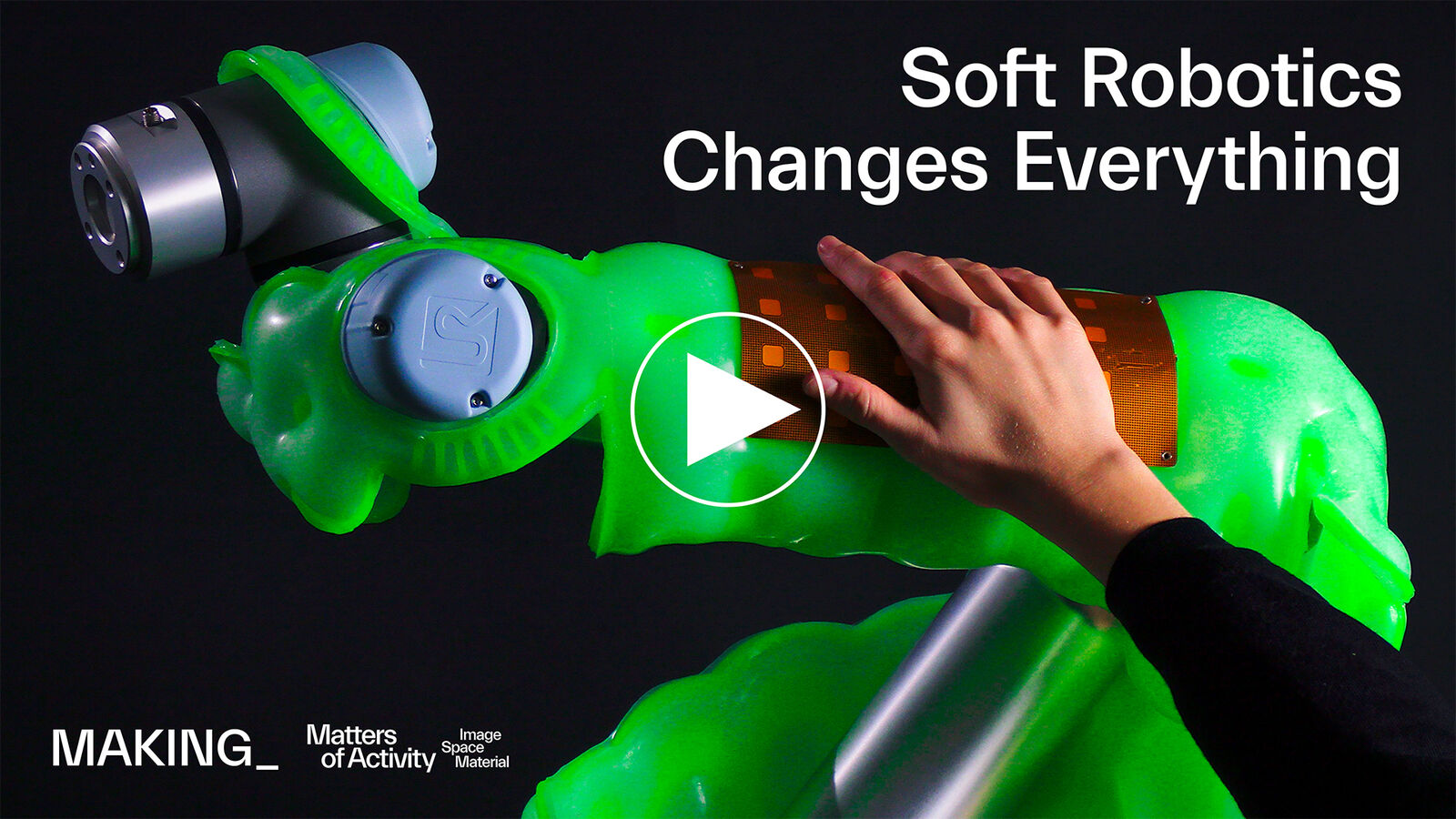
Still of »MAKING a robot feel« with Anna Schäffner and her project »Soft Collision«. Copyright: Matters of Activity
MAKING A Robot Feel
New MoA Mini Documentary Series Starts with Anna Schäffner
Filtering | Robotics | Air | Biodesign | Science Communication | MAKING_ Imagine hugging a robot as soft and comforting as a teddy bear. This could be the future, moving away from the cold, steel monsters we’ve seen in sci-fi films. Anna Schäffner, designer and PhD candidate at Matters of Activity, is bringing this vision to life with her innovative project »Soft Collision«. Anna covered a steel robot in silicone membranes that inflate when you touch them. »It’s giving skin to the robot«, Anna says. But how does it work? How might it let us interact with robots in a more intuitive and secure way? And what’s a caterpillar got to do with it?
more
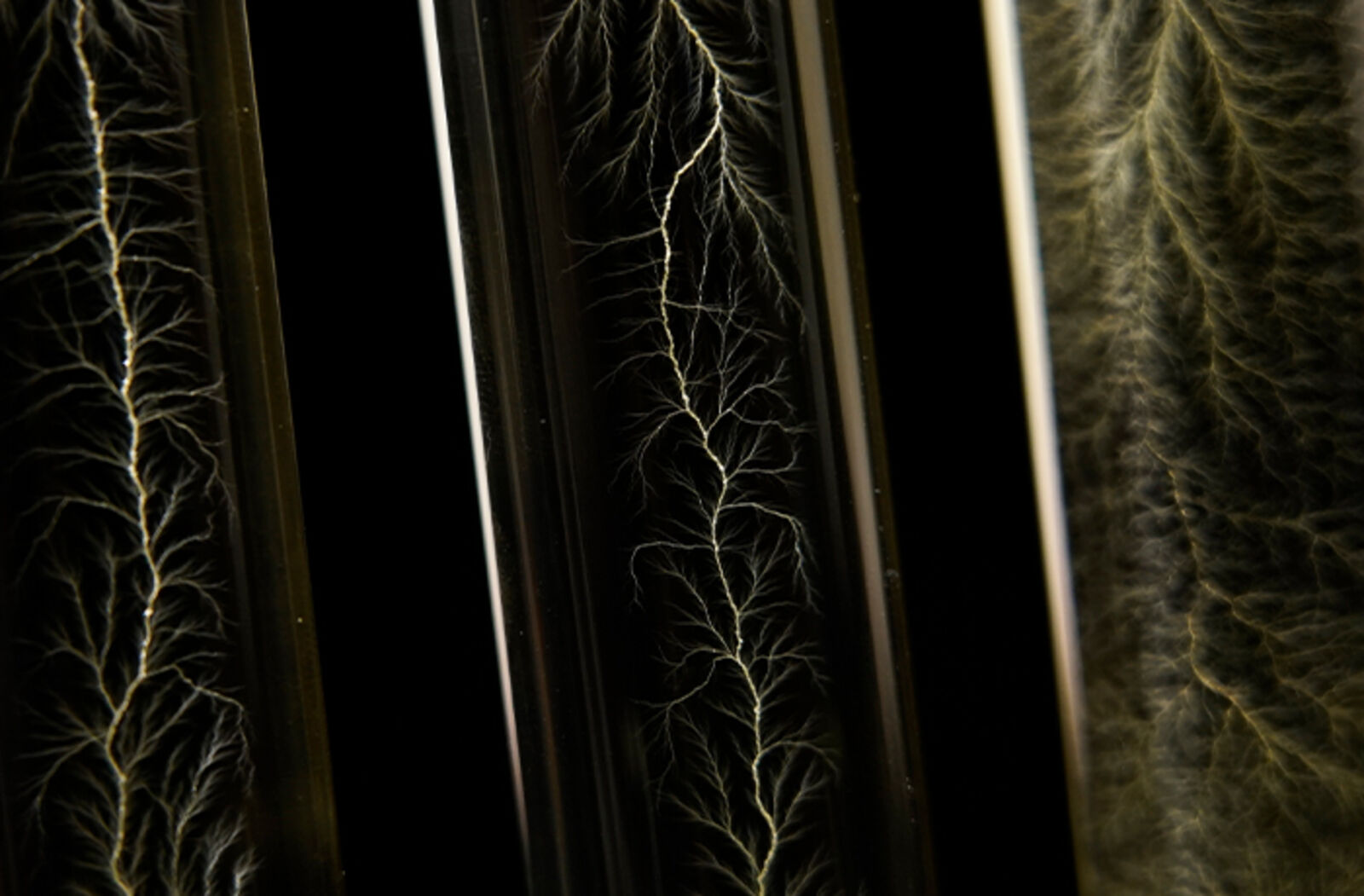
Emile de Visscher, Vascularizations, still of video article released on 15 January 2025 at .able journal.
How to Design for Cells Rather than for Humans?
Visual Essay by Emile De Visscher Published on .able
Material Form Function | Biodesign | Publications »How can we design for cells rather than for humans?«
is the question that drives MoA member Emile De Visscher's latest video article for .
able, »Vascularization«. Inspired by vascular networks (vessel-like structures that enable fluid flow and are widely found in nature) and fulgurites (formations created when lightning strikes sand), this research investigates how lightning-like processes can create microvascular networks for potential medical applications. By bridging biology, experimental surgery, design, and physics, this research proposes a unique approach to addressing organ donation scarcity while moving towards more resilience in materials science.
.able is an image-based journal at the intersection of art, design, and sciences responding to the complexities of today’s society.
more
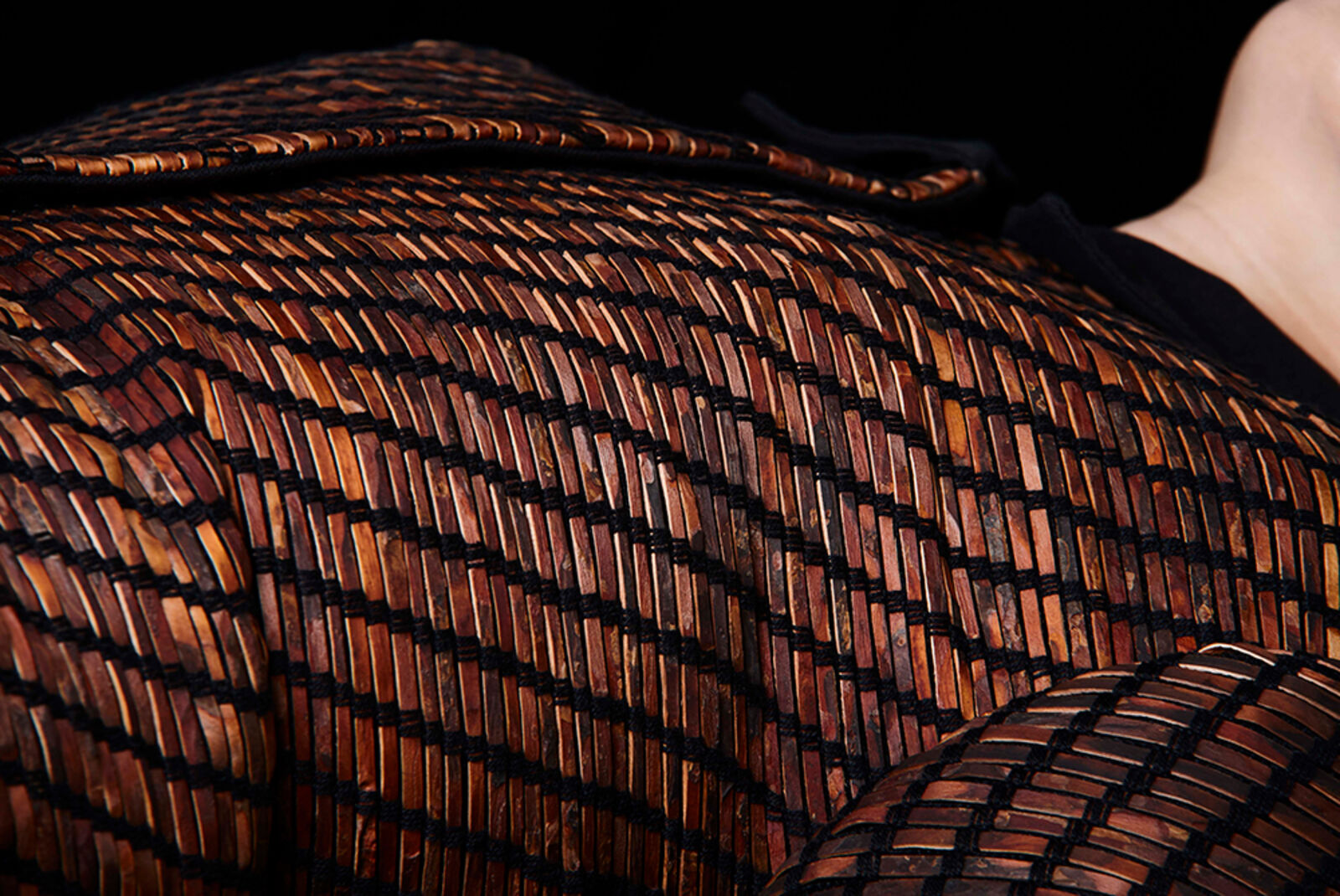
»The Bark Project«, Charlett Wenig. Copyright: Patrick Walter, MPIKG
FUTURES – Material and Design of Tomorrow
Special Exhibition at Grassi Museum Leipzig with Works of Charlett Wenig
Tree Bark | Speculative Design | Circular Economies | Biodesign Humanity has always been fascinated by ideas, visions and versions of the future. Faced with global challenges, themes like resource scarcity, climate crisis and socioeconomic injustice dominate social awareness. Designers and artists increasingly focus on aspects of possible ›futures‹ as shown in the exhibition that is now opening at Grassi Museum of Applied Arts Leipzig. The exhibition’s chapter »READY MADE FUTURE« features works of Charlett Wenig.
more
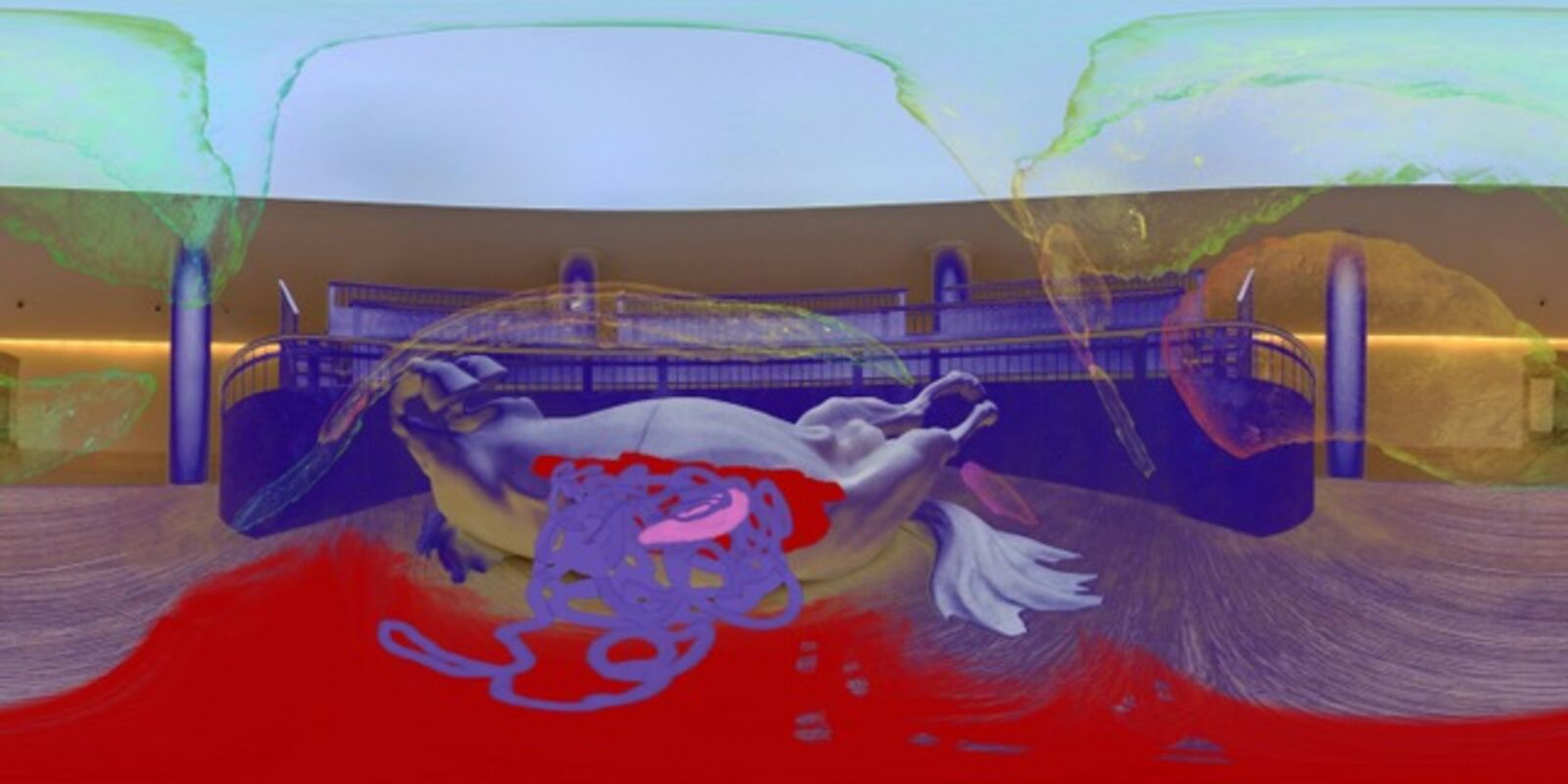
Article Stretching Materialities
Adopting the Perspective of Things
Open Access Peer-Reviewed Article Published on the »Stretching Materialities« Exhibition's Process
Object Space Agency | Air | Biodesign | Cloud | Graphic Anthropology | Haptics | Hemp | Prototype / Model | Stone | Stretching Materialities | XR »TATour« is the title of a virtual exhibition based on preliminary fieldwork we conducted in 2020 at the Tieranatomisches Theater in Berlin (Humboldt-Universität zu Berlin). This collaborative inquiry served as a preamble to creating a physical exhibition in a museum space based in a former veterinary anatomical theater (Stretching Materialities, 2021-2022). Constrained by the COVID crisis, we invested our efforts in creating a digital tour that focused on the visible and invisible activities that remained there even when visitors could no longer access them. This recent paper by exhibition curators Maxime Le Calvé, Natalija Miodragović, Nina Samuel, Felix Sattler, Christian Stein, and Clemens Winkler, published in
ethnographiques.org, issue 47, presents the production process for this immersive work, describes the creative process underlying this immersive work and its unusual approach to doing fieldwork through 360° fabulations inside an exhibition space, using sketching as a primary method.
more
Battle of the Brains
The Science Slam of the Berlin Clusters of Excellence
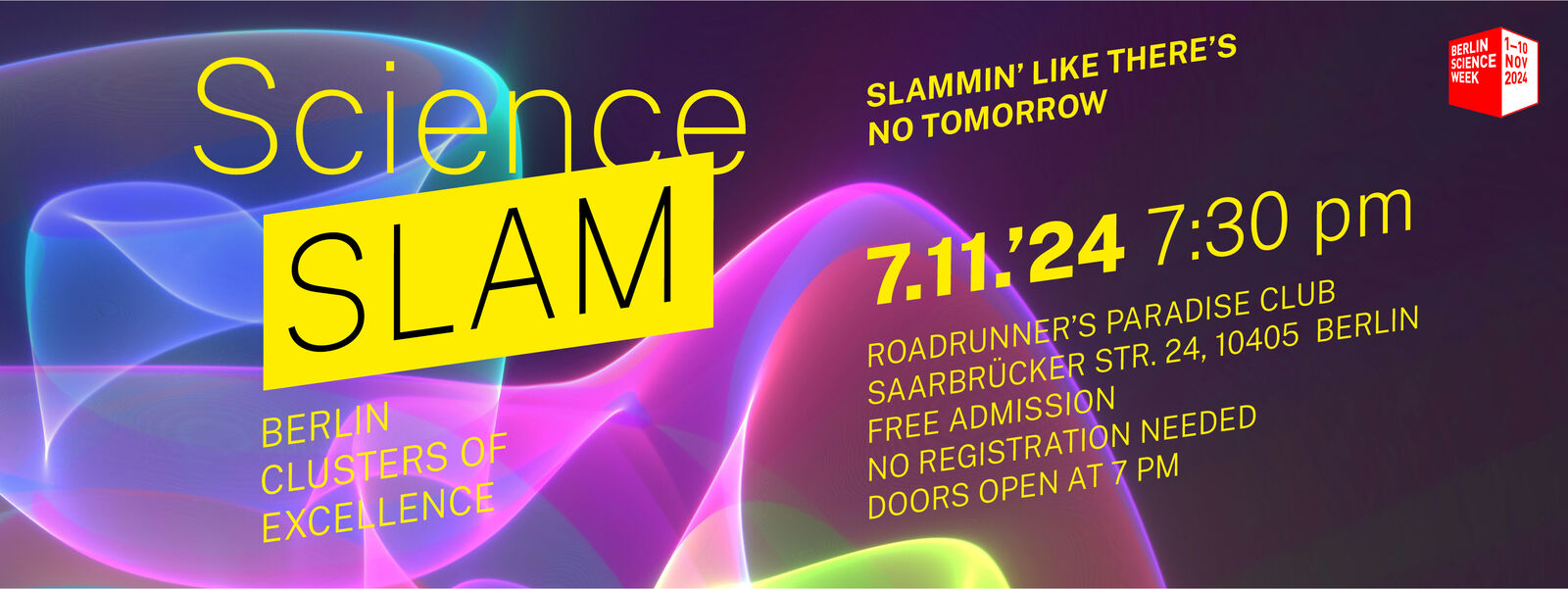
Material Form Function | Biodesign | Science Communication | Performance Slammin’ like there’s no tomorrow – at the Science Slam of the Berlin Clusters of Excellence, researchers try everything to entertain their audience, regardless of whether the subject is e.g. mathematics, neuroscience, or active material. For Matters of Activity, Associated Member Heidi Jalkh will present her latest research under the title »From Awe to Wonder - Designing Nature Inspired Materials«. Join us on November 7th at Roadrunner's Paradise Club, it will be a great evening! The event is part of Berlin Science Week 2024.
more
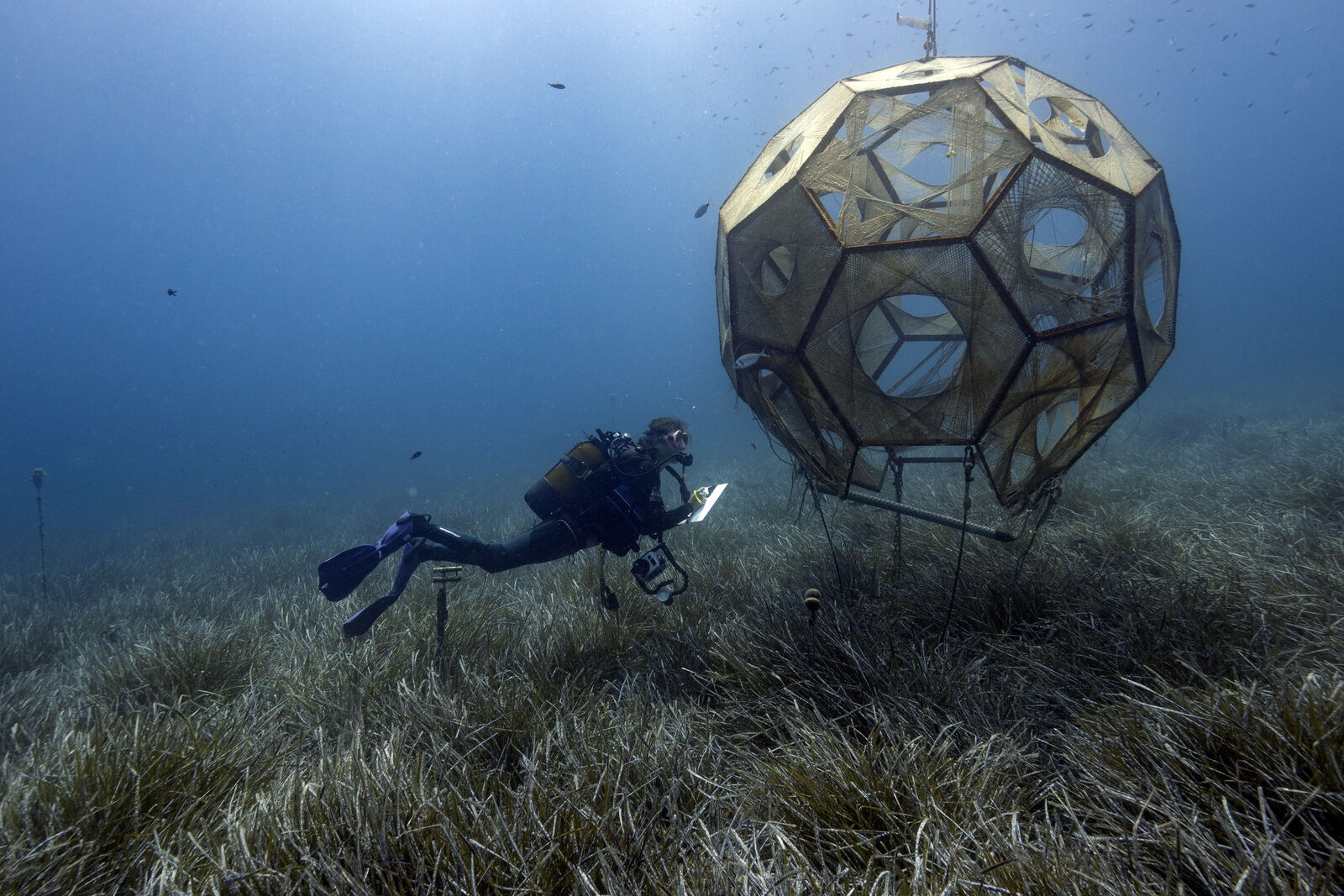
»Kiki Prototype«. Design: Rasa Weber, rasaweber.com. PhD Project: «SymbiOcean». Location: STARESO - Calvi (FR). Diver: Noémie Chabrier. Installation team, assistance and monitoring: Arnaud Boulenger, Sandra Bracun, Noemi Chabrier, Mélodie Chapat, Sylvain Coudray, Stéphane Jamme, Leonie John, Teal Jordan, Michael Karle, Mathieu Kelhetter (design intern), Michaela Roger, Bram van der Schoot, Kelly Stiver, Anja Wegner, Lena Wesenberg, Aubin Woehrel. Date: June 2023. SNF research project: «Interfacing the Ocean». Hosting University: Zurich University of the Arts & University of Art and Design Linz. Photo: Stéphane Jamme @stepp_aquanaute.
The Whispering World: Words by a Silent Sea
Exhibition by Rasa Weber Opens at Berlin Science Week
Material Form Function | Biodesign | More-Than-Human | Ocean | Prototype / Model | Temporality We're delighted that MoA associated member Rasa Weber will be part of the Blue Talk: »Science and Design for Marine Ecosystem Restoration« at this year's Berlin Science Week. The event is part of the preparation for the Third United Nations Ocean Conference jointly organized by France and Costa Rica (June 2025 - Nice, France) and takes place at the French Embassy in Berlin. The panel discussion will be followed by the official opening of the exhibition »The Whispering World: Words by a Silent Sea«,
showcasing Rasa's work in developing a prototype of an artificial reef that provides a substrate and structure for pioneer organisms to form a habitat.
more
Samples from the CONQ project, 2024. Copyright: Angie Dub and Heidi Jalkh
In a Seashell
Workshop with Angie Dub and Heidi Jalkh at Berlin Science Week 2024 Fully Booked - Save Your Last Spot on the Waiting List!
Material Form Function | Biodesign | Ocean | Science Communication | Prototype / Model We're thrilled to share that we will contribute to this year's Berlin Science Week with a workshop about connecting marine-based industries and construction for more sustainable architecture. Each year, over 10 million tonnes of shells—mostly from oysters, clams, scallops, and mussels—are discarded as waste despite their high calcium carbonate content. How could we make better use of the potential of these ingenious materials? Let’s explore this together! With inputs from MoA member Christiane Sauer, Kika Brockstedt from the material data platform revalu, and many more.
more
Planetary Design: Reclaiming Futures
Conference Organized by Claudia Mareis – Conference Contributions Now Online as an Audio Series
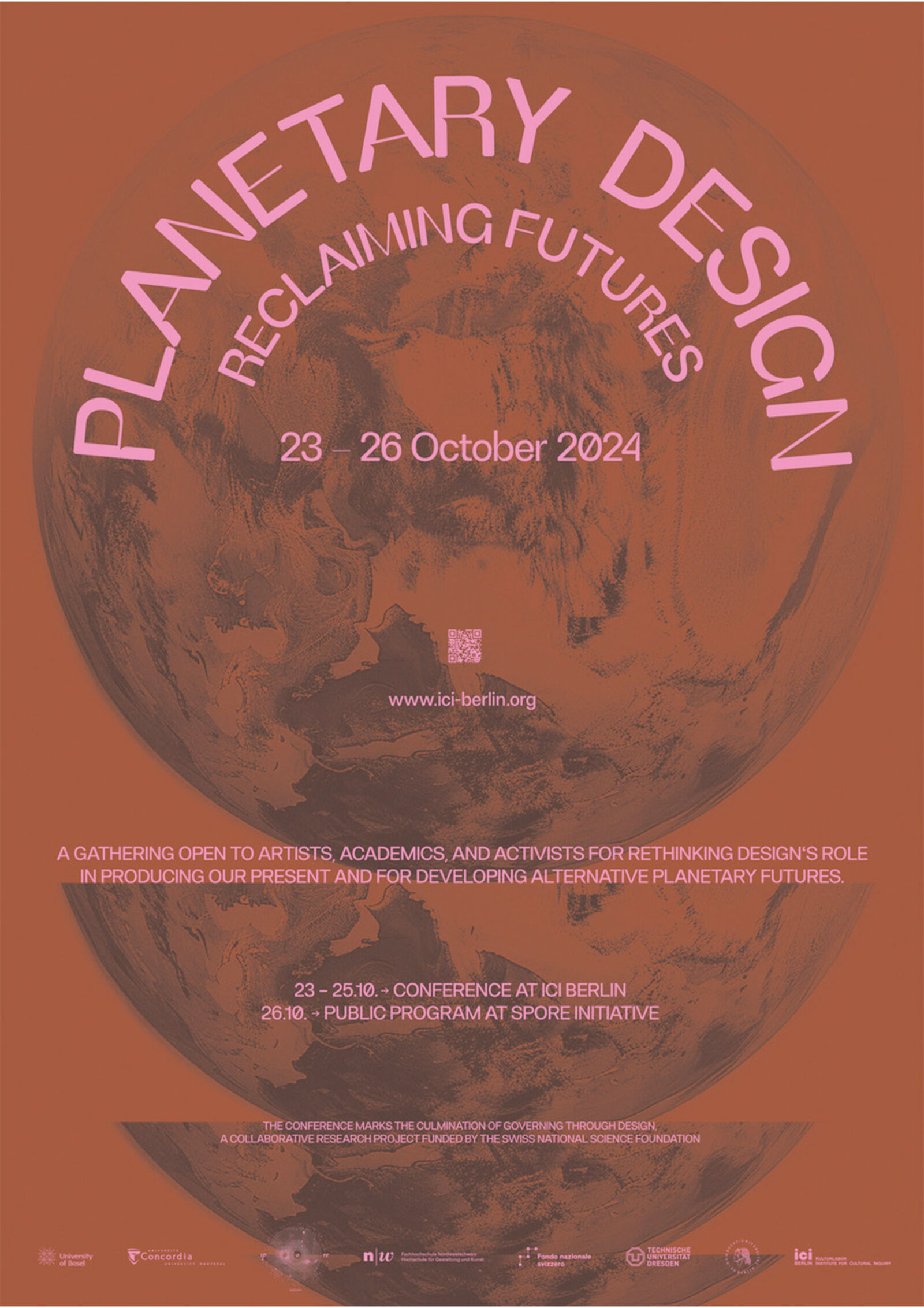
Material Form Function | Science Communication | Climate | More-Than-Human | Biodesign | Circular Economies | Speculative Design | Temporality The conference »Planetary Design: Reclaiming Futures« brought together critical thinking and doing around the role of design in making, unmaking and remaking worlds. Starting from the intersection of design, infrastructure, and the planetary environment, it offered a generative platform open to artists, academics, and activists for rethinking design’s role in producing the present and for developing alternative planetary futures. The conference gathered artists, academics, and activists to rethink design's role in producing our present and developing alternative planetary futures. The conference contributions are now online as a podcast!
more
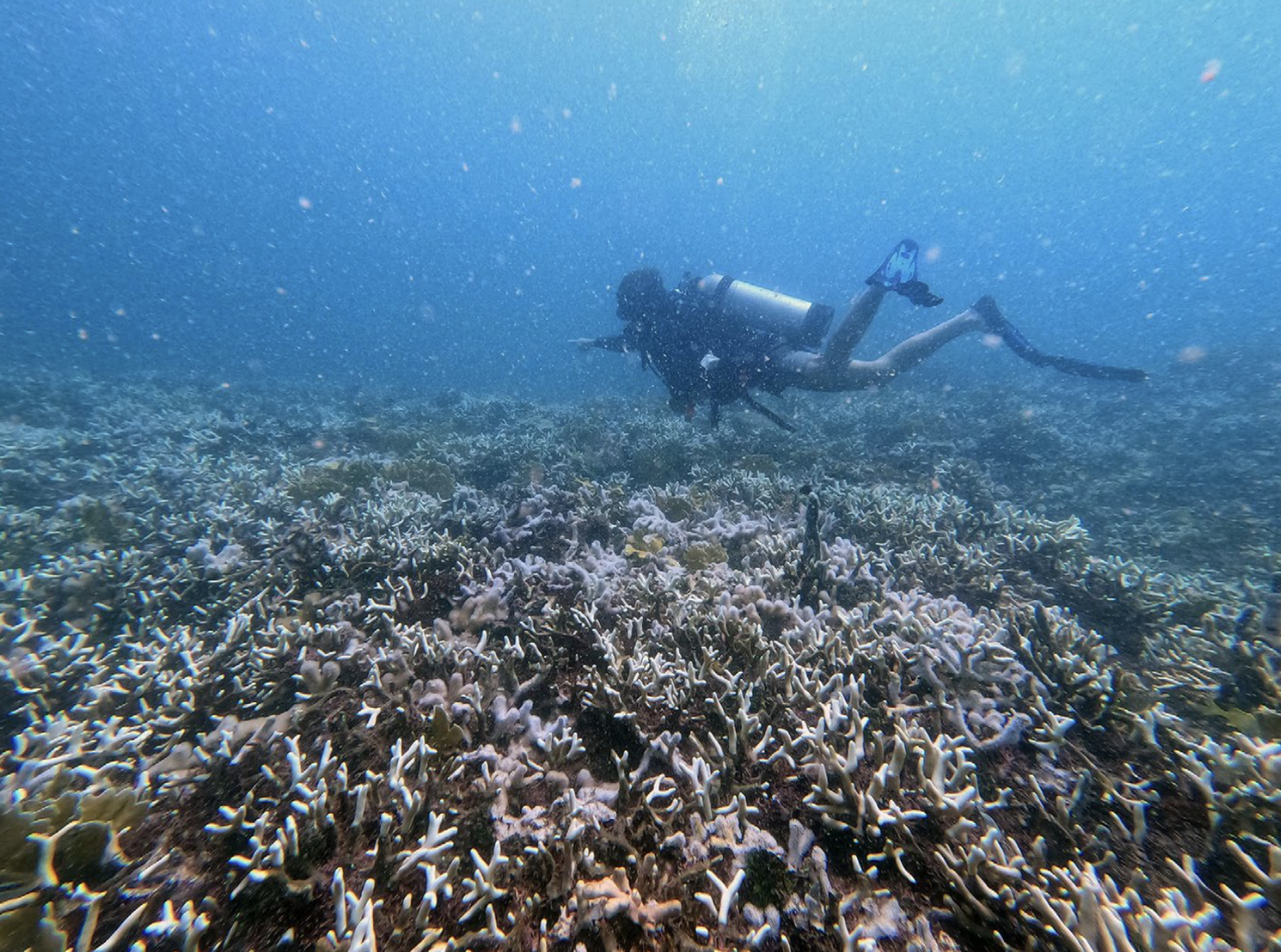
Coral bleaching on Caribbean Coast. Photo: Rasa Weber. Diver: Jota Uparela. From the Project: »Symbiotic Coral Nurseries« in collaboration with The Polynesian Institute of Biomimicry IPB, Andry Carrasquilla, Paraiso Dive Center. Location: Tierra Bomba (COL), 2023
Blasted Seascapes
Two New Articles by Rasa Weber
Material Form Function | Biodesign | Climate | Doctoral Program | More-Than-Human | Ocean | Publications Two articles by Cluster member Rasa Weber were published recently: In kritische berichte. Zeitschrift für Kunst- und Kulturgeschichte, Rasa writes about »Queer Reefs – A Queer Ecological Journey into Blasted Seascapes«. Moreover, »Of Other Reefs: Designing Habitats in Blasted Seascapes« has been published by Cambridge University Press. Both publications are open access.
more
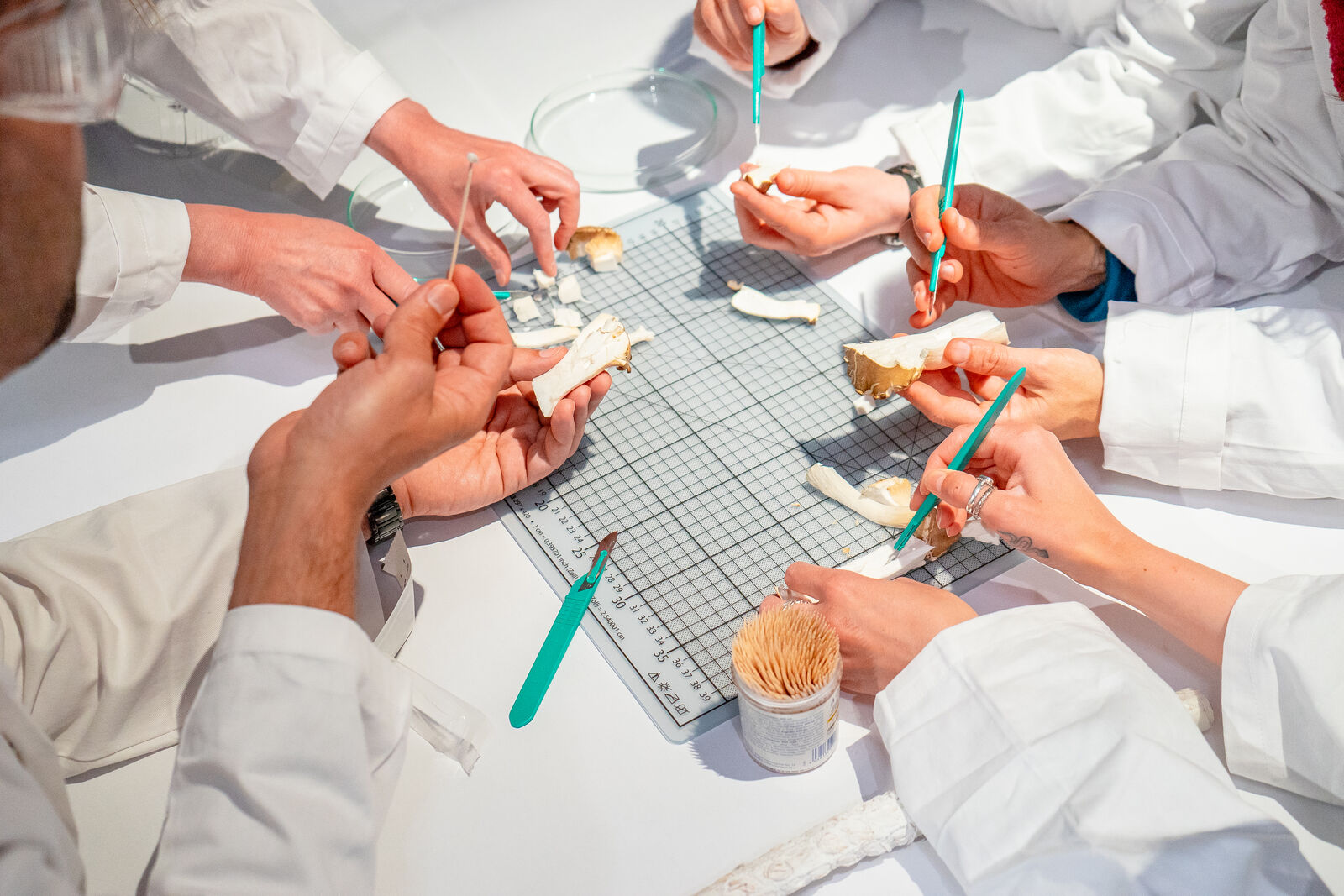
CollActive Materials’ Workshop »Open Lab Abend: Wachsende Architektur – Co-Design mit Pilzen« im Futurium Lab, 13. Juni 2024. Copyright: Matters of Activity
Holitopia 2024
Several MoA Members Contribute to the Festival on Future Design
Object Space Agency | Material Form Function | Science Communication | Speculative Design | Biodesign | Ocean | Fungi/Mycelium | XR | Climate | Collactive Materials | Stretching Materialities Witness future design and art coming together to turn visions into reality: futures you can see and touch! MoA members Christian Stein, Rasa Weber, Natalija Miodragovic, Dimitra Almpani-Lekka, Antje Nestler and Kristin Werner contribute to this year's Holitopia Festival with a keynote, panel, discussion and speculative workshop at Campus Wilhelminenhof of HTW Berlin. Don't miss your chance for a reduced ticket for the conference day. But there are also lots of free activities, such as the exhibition »Above the Sea of Air« with works from the Cluster.
more
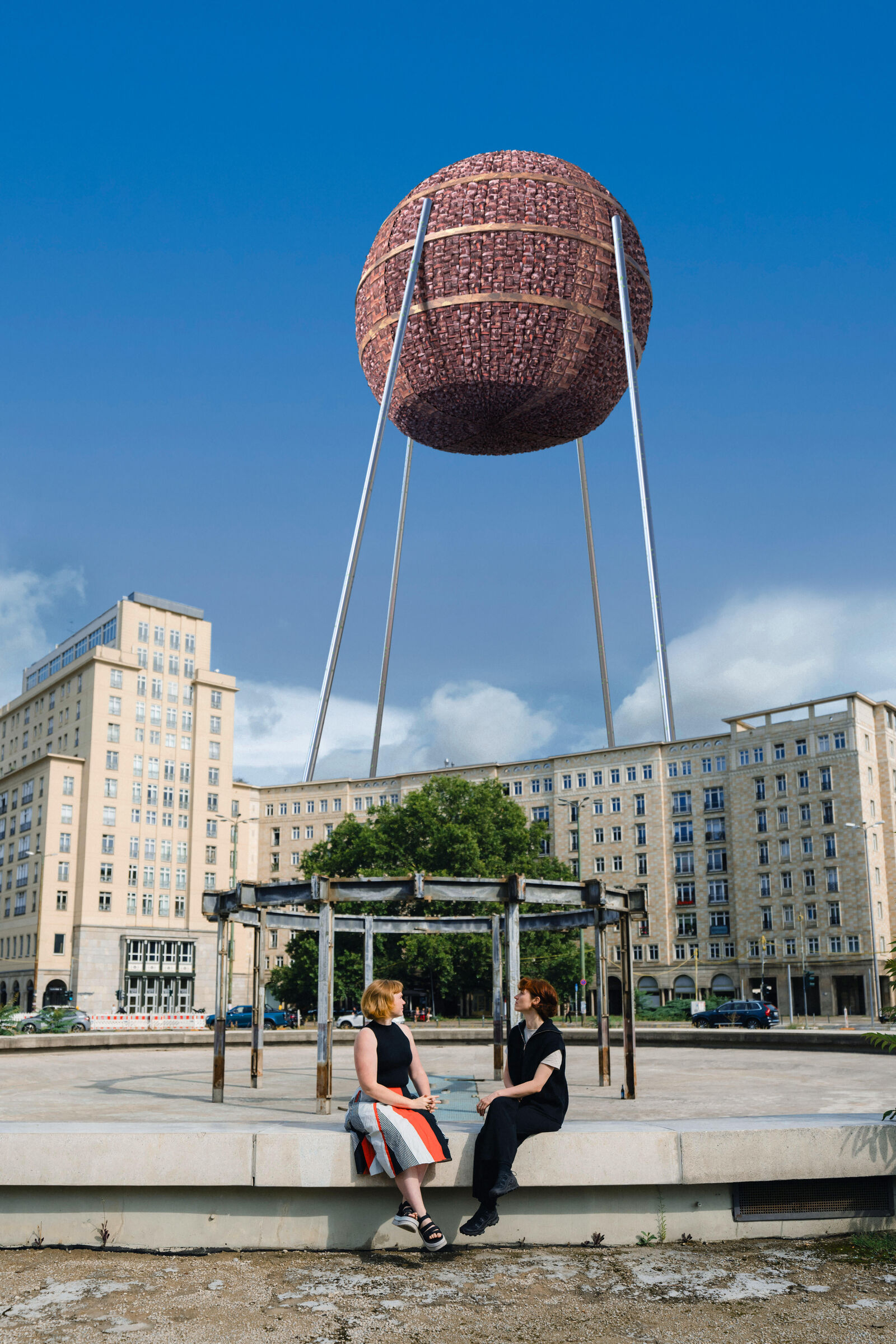
Charlett Wenig und Johanna Hehemyer-Cürten mit der Barksphere am Strausberger Platz, Kampagne »Das offene Wissenslabor«, 2024. Copyright: Berlin University Alliance
Welche Materialien und Ressourcen wollen wir in Zukunft verwenden?
Charlett Wenig und Johanna Hehemeyer-Cürten über das Bark Project
Material Form Function | Biodesign | Prototype / Model | Science Communication | Tree Bark Fasern, Samenkapseln, Pflanzenstängel oder Seidengespinste – in der Natur gibt es jede Menge unterschiedlicher Materialien, die außergewöhnlichen mechanische Eigenschaften haben und sich an wechselnde Umweltbedingungen anpassen können. Wie funktionieren diese biogenen Materialien und könnten sie möglicherweise Inspirations- und Rohstoffquelle für Architektur, Design oder Produktentwicklung sein? In einem Interview, das Teil der neuen Kampagne der Berlin University Alliana »Das offene Wissenslabor« ist, geben Cluster-Mitglieder Charlett Wenig und Johanna Hehemeyer-Cürten Einblicke in die Arbeit der Forschungsgruppe »Adaptive Fibrous Materials« und insbesondere über ihre Forschung zu Baumrinde.
more
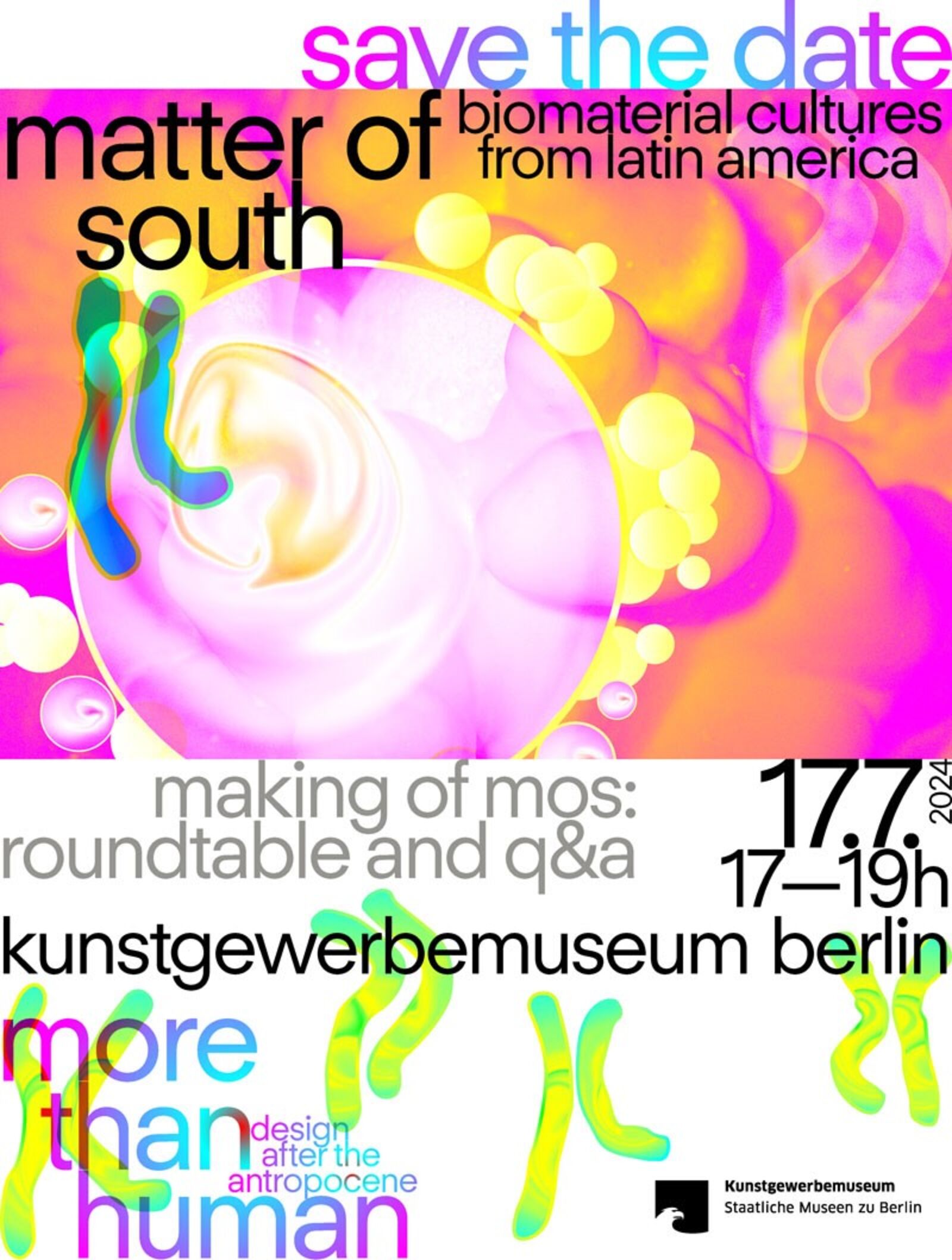
Copyright: Staatliche Museen zu Berlin, Kunstgewerbemuseum / Gestaltung: cyan Berlin
The Making of »Matter of South. Biomaterial Cultures form Latin America«
Roundtable and Q&A
Material Form Function | More-Than-Human | Biodesign | Fungi/Mycelium | Rubber | Water | Climate | Circular Economies On July 12th 2024, the exhibition and research project »Matter of South. Biomaterial Cultures from Latin America« opened its doors. Its curators Heidi Jalkh, Gisela Pozzetti and Valentina Aliaga Vargas are investigating to which extent the development of biomaterials can create new relationships between people and their environment in the future. What alternatives can there be to our extractivist practices? In this round table discussion with the three curators and further players, on July 17th, you can find out more about the background and vision of the »Matter of South« initiative.
more
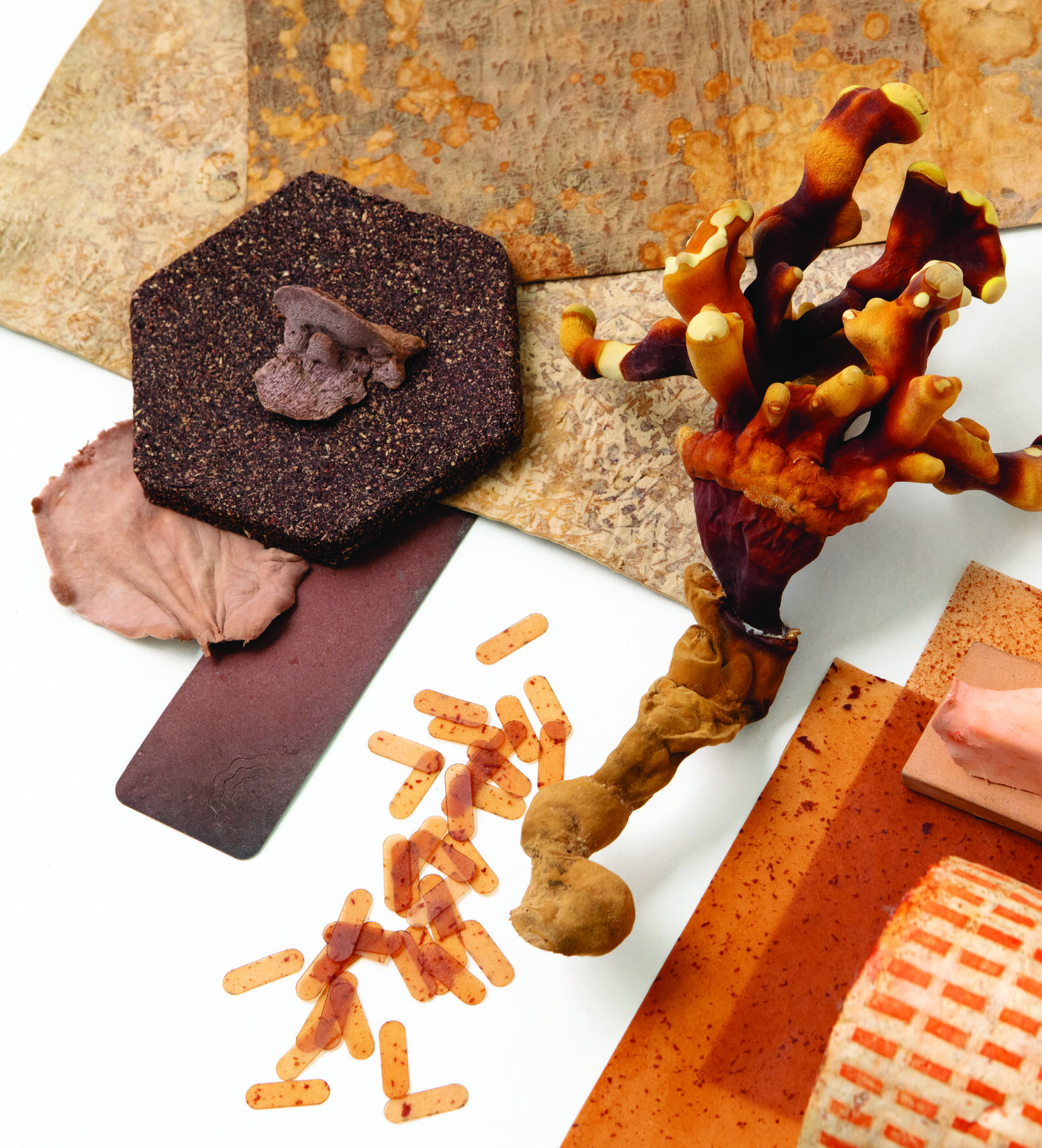
TRAZOS Edición Biomateriales, 2024, Gisela Pozzetti, Heidi Jalkh, Sistemas Materiales. Photo: Maia Croizet
Matter of South. Biomaterial Cultures from Latin America
Exhibition Opening at Kunstgewerbemuseum on 12 July
Material Form Function | Biodesign | More-Than-Human Under the new discursive platform »More Than Human: Design after the Anthropocene« at the Kunstgewerbemuseum Berlin, created by Claudia Banz, Heidi Jalkh has been invited to curate a project in collaboration with co-curators Gisela Pozzetti and Valentina Aliaga. The »Matter of South - Biomaterial Cultures from Latin America« project explores how biomaterial initiatives in this region harness local culture and biodiversity to create new material cultures. This endeavor also aims to reframe our relationship with the immediate environment while questioning and providing alternatives to the established extractivist model. The exhibition will open on July 12th, 7 pm, and runs through August 26th. A two-day international symposium on this topic is scheduled for the project, tentatively set for July 17th-18th.
more
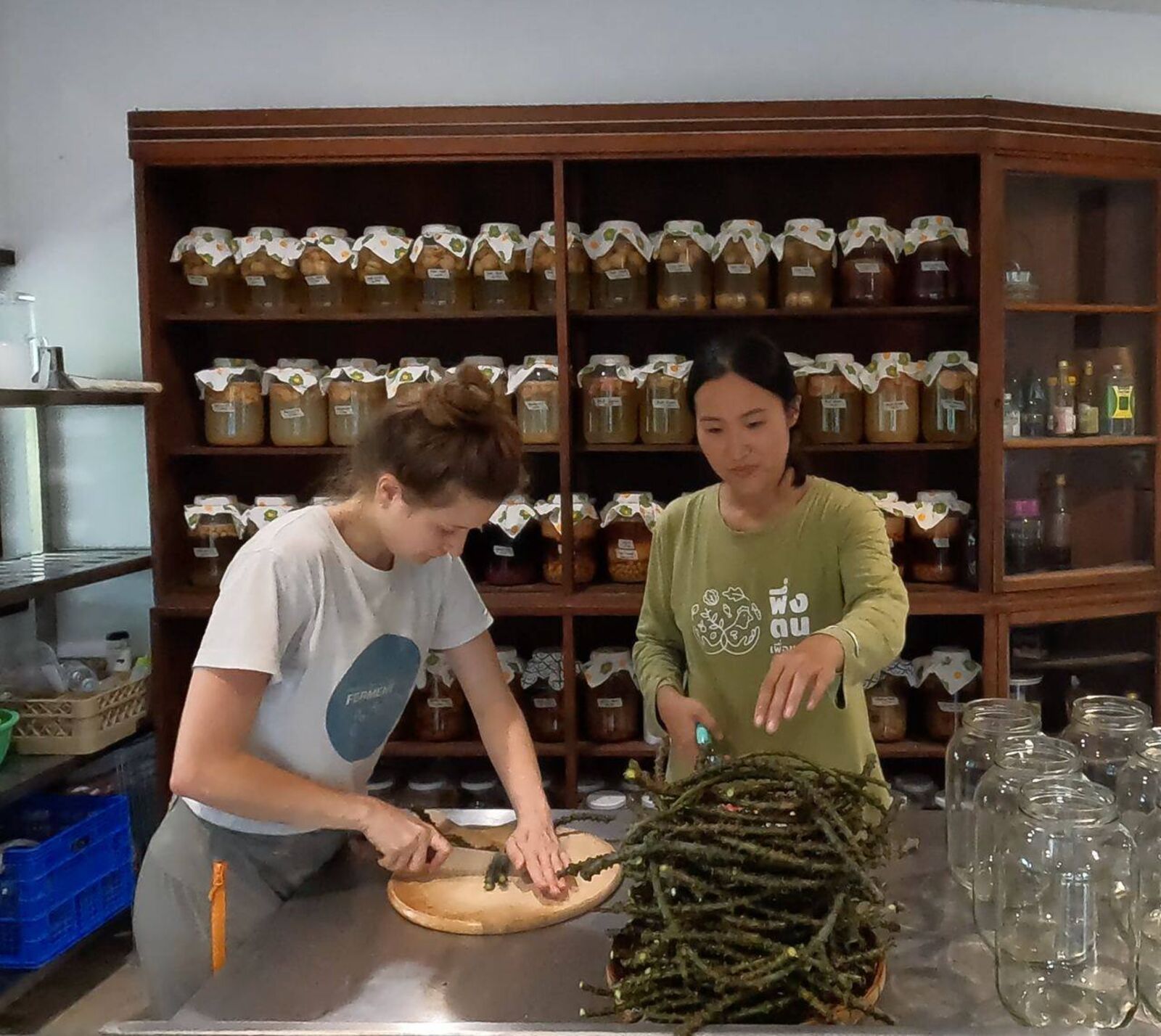
Fermentation preparation with Tanyaporn Tantasathien. Thailand 2024. Copyright: Emma Sicher
Generating Biomaterials By Acetic Fermentation
Emma Sicher Exchanged Knowledge with Researchers and Practitioners in Thailand
Weaving | Bacteria | Biodesign | Biofilm | Cellulose | Doctoral Program Between May and June, doctoral researcher Emma Sicher spent three weeks in Thailand as part of her PhD in Design Studies. Invited by Professor Aracha Krasae-in, she presented the work of the Cluster and her current research at the Faculty of Architecture of Kasetsart University in Bangkok. There, she also exchanged ideas with Professor Prakit Sukyai, an expert in Biotechnology and Biopolymers. Additionally, she presented at the Faculty of Fine and Applied Arts of Thammasat University, invited by Professor Wuthigrai Siriphon.
The heart of the experience consisted of visits to two sites associated with acetic fermentation techniques that can generate biomaterials. These techniques range from ancient practices to more recent methods, employed in various ways from fertilizers to health-promoting substances. The visits took place in small artisanal production realities in Nakhon Ratchasima province, including Stefano and Somporn Abbruzzese, and Micro Friends, an initiative run by Tanyaporn Tantasathien and Waratchanat Thongthiangtham at the Baan Ama farm stay.
more
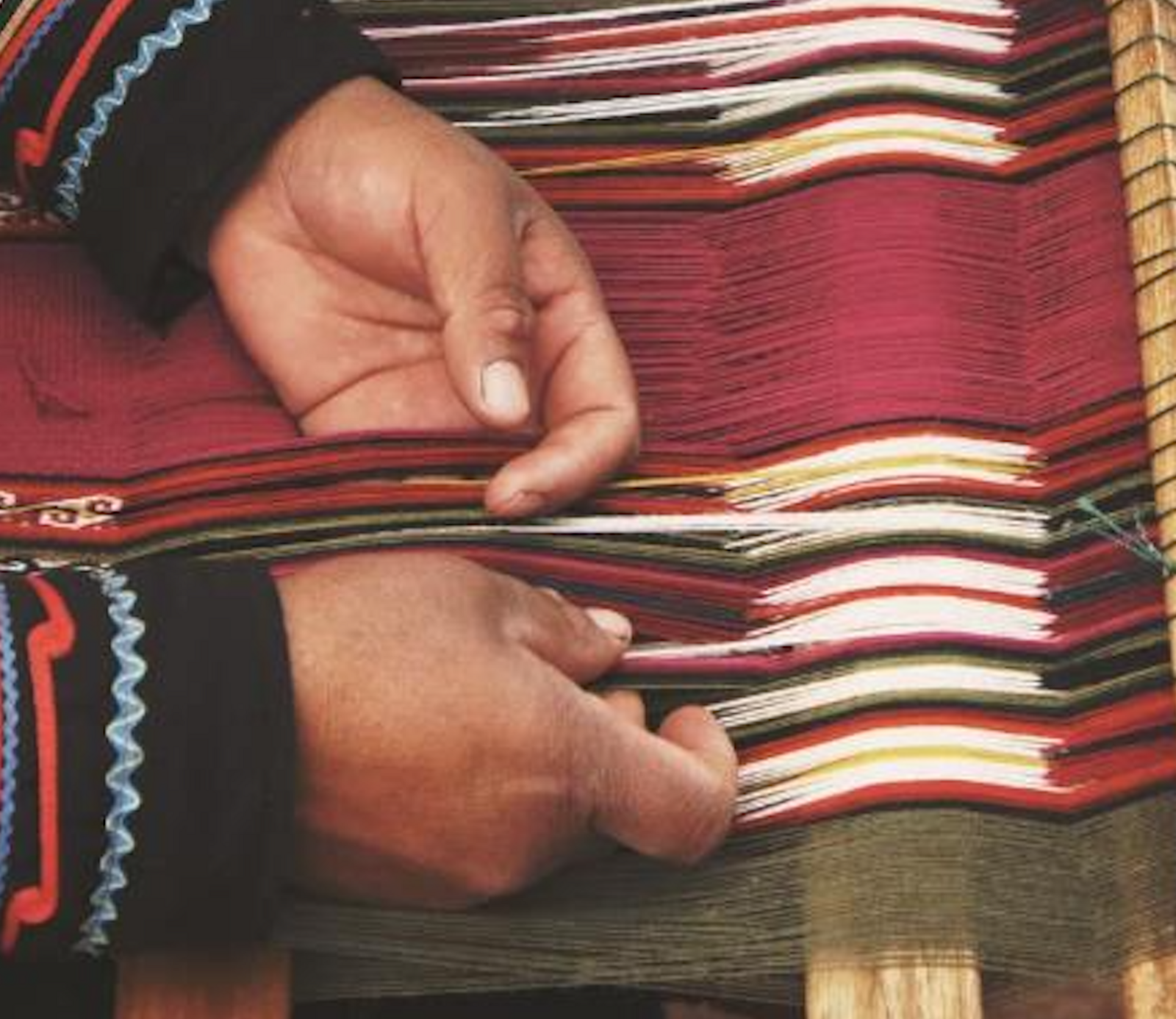
Detail Poster Weaving Study Day, Material Culture Forum, 11 June 2024. Copyright: University of Cambridge
Textile Thinking for the Future
Christiane Sauer Contributes to Weaving Study Day in Cambridge
Weaving | Biodesign | Textiles On June 11th, MoA Member Christiane Sauer will contribute to a Weaving Study Day organized by the Material Culture Forum at the University of Cambridge (UK). Her talk will explore textile potentials for a novel design approach. The hierarchical structure of fibre, yarn, fabric offers multiple possibilities to »program« a surface for specific performance in an applied context. Experimental prototyping and bio-inspired design become the base for resilient and adaptive structures that examine the boundaries between softness and rigidity, between material and shape, and between functionality and structure.
more
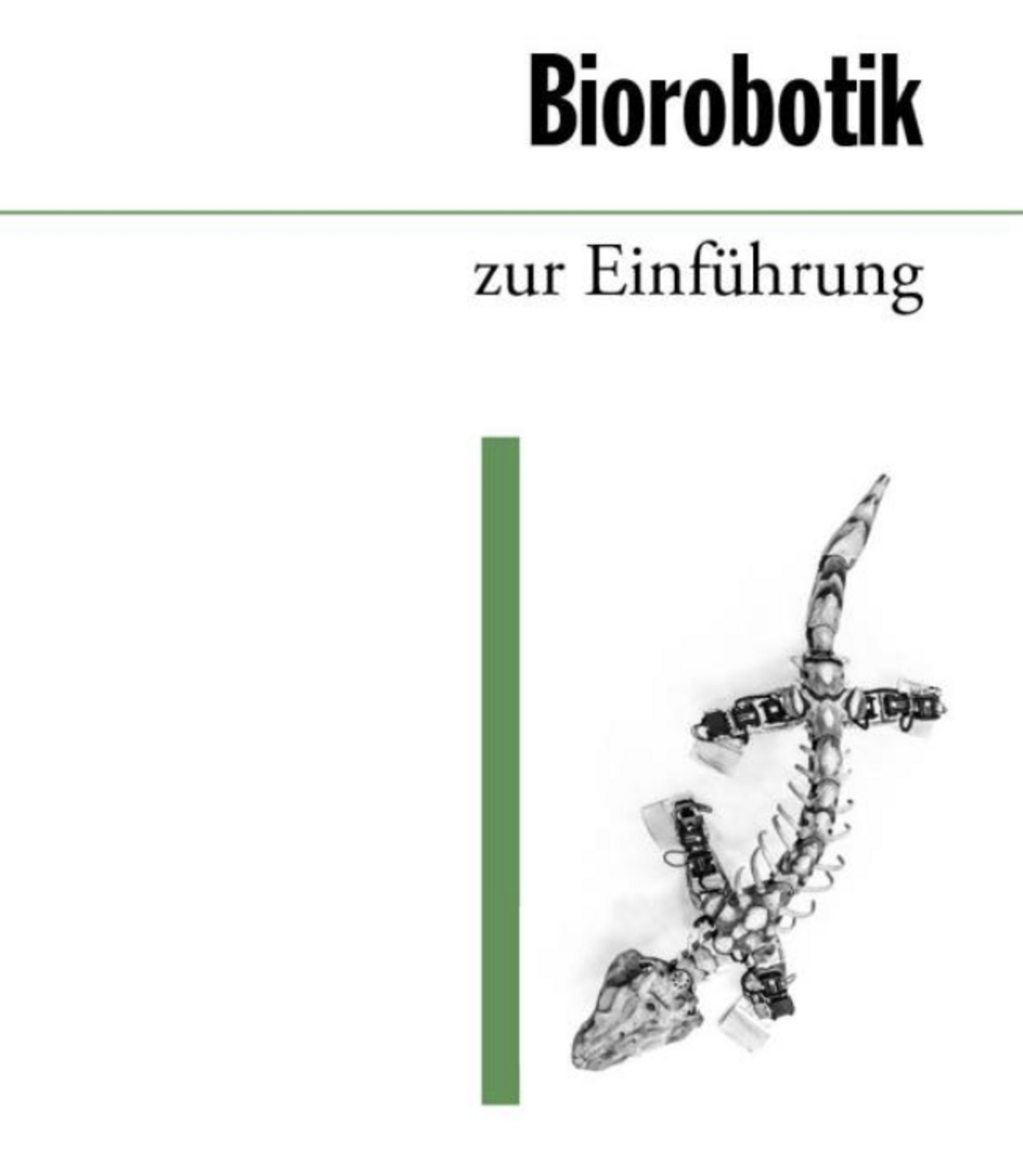
Marco Tamborini: Biorobotik zur Einführung
Biorobotik zur Einführung
Neue Publikation von Clustermitglied Marco Tamborini
Symbolic Material | Publications | Robotics | Biodesign Was ist Biorobotik? Unter welchen philosophischen, historischen und ethischen Voraussetzungen können bioinspirierte Roboter gebaut werden? Wie haben sich das Bild des Menschen und das Verhältnis von Natur und Technik durch die Herstellung von biohybriden Robotern verändert?
more
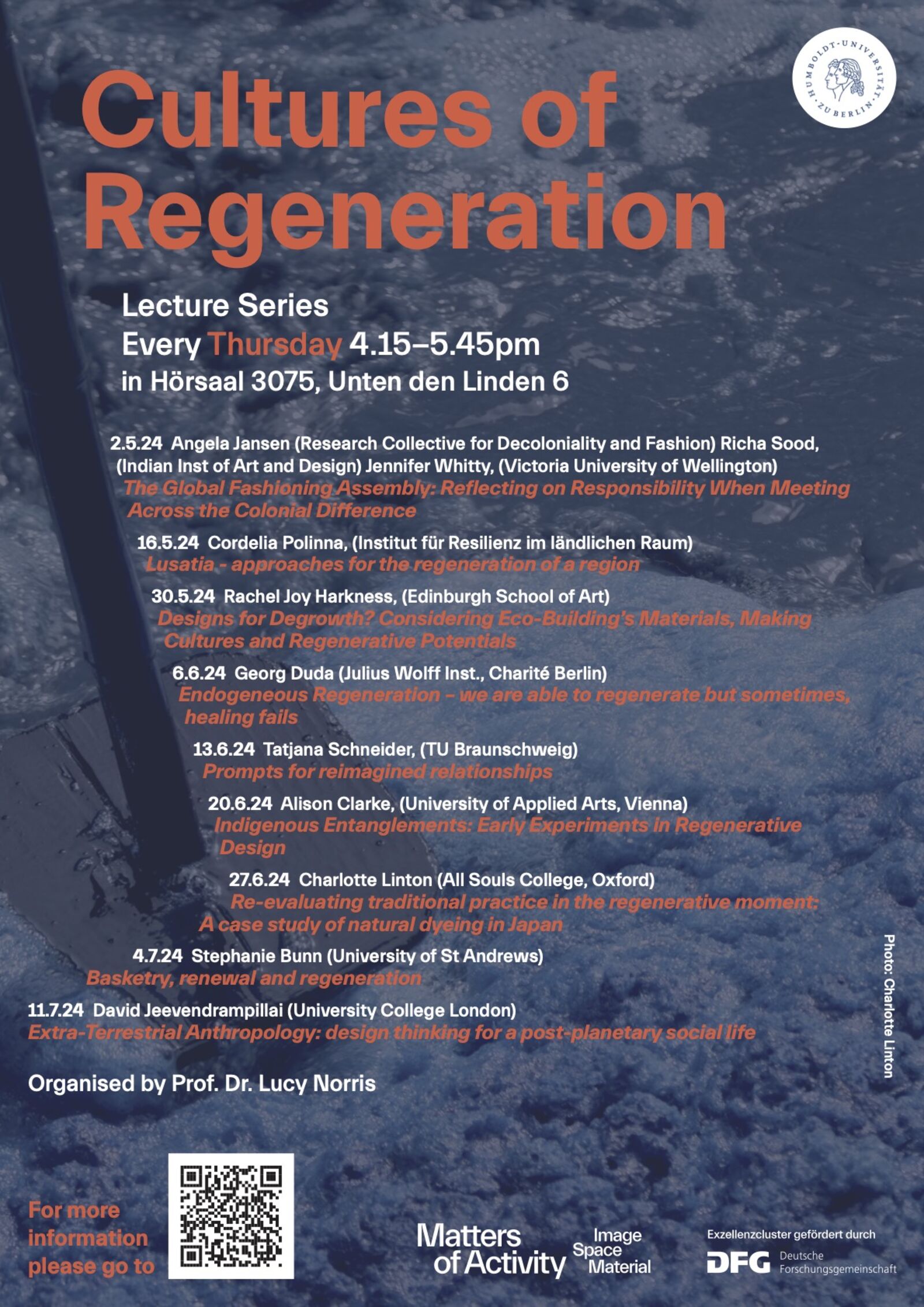
Poster Lecture Series 2024, Photo: Charlotte Linton. Copyright: Matters of Activity.
Cultures of Regeneration
On 11 July, David Jeevendrampillai spoke about Extra-Terrestrial Anthropology: Design Thinking for a Post-Planetary Social Life
Material Form Function | Teaching | Biodesign | Textiles Rapidly increasing socio-ecological damage and the urgent need for care, repair, and recovery have led to renewed calls for regenerative design as a means of wayfinding towards new forms of just and sustainable life on earth, prompting critical questions concerning the reconfigured pasts they invoke to the possible futures they open up. Aiming to (re)design the way we live to support our interdependence on natural ecosystems, regenerative systems thinking is being applied to fundamental fields of human activity, from food production and agriculture to medicine, textiles, architecture, rural revival, and the urban built environment to other-worldly materialities. The lecture series organized by Lucy Norris, which started on May 2nd, will, among other things, explore how traces of former ways of being in the world and concepts such as ›indigenous knowledge‹ are referenced as ways to move forward and ask what futures are being imagined by whom and for whom, and how some forms of living are enabled while other possibilities are negated.
more
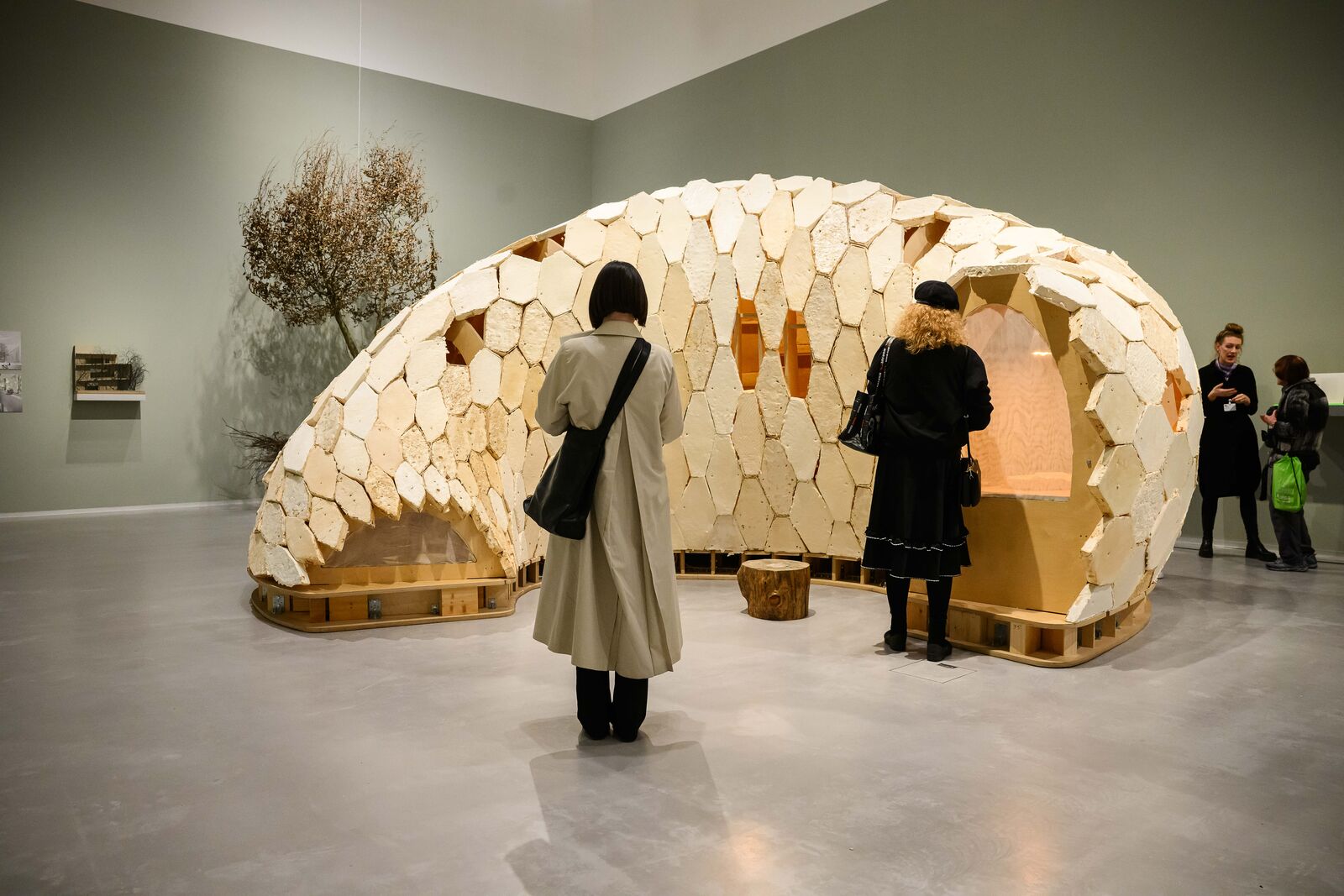
Exhibition view »Closer to Nature. Building with Mushroom, Tree, Clay«, Berlinische Galerie. Copyright: Photo: Harry Schnitger
Closer to Nature
Experimental Building by SciArt Collective MY-CO-X on Show at Berlinische Galerie
Object Space Agency | Fungi/Mycelium | Biodesign | More-Than-Human | Prototype / Model | Textiles | Temporality Architecture and nature inevitably compete for space. That poses a dilemma when resources are finite and the demand for space keeps growing. Besides, we know that the construction sector generates huge waste and emissions. All this has raised issues about the role of architecture: Does it need a shift in perspective? Could we build with nature instead of against it? The exhibition »Closer to Nature« at the Berlinische Galerie showcases three Berlin-based projects, that utilize the potential of mushrooms, living trees, and clay. This gives them an ecological quality, but also a completely new character: the buildings breathe, grow, and thus become alive themselves. One of the showcased projects is the experimental building MY-CO SPACE, which was developed, designed, and built by the interdisciplinary Berlin SciArt collective MY-CO-X, an initiative of the Department of Applied and Molecular Microbiology at TU Berlin under the direction of MoA member Vera Meyer with contributions by Dimitra Almpani-Lekka.
more
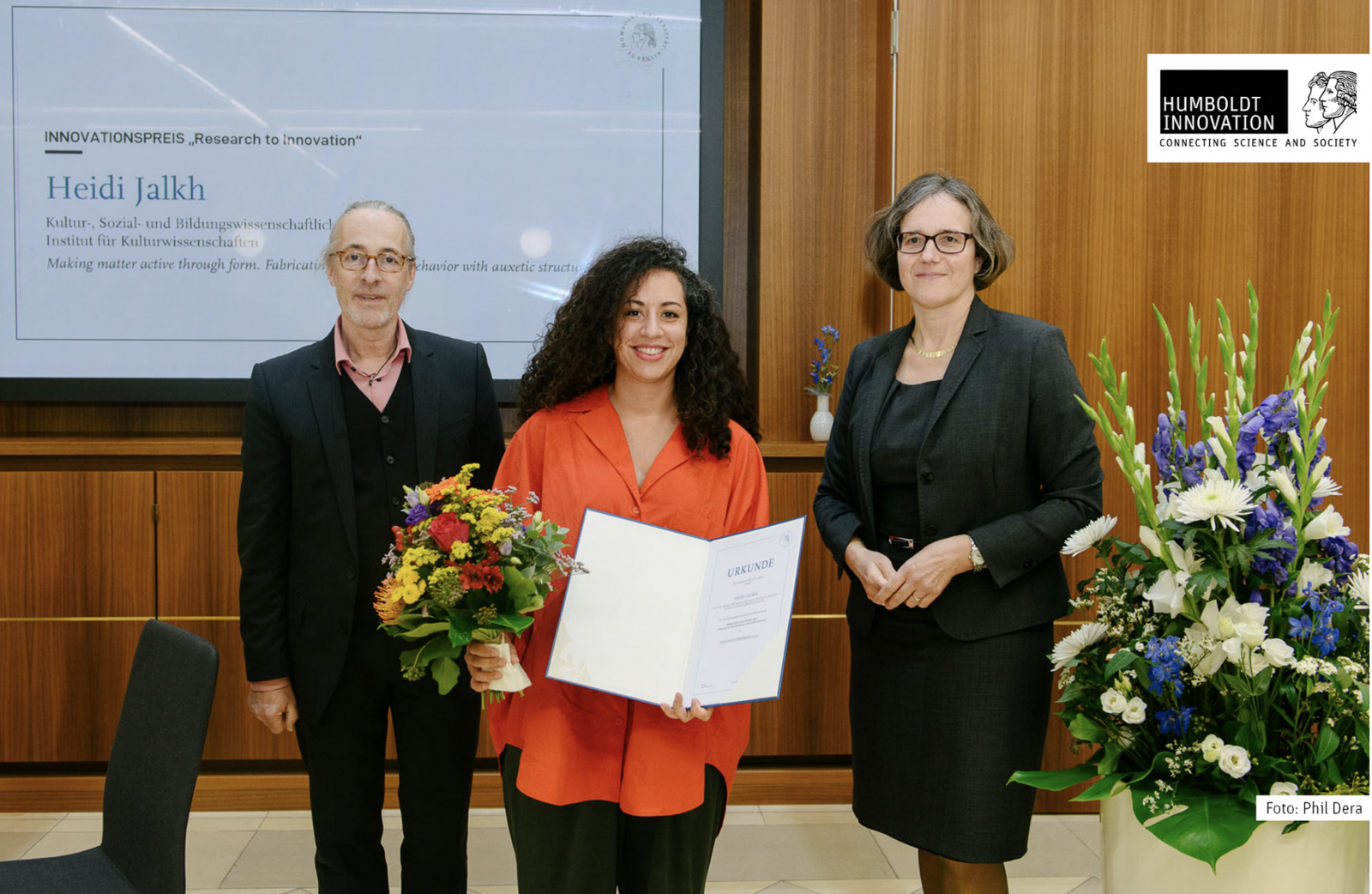
Presenting the Humboldt Award to Heidi Jalkh. Photo: Phil Dera. Copyright: Humboldt-Universität zu Berlin
Heidi Jalkh Awarded with Humboldt Price »Research to Innovation« 2022
Material Form Function | Master Open Design | Achievements | Teaching | Biodesign Cluster member Heidi Jalkh has been awarded for her master thesis »Making matter active through form. Fabricating bio-inspired behavior with auxetic structures« with the Humboldt Award 2022 in the category »Research to Innovation«. Our warmest congratulations! The thesis at the department of Cultural History and Theory and is part of the Master »Open Design« and shows how the use of geometry and spatial arrangement can be used to provide a conventional elastic material with unconventional behavior and functionality. Thus, through interdisciplinary research, Heidi Jalkh has succeeded in weaving concepts from biology, materials science, and engineering from a designer's perspective to create new »active materials«.
more
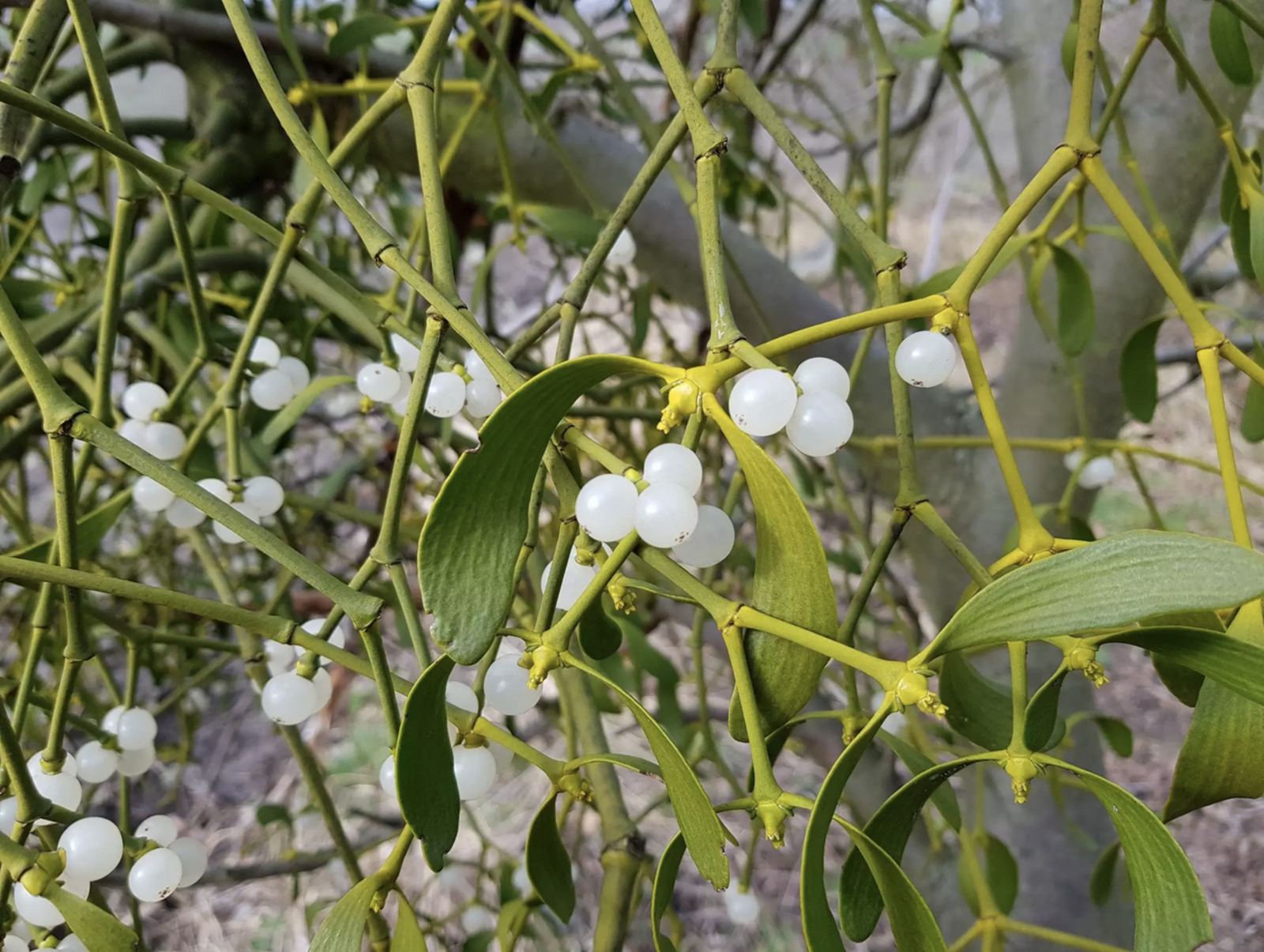
Close up of mistletoe berries containing sticky seeds. Copyright: Max Planck Institute of Colloids and Interfaces / Nils Horbelt
Natural Super Glue from Mistletoe Berries
A Cellulose-Based Material Could be Useful for Medical Applications such as Wound Sealant
Biodesign A team of researchers from the Max Planck Institute of Colloids and Interfaces (MPICI) and McGill University in Canada discovered strong adhesive properties of white-berry mistletoe. The mistletoe berry's flexible fibers adhere to both skin and cartilage as well as to various synthetic materials and could find application in many fields, such as wound sealant in biomedicine, through ease of processing.
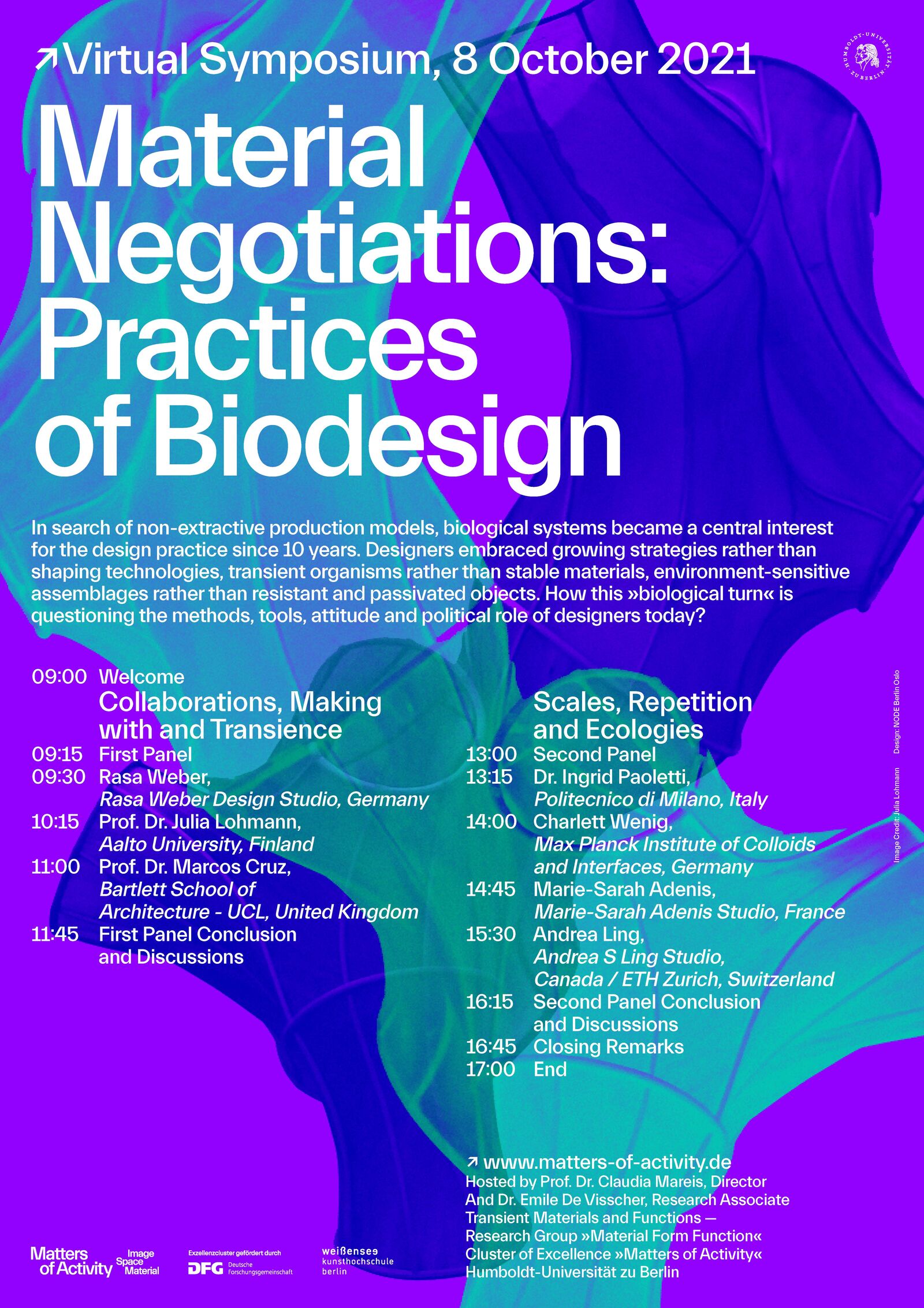
Poster virtual symposium »Material Negotiations«. Copyright: Julia Lohmann, adapted by NODE Berlin
Material Negotiations: Practices of Biodesign
Virtual Symposium on 8 October
Material Form Function | Science Communication | Biodesign In search of non-extractive production models, biological systems became a central interest for the design practice for 10 years. Designers embraced growing strategies rather than shaping technologies, transient organisms rather than stable materials, environment-sensitive assemblages rather than resistant and passivated objects. How this ›biological turn‹ is questioning the methods, tools, attitude and political role of designers today?
The virtual symposium »Material Negotiations« gathered design practitioners to discuss and understand the scope, challenges and interest of such a shift. The symposium was hosted by Prof. Dr. Claudia Mareis and Dr. Emile de Visscher as part of the »Material Form Function« group.
more
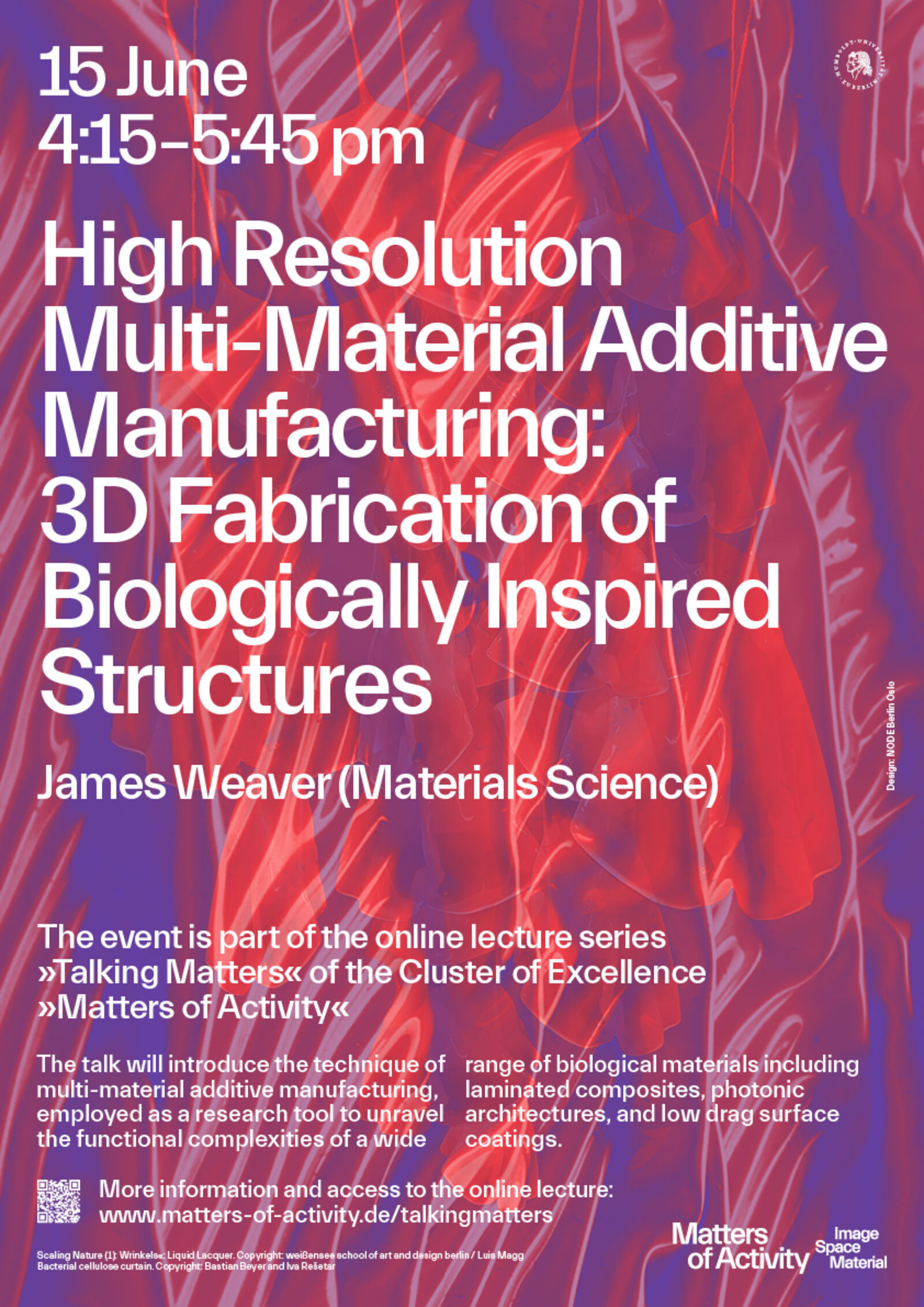
Scaling Nature (1): Wrinkles«: Liquid Lacquer. Copyright: weißensee school of art and design berlin / Luis Magg | Bacterial cellulose curtain. Copyright: Bastian Beyer and Iva Rešetar
3D Fabrication of Biologically Inspired Structures
»Talking Matters« Lecture Series Continues with a Talk by Materials Scientist James Weaver
Material Form Function | Science Communication | Biodesign On Tuesday, 15 June 2021, 4:15–5:45 pm, the Cluster lecture series »Talking Matters« continued with a talk by James Weaver from Harvard University. The materials scientist spoke on invitation of the project Material Form Function about »High Resolution Multi-Material Additive Manufacturing: 3D Fabrication of Biologically Inspired Structures«.
more
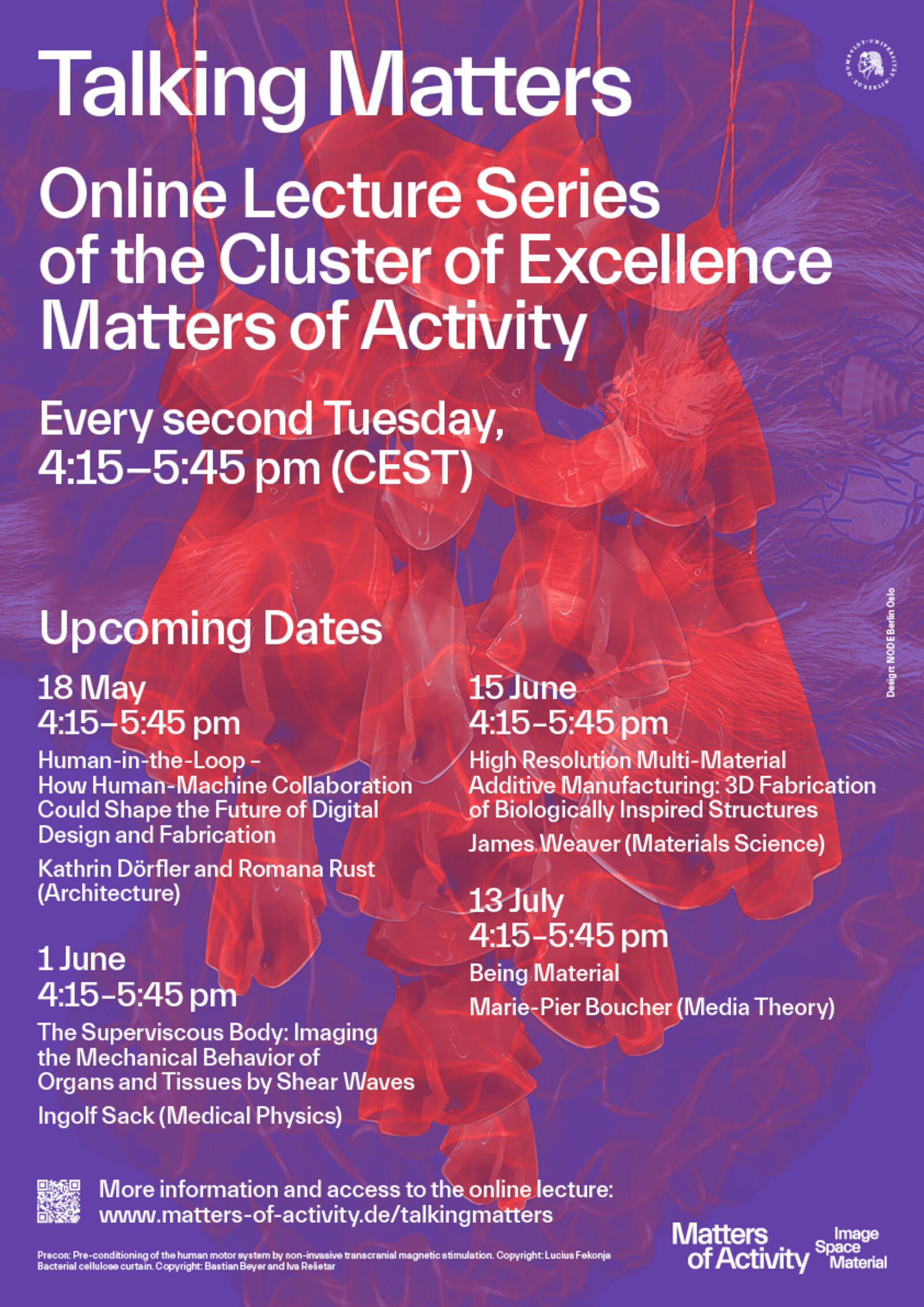
Poster Online Lecture Series »Talking Matters«, Copyright: Lucius Fekonja, Bastian Beyer, Iva Rešetar, adapted by NODE Berlin
Talking Matters
Online Lecture Series of the Cluster of Excellence »Matters of Activity«
Weaving | Filtering | Cutting | Material Form Function | Object Space Agency | Symbolic Material | Science Communication | Biodesign | Brain | Computational Design | More-Than-Human | Yarns/Fibers On Tuesday, May 18th, 2021, »Matters of Activity« launched the online lecture series »Talking Matters«, in which external speakers from various disciplines were invited by the six cluster projects to provide insights into their research, which is related to central issues of »Matters of Activity«. In addition to researchers and students from various disciplines, the lecture series was open to anyone interested in our research.
more
Can Bacteria Spin a Yarn? Kick-Off event »MitWissenschaft/ WeSearch«, Humboldt Forum Berlin, 29 April 2021. Copyright: Humbolt Forum
Can Bacteria Spin a Yarn? We Need a New Culture of Materials
Cluster Members Opened Event Series »MitWissenschaft/ WeSearch« at the Humboldt Forum
Filtering | Weaving | Bacteria | Biofilm | More-Than-Human | Science Communication | Yarns/Fibers | Biodesign On Thursday, April 29th, 7–9:30 pm, members of the Cluster gave insights into the research of »Matters of Activity« in an interactive live show, thus opening the event series »MitWissenschaft/ WeSearch« at the Humboldt Forum.
Using concrete examples from the Cluster projects »Weaving« and »Filtering«, MoA members Bastian Beyer, Alwin Cubasch, Peter Fratzl, Regine Hengge, Claudia Mareis, Léa Perraudin, Christiane Sauer and Wolfgang Schäffner showed how the natural sciences, the humanities and the design disciplines work closely together to find innovative solutions to contemporary problems.
more
»Materialwissenschaft – von der Biomimese zur Bioinspiration«
Guest Article from Peter Fratzl in the »Austria Presse Agentur – Science«
Material Form Function | Publications | Biodesign Peter Fratzl has published a guest article in »Austria Presse Agentur – Science« in the series »Lehrmeisterin Natur«. Under the title »Materialwissenschaft – von der Biomimese zur Bioinspiration«, he explores the question of what makes natural materials so interesting for materials scientists. On the one hand, there are the renewable raw materials such as wood or cotton, which are widely used as building materials or textiles. On the other hand, it is the fact that nature succeeds in producing materials with an incredible variety of properties and applications from comparatively few and not always very high-quality basic materials. The article is available in German.
more
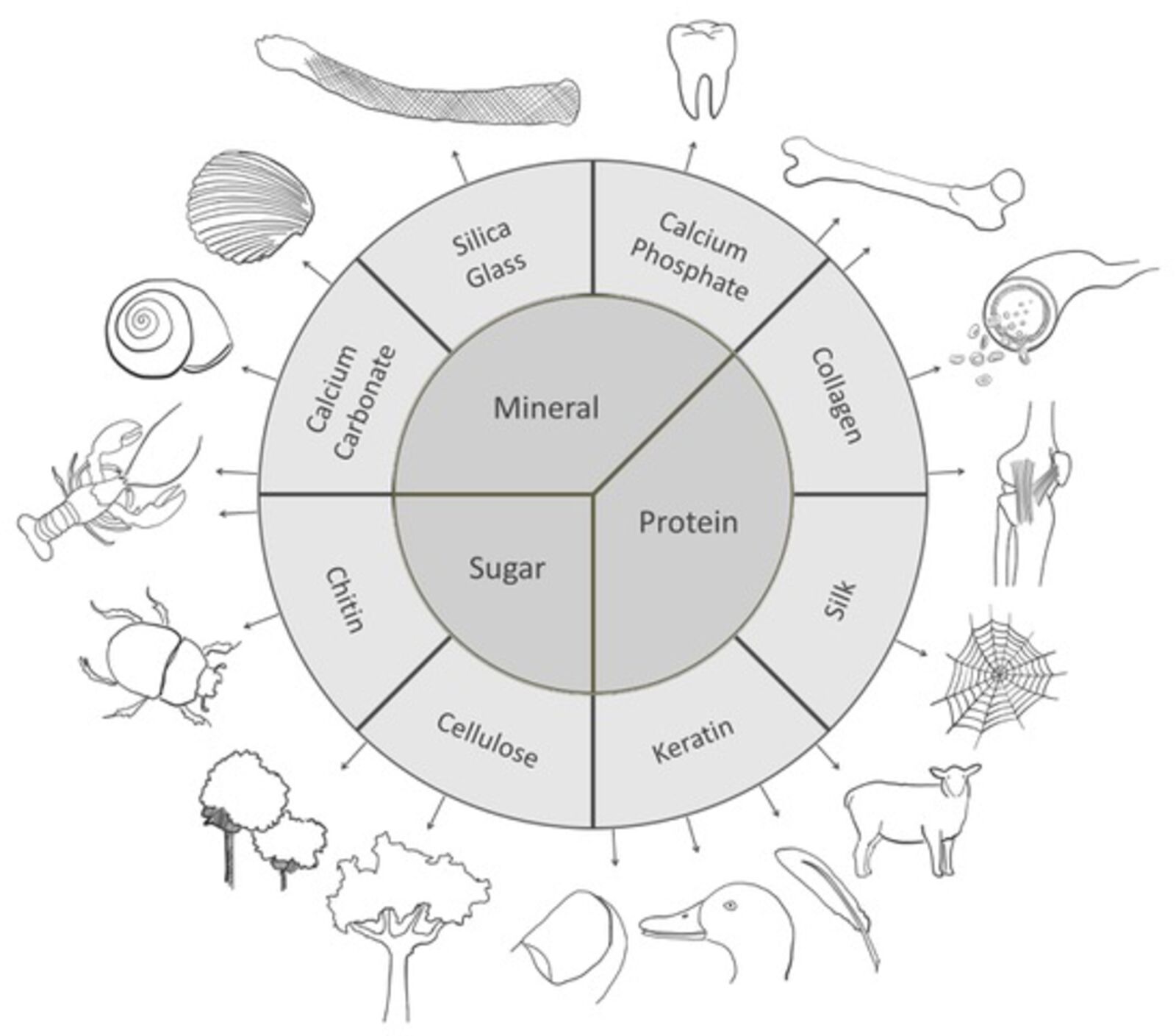
Biological materials are built with a limited number of building blocks, based on polysaccharides, proteins, and minerals. Copyright: Julia Blumenthal
Interdependence of Structure and Function in Biological Materials
Peter Fratzl holds Lecture Series for an Interdisciplinary Audience at HU
Material Form Function | Teaching | Biodesign The lecture series took place every second Tuesday 4:15–5:45 pm and was addressed to a pluridisciplinary audience, including sciences, design and cultural studies. All required basics from biophysics and biochemistry to mechanics were provided. The lecture series introduced relevant structural features from molecular to macroscopic scales using examples for materials based on proteins or on polysaccharides, in particular cellulose and chitin.
more
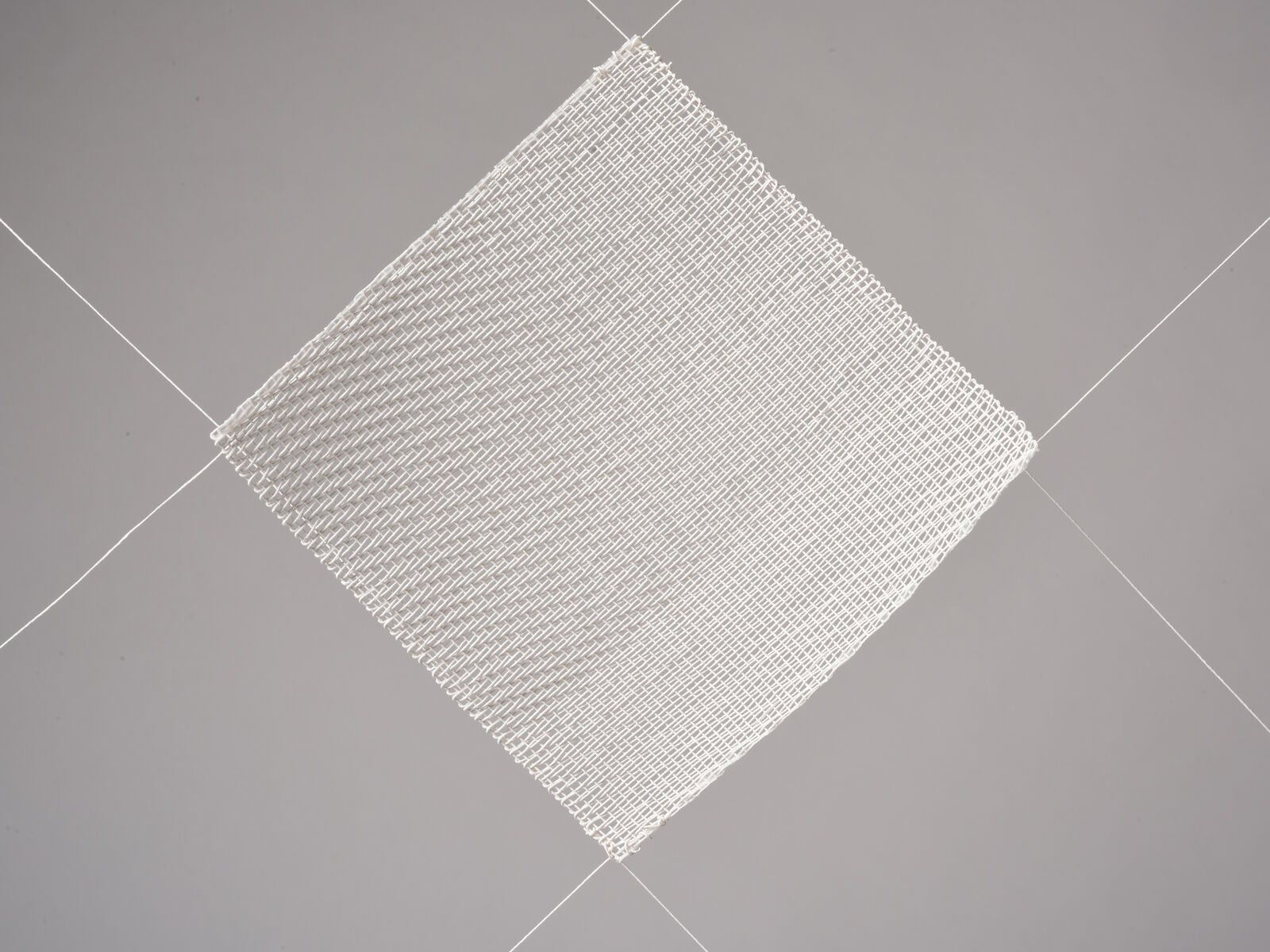
Hydroweave. Copyright: Stefanie Eichler & Juni Neyenhuys, weißensee school of art and design berlin
»Hydroweave« at the Raumprobe Material Award 2020
The Work was Realized at weißensee school of art and design berlin Within the Framework of the MoA Design Studio
Achievements | MoA Design Research Studio | Teaching | Biodesign | Textiles »Hydroweave« by Stefanie Eichler and Juni Neyenhuys was awarded a recognition in the field of »Study« at the Raumprobe Material Award 2020. The project, which centers on a research-based design approach, was created in 2019 at weißensee school of art and design berlin as part of the MoA Design Studio »Scaling Nature (1): Wrinkles« under the direction of Prof. Christiane Sauer. Since 2005, Raumprobe has been a constantly growing online material database and physical material exhibition in Stuttgart. Raumprobe has been awarding the prestigious Material Prize annually since 2013, recognizing special materials.
more
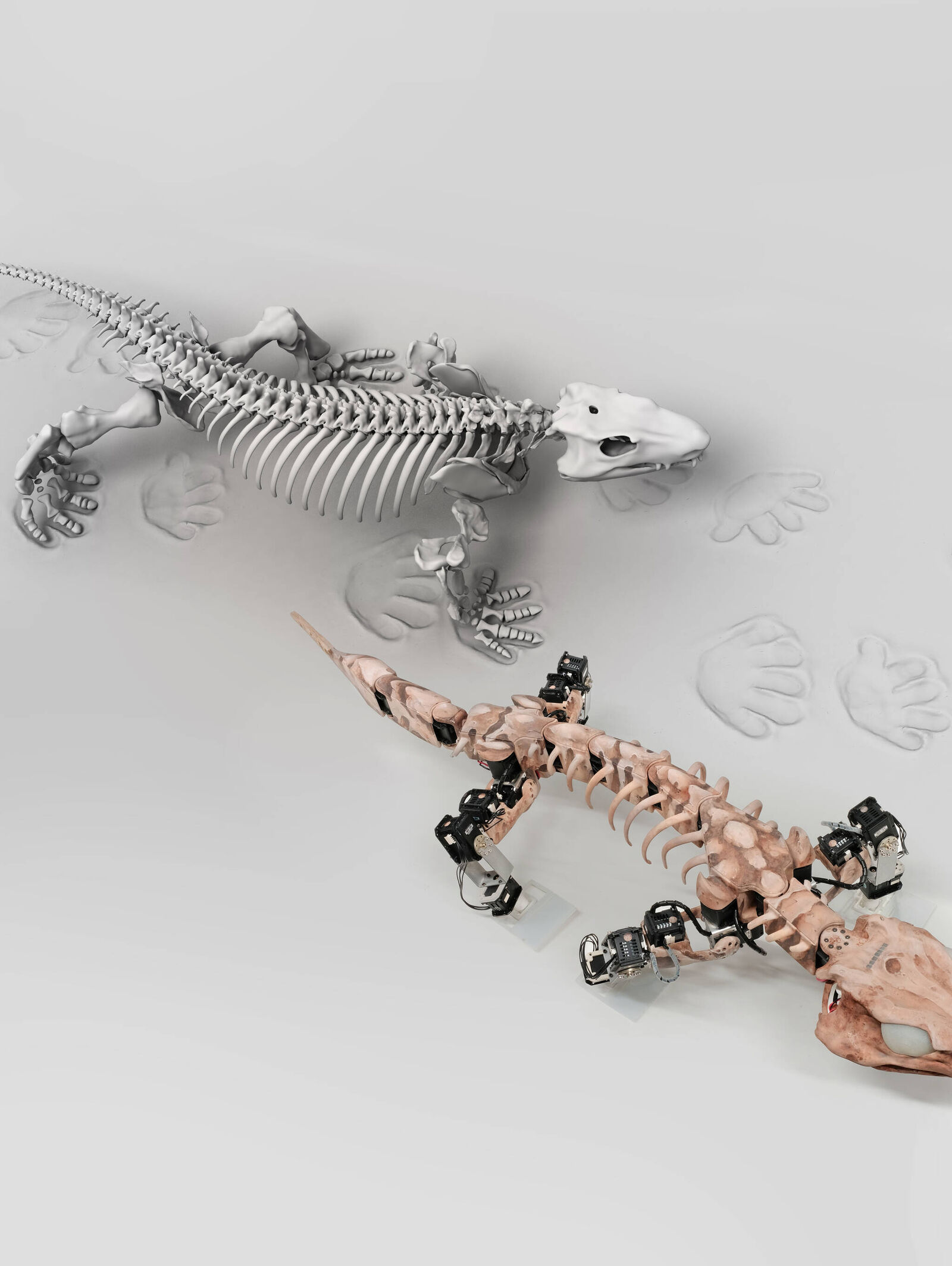
Copyright: Jonas Lauströer, Amir Andikfar, John Nyakatura (HU Berlin)
Reverse-engineering the Locomotion of a Stem Amniote – Insights from a Multidisciplinary Approach
Hosted at ExC Science of Intelligence our Member John Nyakatura Talks About Contemporary Paleobiological Research on 14 January
Cutting | Biodesign Reconstructing the locomotion of key vertebrate fossil specimens offers insights into their palaeobiology and helps to conceptualize major transitions in vertebrate evolution. A unique combination of an articulated nearly complete early land-living vertebrate fossil specimen and fossilized trackways was the starting point for an in-depth reconstruction of the locomotion based on the integration of image-based analyses with engineering techniques. The reconstruction involved experimental as well as computer-aided modeling approaches (›virtual paleontology‹).
more
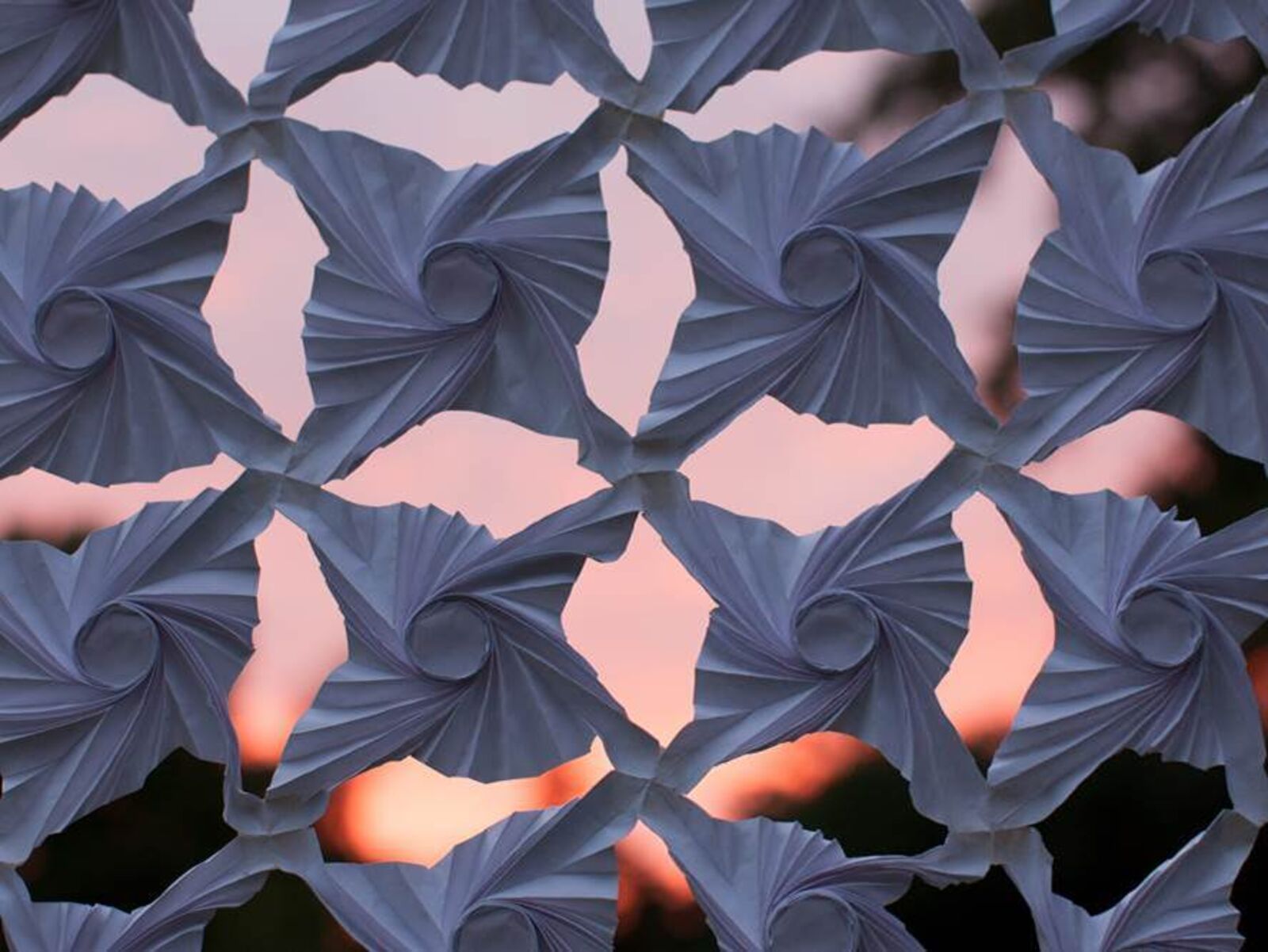
Yin 阴 , Cindy Peng. Copyright: weißensee school of art and design berlin, Cindy Peng
Scaling Nature (3): Growth
Works on Display at weißensee school of art and design
Weaving | Material Form Function | Teaching | MoA Design Research Studio | Biodesign The MoA Design Research Studio on »Growth« was a continuation of the »Scaling Nature« series introduced in Summer 2019. In this context, the core idea of the studio was to investigate matter as an active agent in the design process. This means that it has its own innate capacity of formation and performance, that is being designed from the bottom up. Scaling nature can be understood as the process of extracting principles from naturally occurring systems and taking them as inspiration for specific applications – during this process scaling operations necessarily are one key aspect of this translation. The results of the MoA Design Research Studio on »Growth« were on internal display at the weißensee school of art and design berlin from September 22nd to October 14th, 2020.
more
Cluster Member Clemens Winkler becomes Jury Member at »Gingko Bioworks –The Organism Company«
Residencies between Creative Disciplines and Synthetic Biology
Object Space Agency | Achievements | Biodesign At »Gingko Bioworks – The Organism Company« designers can spend a three month residency working at the intersection of creative disciplines and synthetic Biology. Through an open call process, they invited designers to submit a design project proposal in response to the theme: »Skin: Designing Biological Interfaces«. Cluster Member and Design Researcher Clemens Winkler was part of the jury. The jury members will now provide mentorship during the residency and interact with the residents on a regular basis.
more
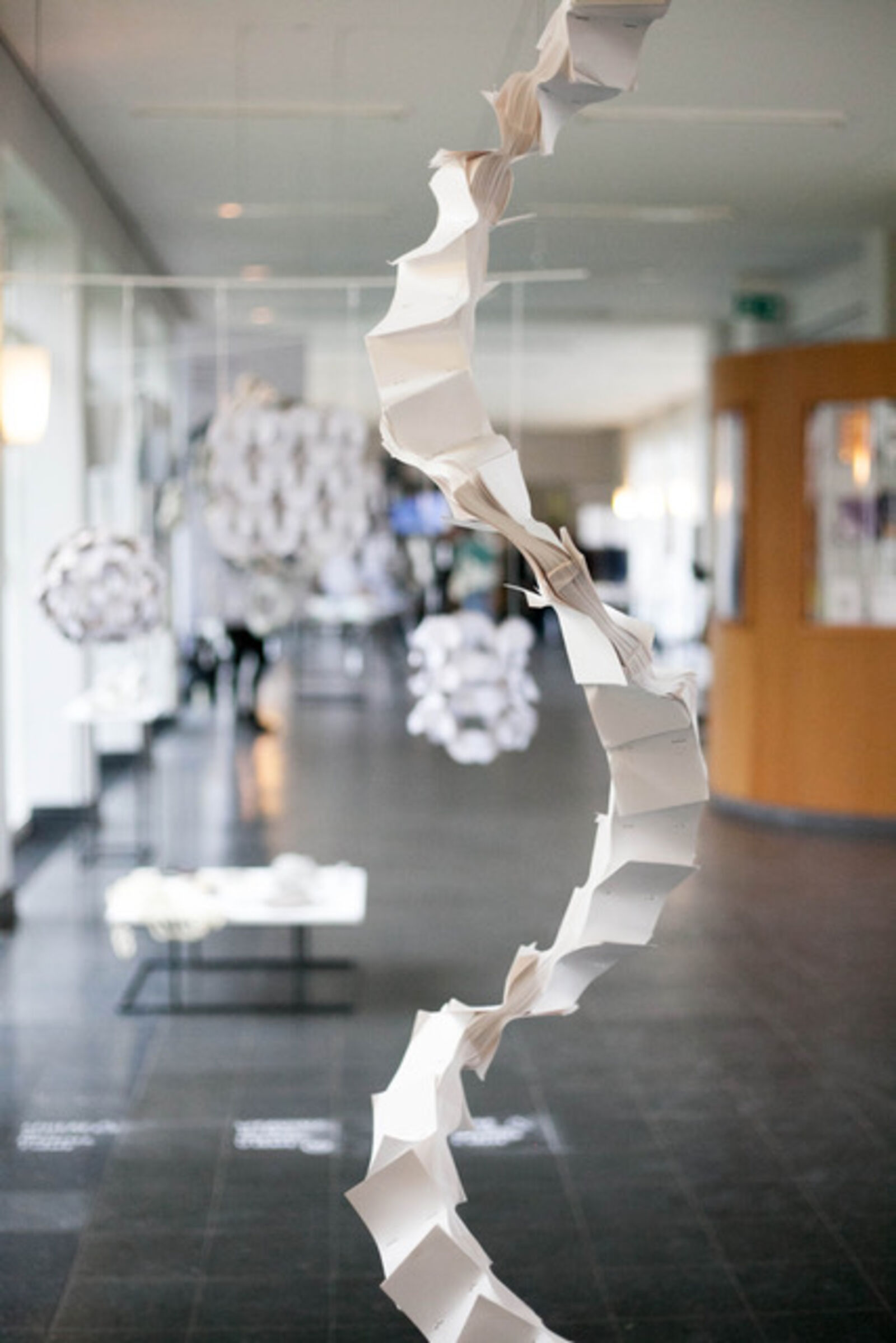
»Scaling Nature (2): Fibers, Muscles and Bones« Final Presentation. Copyright: weissensee academy of art berlin
MoA Design Studio: Scaling Nature (2): Fibers, Muscles, Bones
Final Presentation at weißensee school of art and design berlin
Weaving | Material Form Function | Teaching | MoA Design Research Studio | Biodesign On February 11th, 2020 the final presentations of MoA Design Studio »Scaling Nature (2): Fibers, Muscles and Bones« took place at weißensee school of art and design berlin. We are very happy that many MoA Members were able to attend and discuss the students' works, as the final presentations showcased the inspiring journey of this semester's research-based design projects.
more
Animal Materialities
Compositions and Practices in the History of Science
Weaving | Biodesign The Workshop »Animal Materialities« organised by Lisa Onaga & Laurence Douny (project »Weaving«) took place at Max Planck Institute for the History of Science, Berlin, Dec 5-6, 2019. The workshop examined the range of components of animal bodies used and transformed over time by animals, and humans.
more
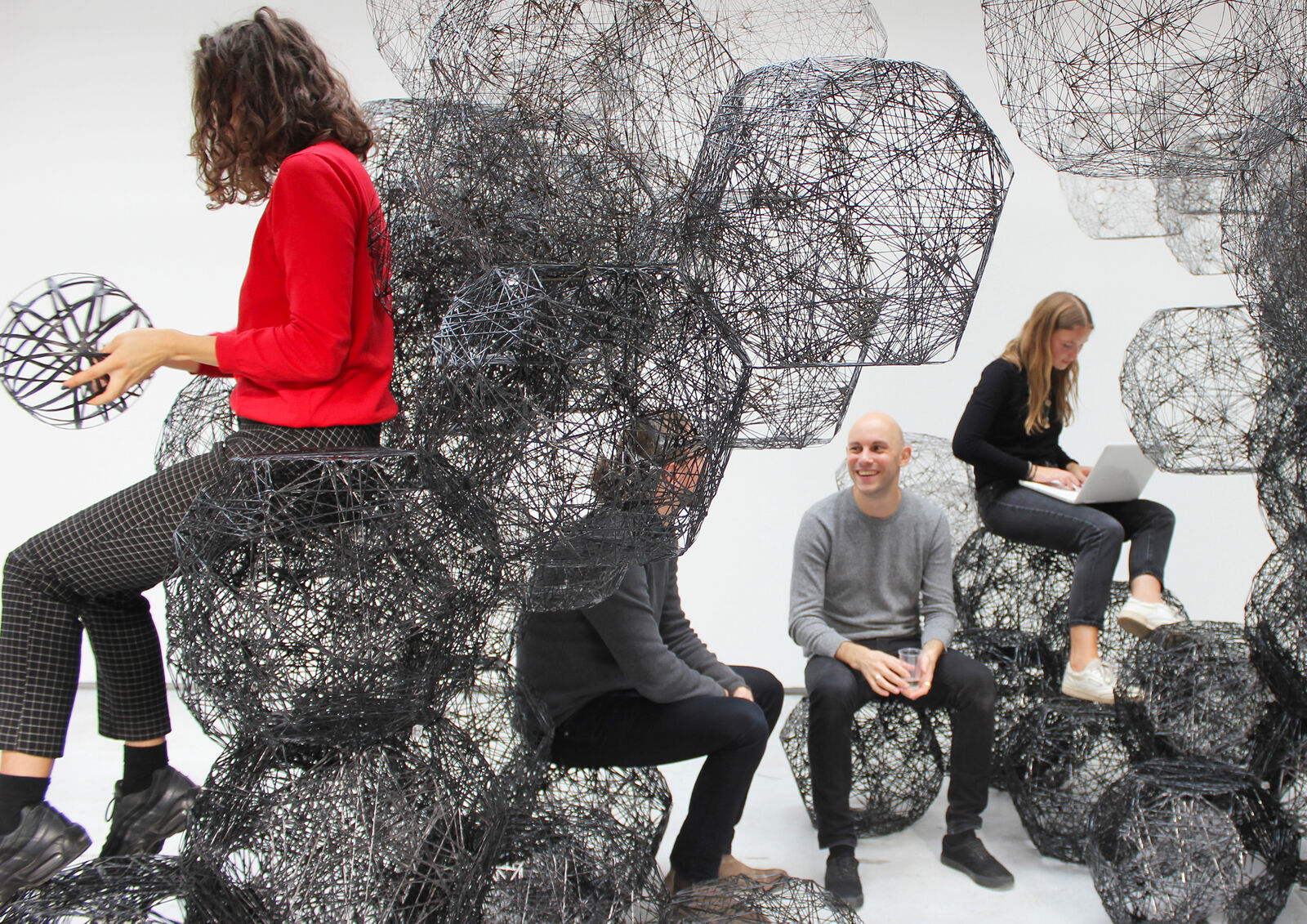
Stone Web – Spatial module system made from basalt fibre at the weissensee academy of art berlin (Idalene Rapp, Natascha-Katharina Unger, Christiane Sauer). Copyright: weissensee academy of art berlin, I. Rapp, N. Unger
Nature as Source of Inspiration
The Innovation Potential of Bio-inspired Materials
Material Form Function | Science Communication | Biodesign Nature is a source of inspiration for the production of new materials. A project by acatech in cooperation with the Cluster Co-Director Prof. Dr. Dr. h.c. Peter Fratzl, which was funded by the German Federal Ministry of Education and Research (BMBF), highlights the innovation potential of bio inspired materials – from chemistry and energy to medicine and robotics, art and design.
more
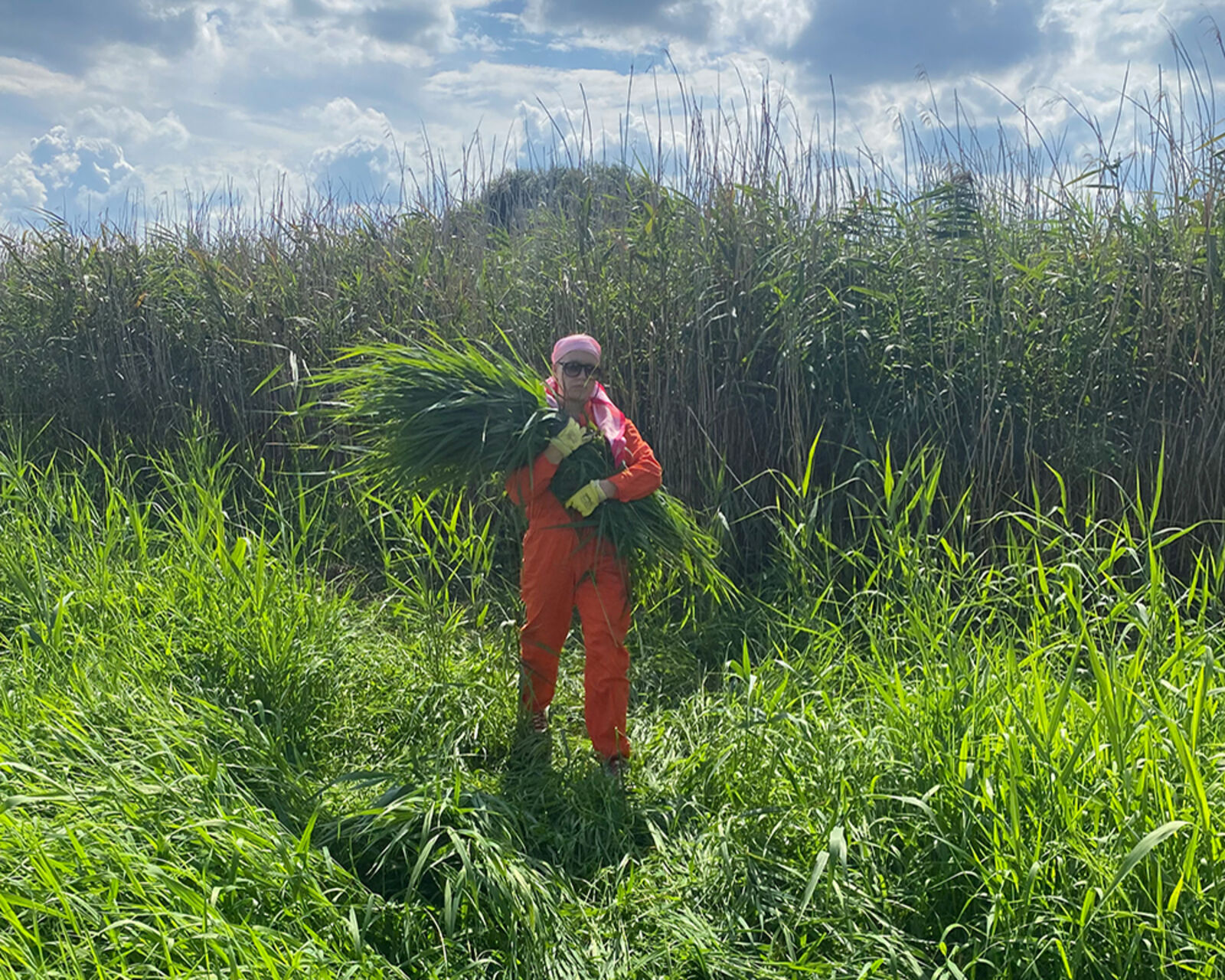
Harvesting reed in Brandenburg for mechanical testings of future design applications. Photo: Charlett Wenig
Paludicultures
Biodesign | Climate | More-Than-Human | Water How might we (re)learn ways of living well in re-wetted landscapes, develop appropriate technologies of making with local resources, and speculate on entangled emergent futures in watery worlds? A collaboration between Charlett Wenig, an interdisciplinary material researcher, and Lucy Norris, a social anthropologist working in the field of design, this project looks at the potential of peatland resources (especially reed canary grass
Phalaris arundinacea, and water sedge
Carex aquatilis) as materials in the proposed wetlands of northern and eastern Germany.
more
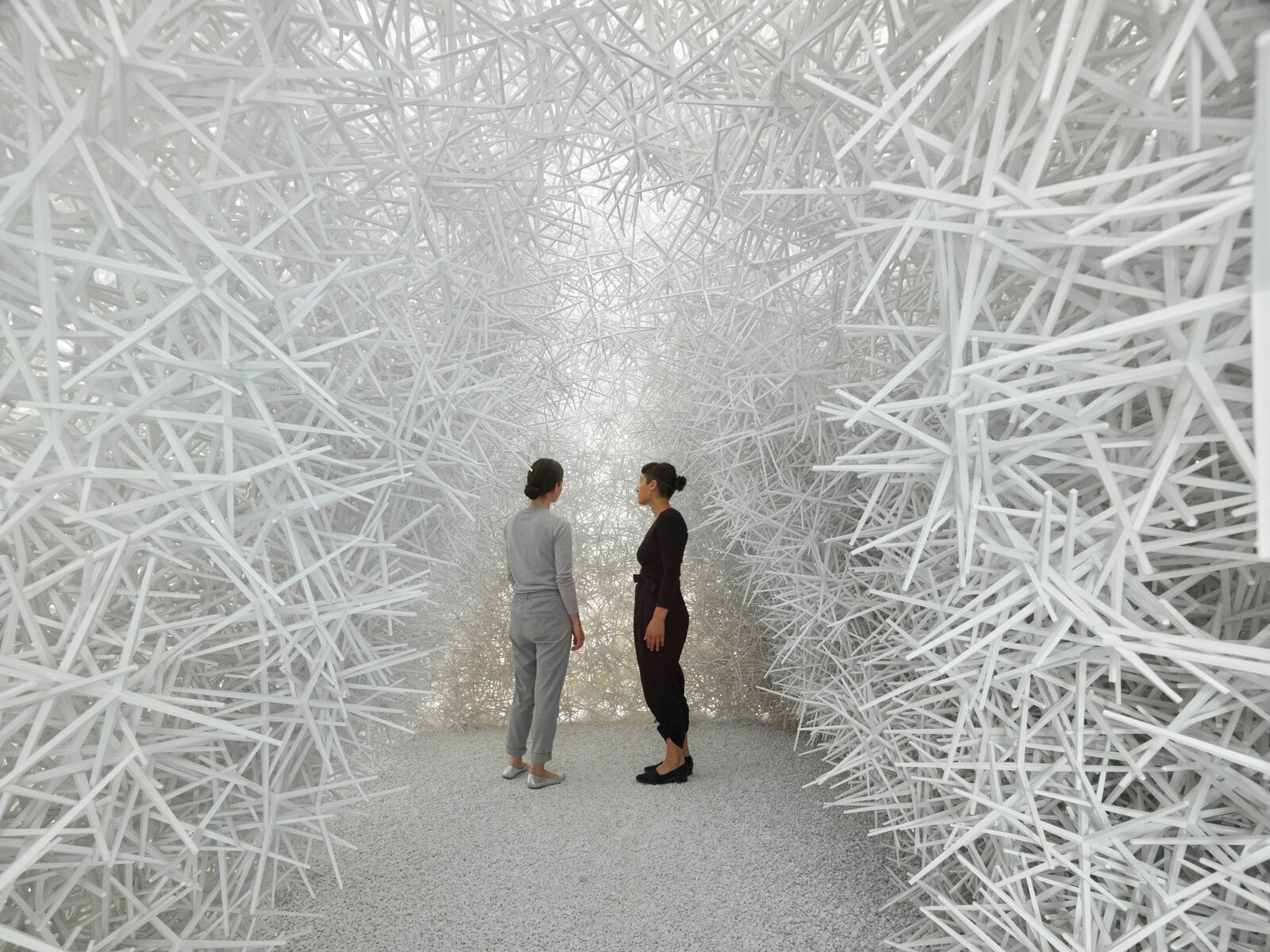
»Syntopia 0—Anthropos I Human«, Karola Dierichs, 2024. Photo: Roland Halbe
Syntopia 0—Anthropos Human
Biodesign | Computational Design »Syntopia 0—Anthropos I Human« is a critical architectural response to anthropogenic mass surpassing living biomass around the year 2020.»Syntopia 0« is part of a collection of architectural prototypes investigating the notion of syntopy, a term which was coined in biology by Luis René Rivas in 1964. The term is a combination of the Greek words syn*meaning together and *topos meaning place. To develop Syntopia thus means to create designs sourced from and situated within a specific site—a topos.
more
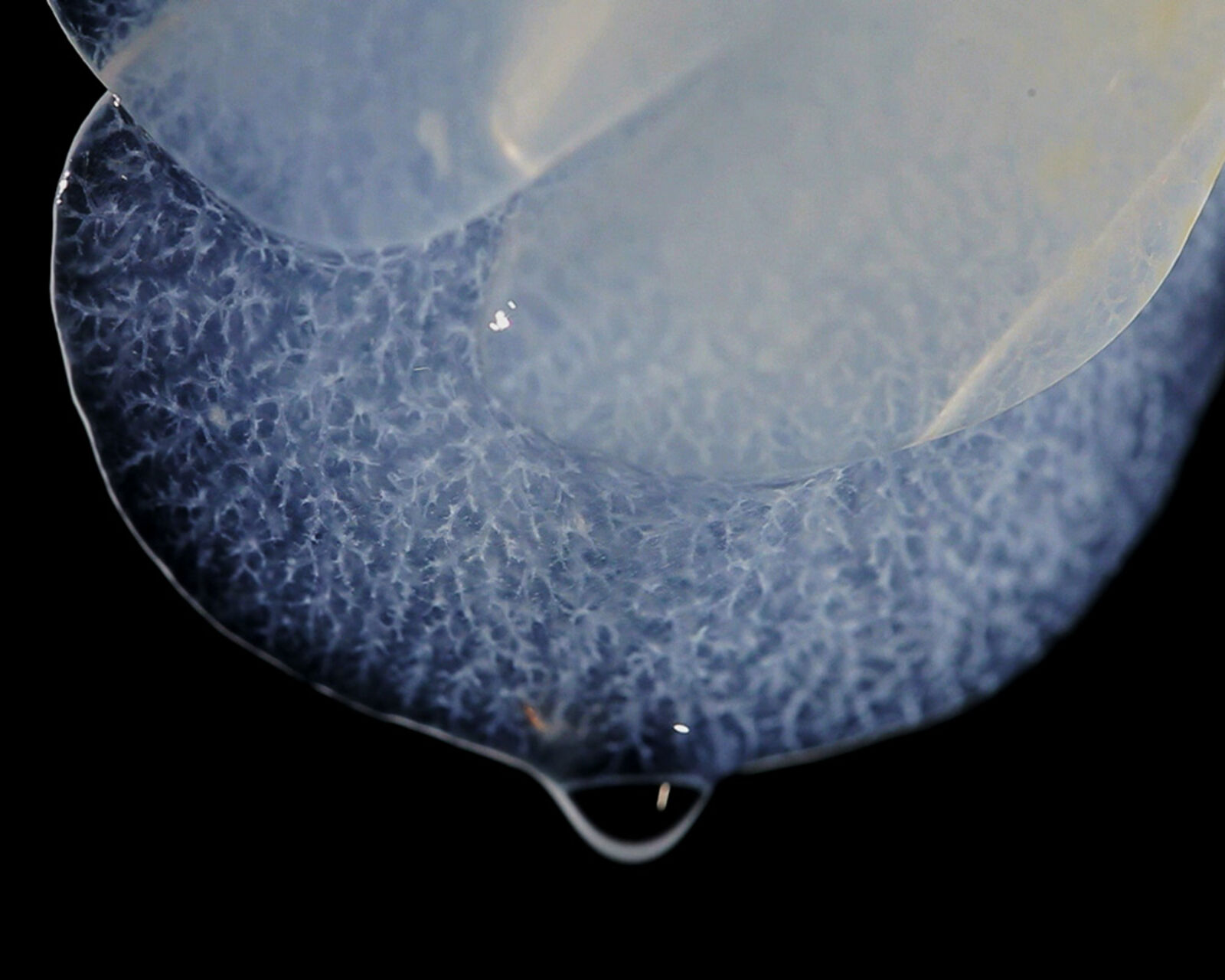
Extracellular matrix. Experiments by Emile De Visscher, 2020. Credits and copyright: Experimental Surgery, Charité.
Vascularizations
Biodesign »Vascularisations« stems from experimental surgery and explores methods for the (re-)generation of vascular structures that are environmentally sensitive, and have regenerative and evolutive functions.
more
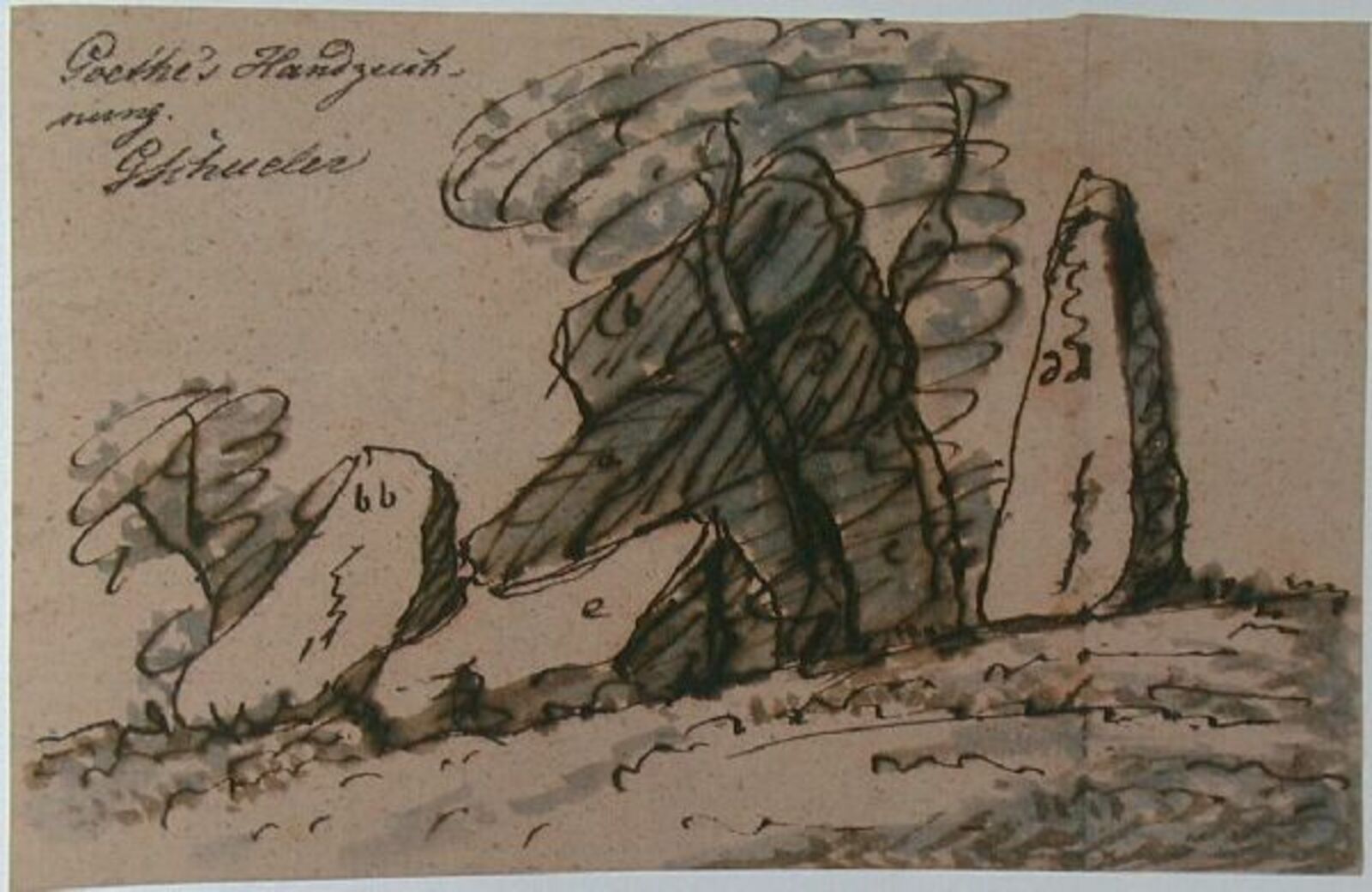
Johann Wolfgang von Goethe, The fallen granite blocks of the Luisenburg in the Fichtelgebirge, 1820, pen and brown ink, gray wash, on greyish paper, 110 x 171 mm, private ownership
Morphology Matters
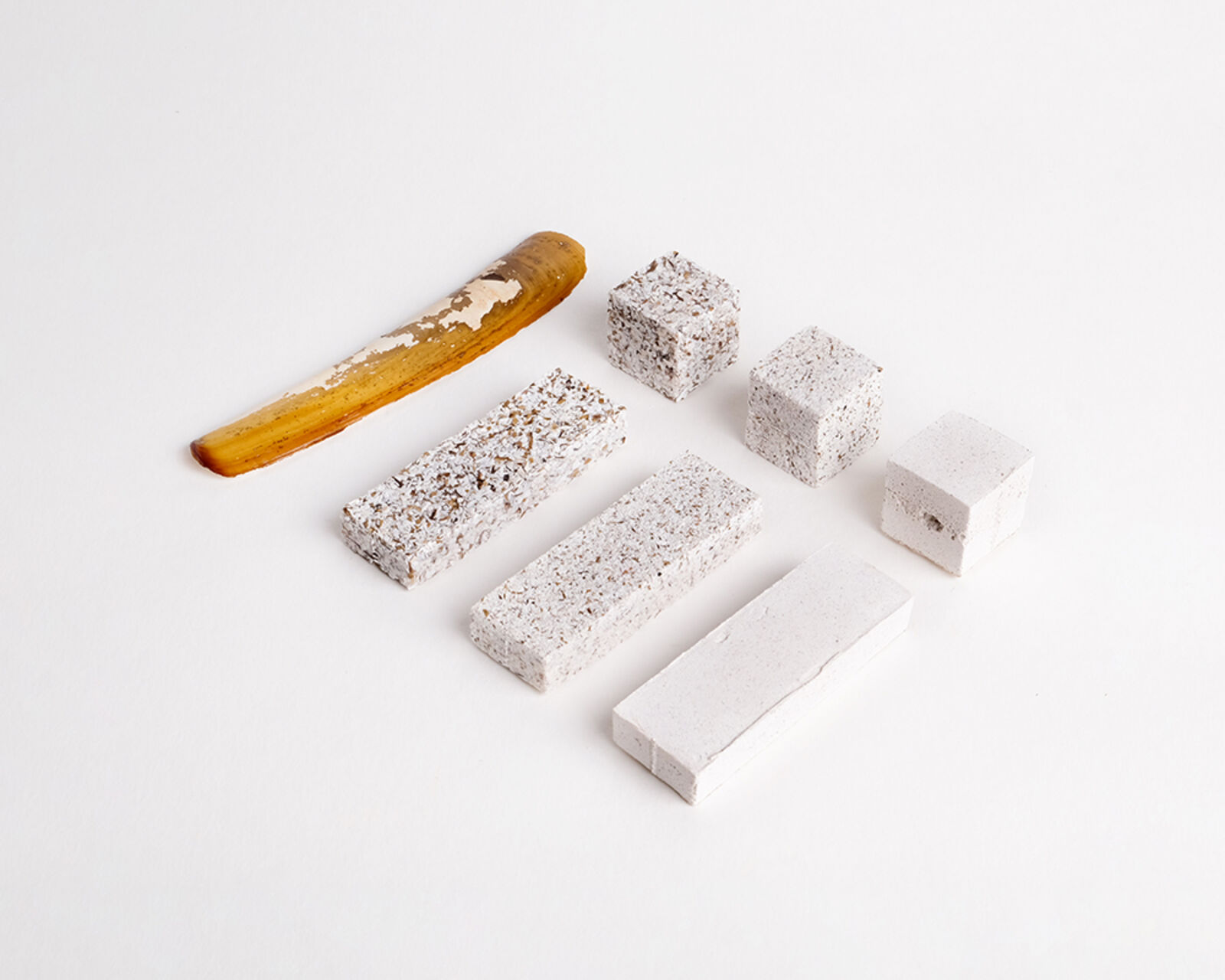
CONQ samples. Copyright: Heidi Jalkh and Angie Dub
CONQ
Marine Biobased Materials for the Built Environment
Biodesign | Ocean | Circular Economies | Prototype / Model Environmental architect Angie Dub and experimental designer Heidi Jalkh, based in Buenos Aires, are finding ways to turn sea shell waste into a sustainable material for the built environment. By combining crushed seashells with algae-based biopolymers, they create a heat-free bioceramic made entirely from marine biomass. In the current phase, material samples are undergoing testing to determine their physical properties and characteristics. These evaluations will inform and guide the exploration of possible implementation scenarios for the material in various applications.
more