Embracing Collision at Shanghai Tech University
Anna Schäffner Gave Student Workshop at CASE Lab
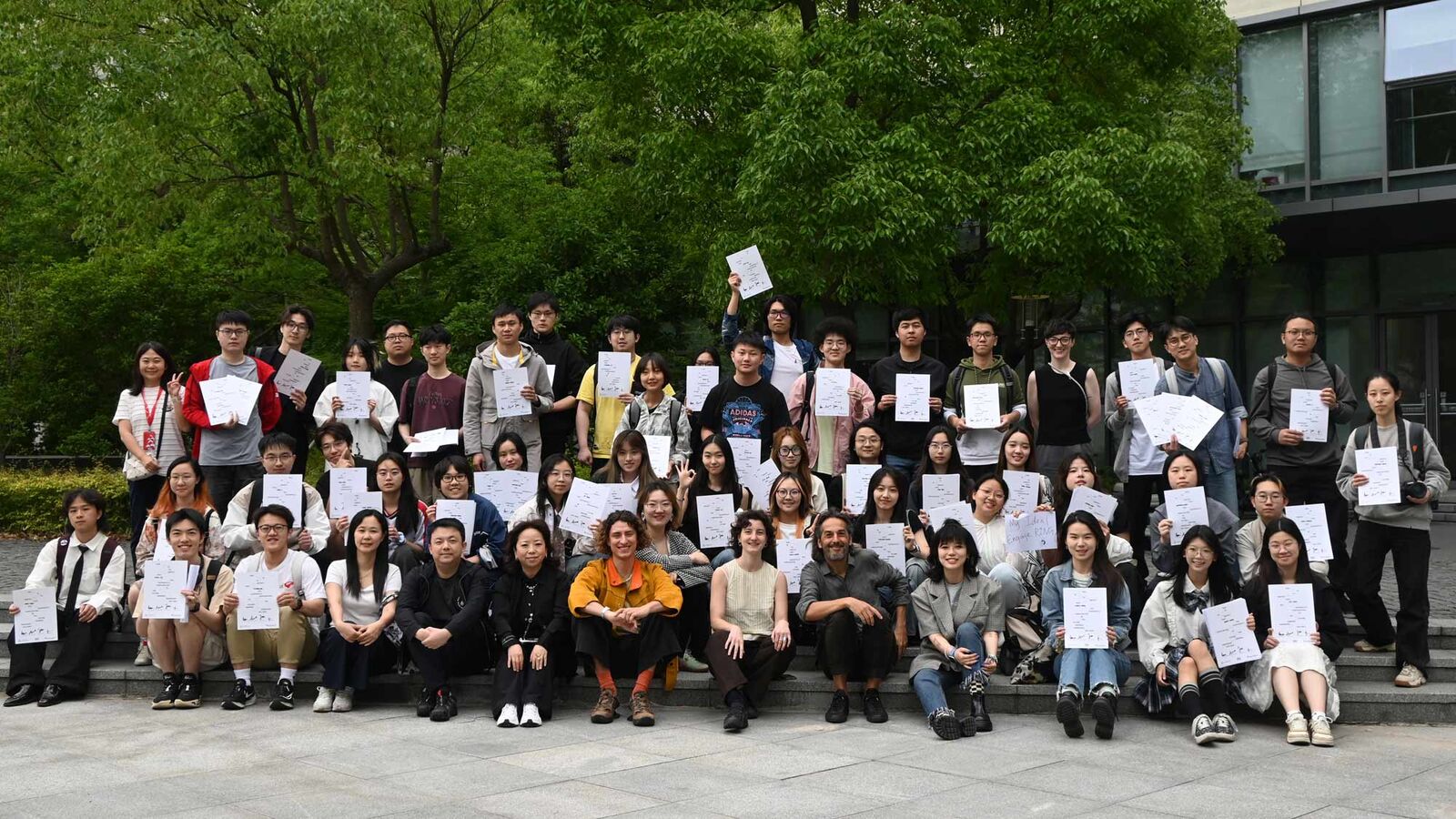
Filtering | Robotics | Teaching In May 2025, Ars Electronica and ShanghaiTech University co-curated a series of artist-led student workshops together with four different research labs of the university. These workshops aimed to introduce ArtScience as a research and production practice that nurtures innovation by bridging the worlds of art, science, and technology. For a week, students were invited to explore ArtScience as a research and production practice. We're delighted that Cluster member Anna Schaeffner was part of this great program with the workshop »Embracing Collision« at the CASE Lab, encouraging participants to rethink the design of objects and devices by embracing collision rather than avoiding it.
more
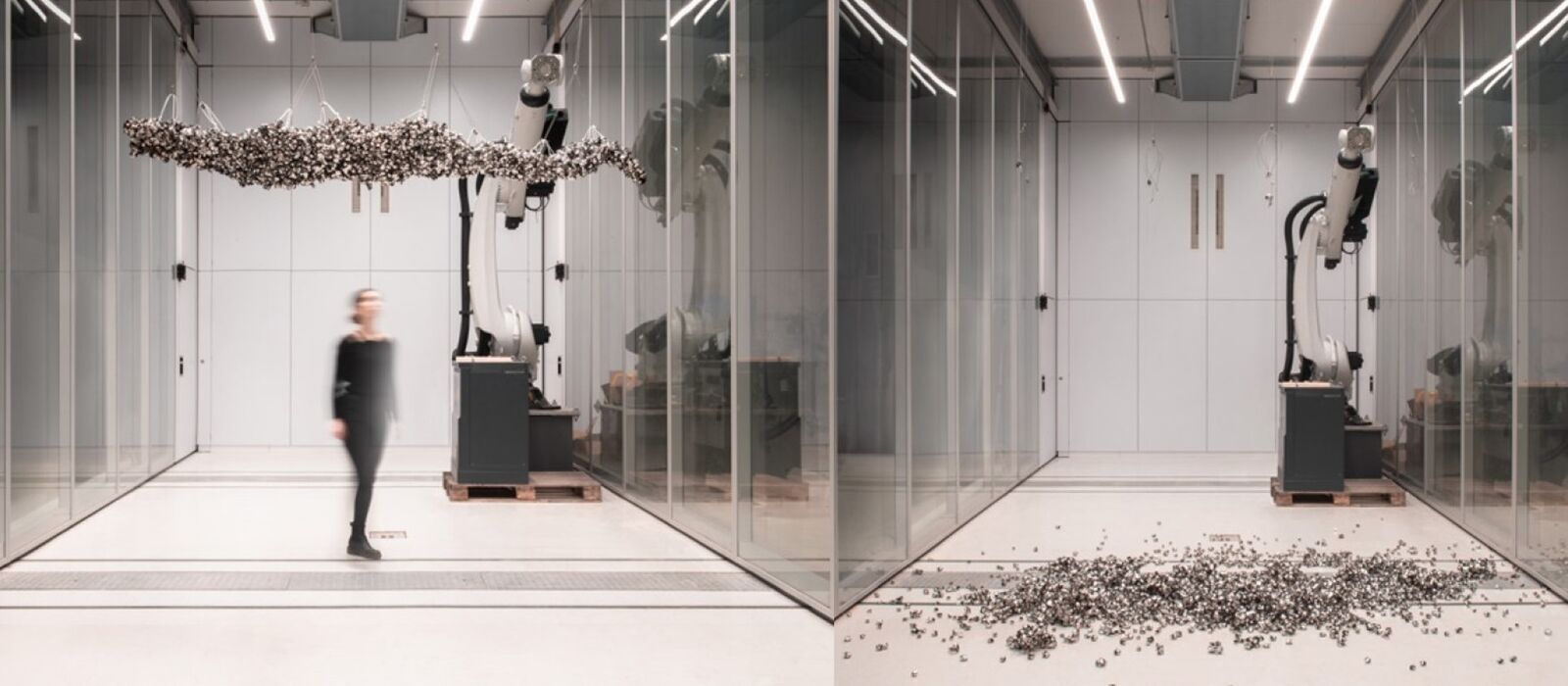
Figure 1 of Koleva, Denitsa; Özdemir, Eda; Tsiokou, Vaia; Dierichs, Karola (2022): Designing Matter: Autonomously Shape-Changing Granular Materials in Architecture. In ACADIA 2021, Realignments: Toward Critical Computation: Proceedings of the 41st Annual Conference of the Association of Computer Aided Design in Architecture (ACADIA). Copyright: Denitsa Koleva, Karola Dierichs, ICD, University of Stuttgart
Designing Multi-Agent Matter
Cluster Professor Karola Dierichs Gives a Keynote at International Conference on Robotics and Automation
Weaving | Material Form Function | Object Space Agency | Robotics | Sand | Prototype / Model On May 23rd, Cluster Professor Karola Dierichs will give an online keynote on »designing multi-agent matter« as part of the workshop »Block by Block: Collaborative Strategies for Multi-agent Robotic Construction« at the IEEE International Conference on Robotics and Automation. The talk will show how granular materials such as sand can become multi-agent matter. Moving from self-interlocking particles for architecture-scale construction to autonomously entangling ones—we will pose the question how matter itself can become a robotic system.
more
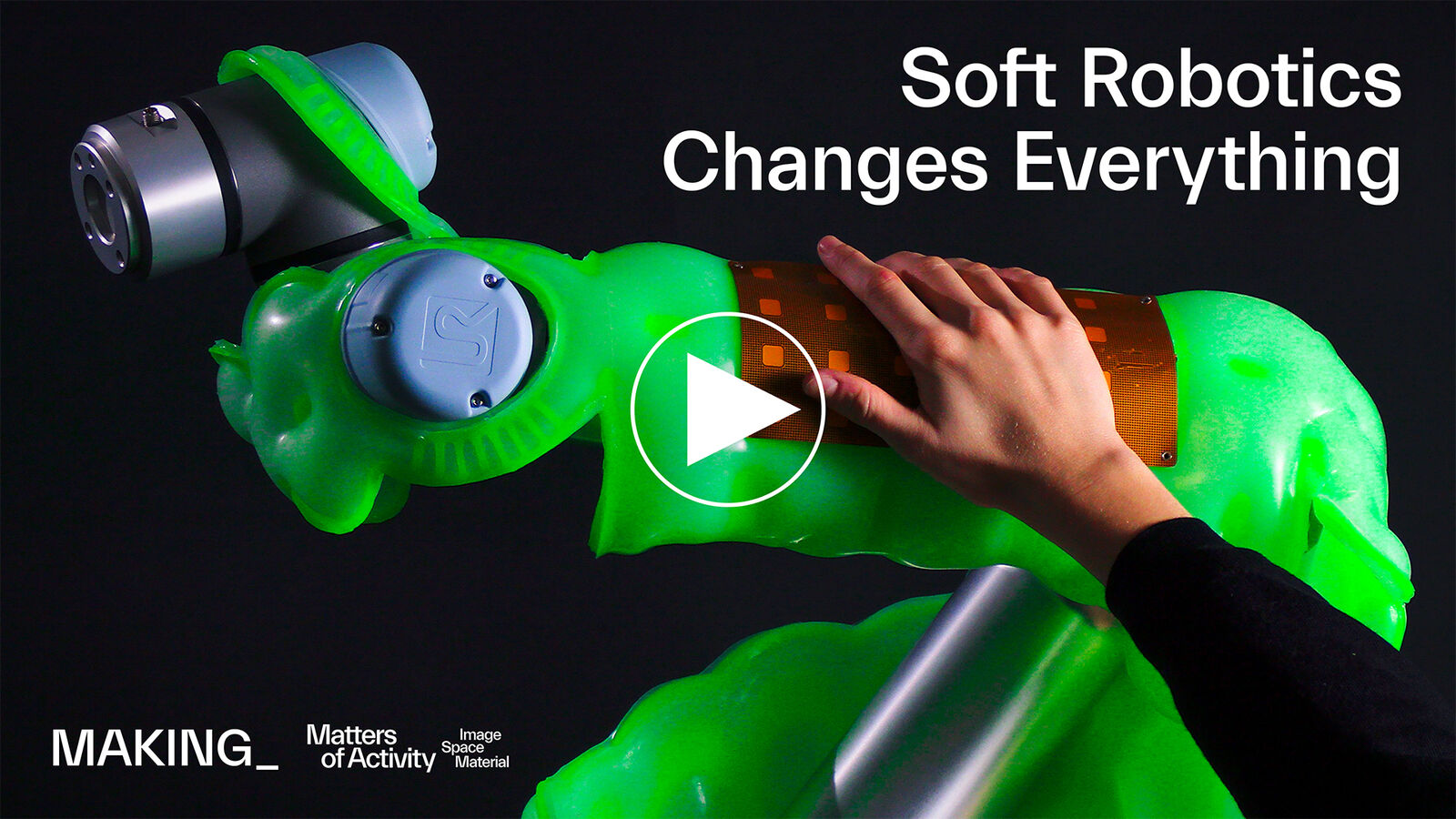
Still of »MAKING a robot feel« with Anna Schäffner and her project »Soft Collision«. Copyright: Matters of Activity
MAKING A Robot Feel
New MoA Mini Documentary Series Starts with Anna Schäffner
Filtering | Robotics | Air | Biodesign | Science Communication | MAKING_ Imagine hugging a robot as soft and comforting as a teddy bear. This could be the future, moving away from the cold, steel monsters we’ve seen in sci-fi films. Anna Schäffner, designer and PhD candidate at Matters of Activity, is bringing this vision to life with her innovative project »Soft Collision«. Anna covered a steel robot in silicone membranes that inflate when you touch them. »It’s giving skin to the robot«, Anna says. But how does it work? How might it let us interact with robots in a more intuitive and secure way? And what’s a caterpillar got to do with it?
more

Teaser »MAKING« with Anna Schäffner and her project »Soft Collision«. Production: Richard Ley & Maxim Landau. Copyright: Matters of Activity
MAKING_
New Documentary Series Takes Viewers Behind the Scenes of Matters of Activity
Science Communication | Robotics | Water | Ocean | Air | MAKING_ How can we make a robot feel? What does it take to build an artificial reef? And how do we design structures that move effortlessly like plants? Find out in the Cluster's new mini-documentary series, MAKING_. Here, our researchers share insights into their groundbreaking work in simple terms. We’re kicking off with Anna Schäffner's Soft Collision. On Thursday, January 23rd, the first episode will be released on the Cluster’s website and social media, followed by Rasa Weber's hidden coral cities on January 30th and Heidi Jalkh's auxetic materials on February 6th.
more
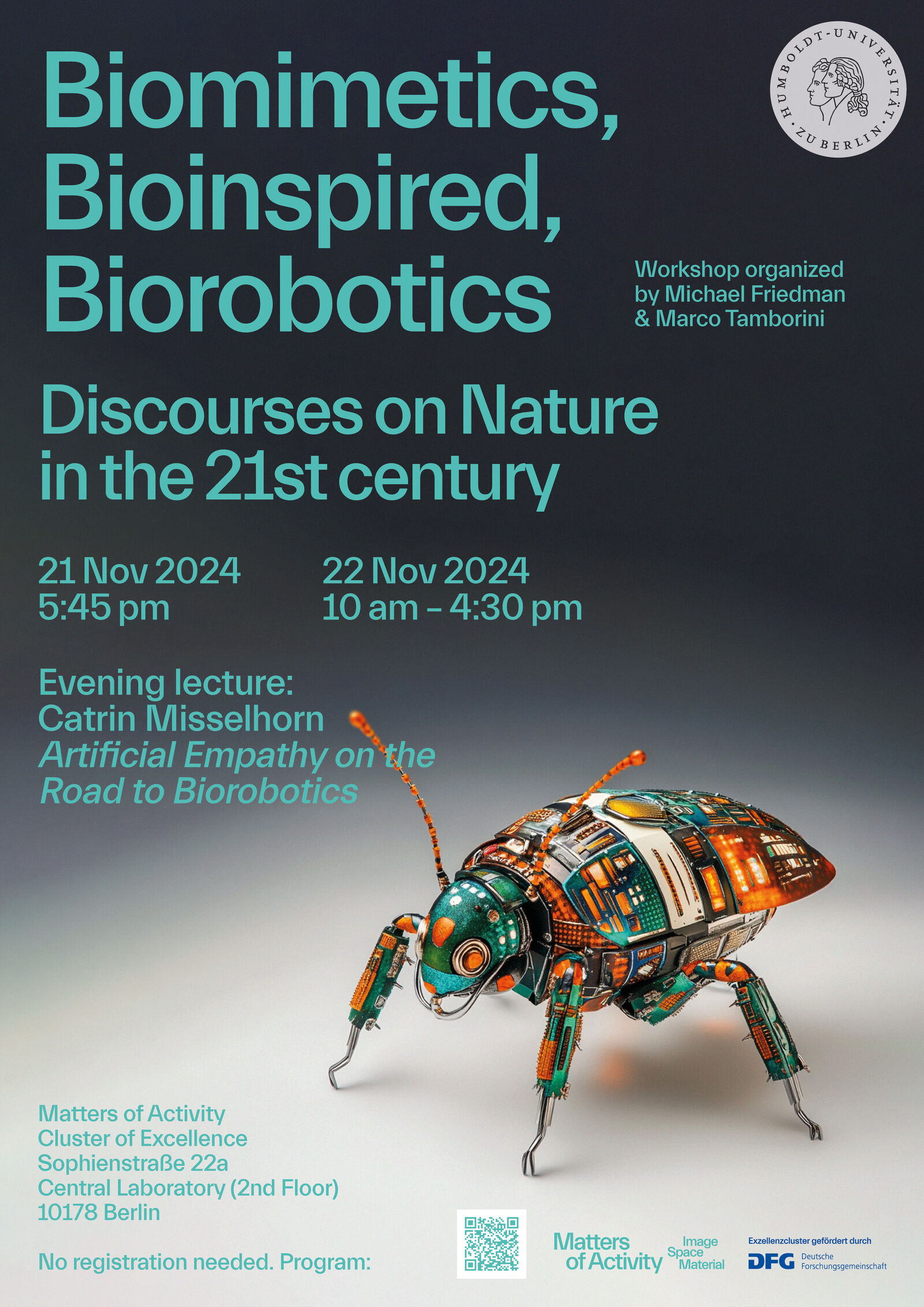
Biomimetics, Bioinspired, Biorobotics: Discourses on Nature in the 21st Century
Workshop Organized by Michael Friedman and Marco Tamborini
Symbolic Material | Weaving | Robotics The workshop aims to explore the new discourses, metaphors, and conceptual approaches in which the research on biomimetics as well as on bioinspired and biorobotics materials is embedded. By bringing together HPS experts in biomimetics, bioinspired, and biorobotics disciplines, we seek to understand how formative these discourses and metaphors are. We aim to explore how they reflect older traditions, identify the actions that support the use of such concepts, and examine how they contribute to a new conceptual and philosophical landscape in the 21st century.
more
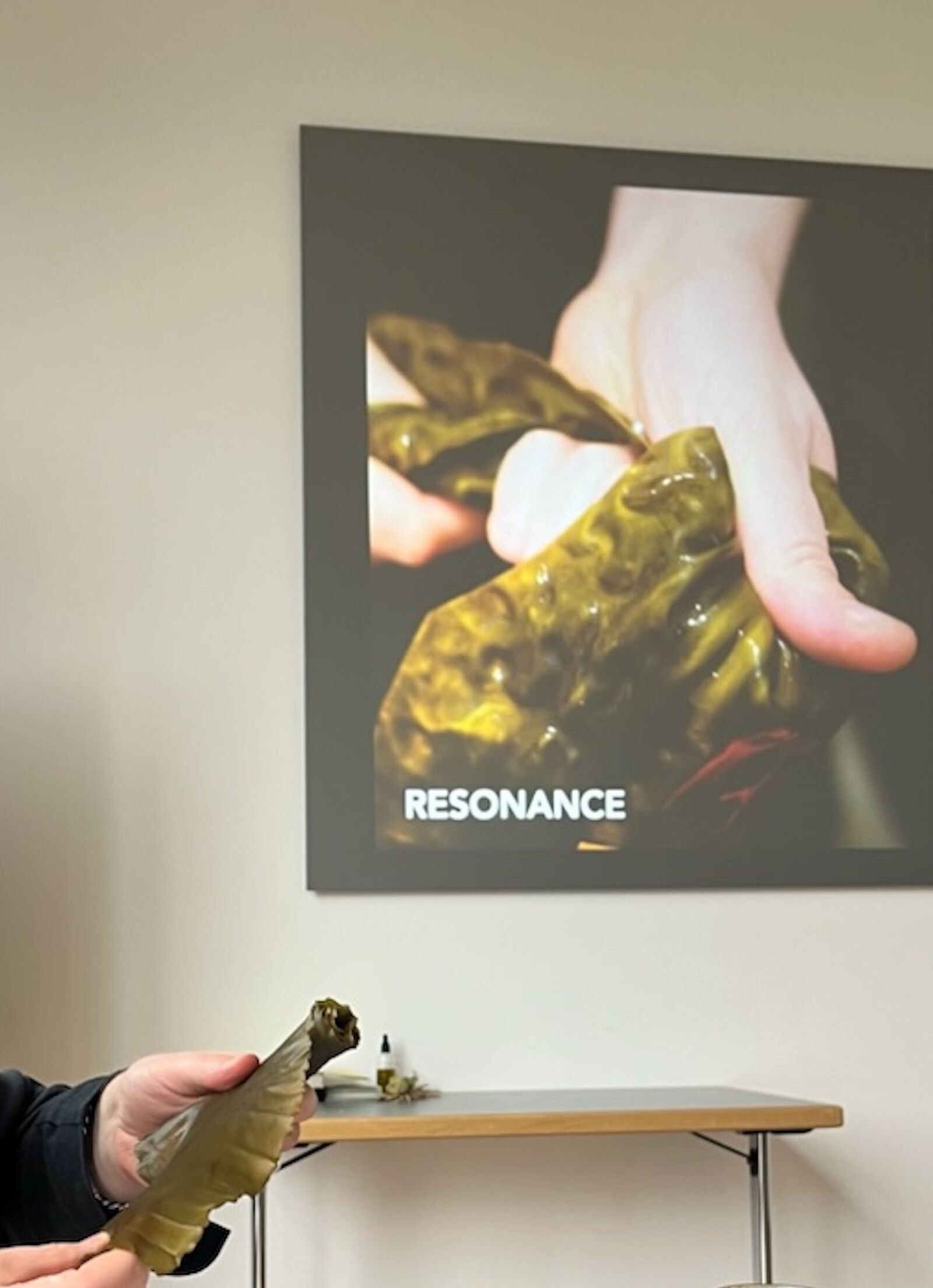
Seaweed resonance, presentation by Julia Lohmann (Aalto, Helsinki). Photo: Clemens Winkler
Sensing Common Grounds. Towards Collaborative Speculation
Symposium by CollActive Materials
Material Form Function | Collactive Materials | Speculative Design | Air | Climate | More-Than-Human | Robotics | Water | Cloud The symposium »Sensing Common Grounds. Towards Collaborative Speculation«, organized by Léa Perraudin and Martin Müller, asked about the ›how‹, foregrounding the methodologies of such speculations and projections: How to relate speculative design proposals to critical diagnoses of the present and attempts at historical speculation? How specifically can collaborative speculation in inter- and transdisciplinary contexts enable us to sense ›what is in the air‹? What narratives, prototypes, materials, and media hold knowledge (and non-knowledge) of these scenarios?
more
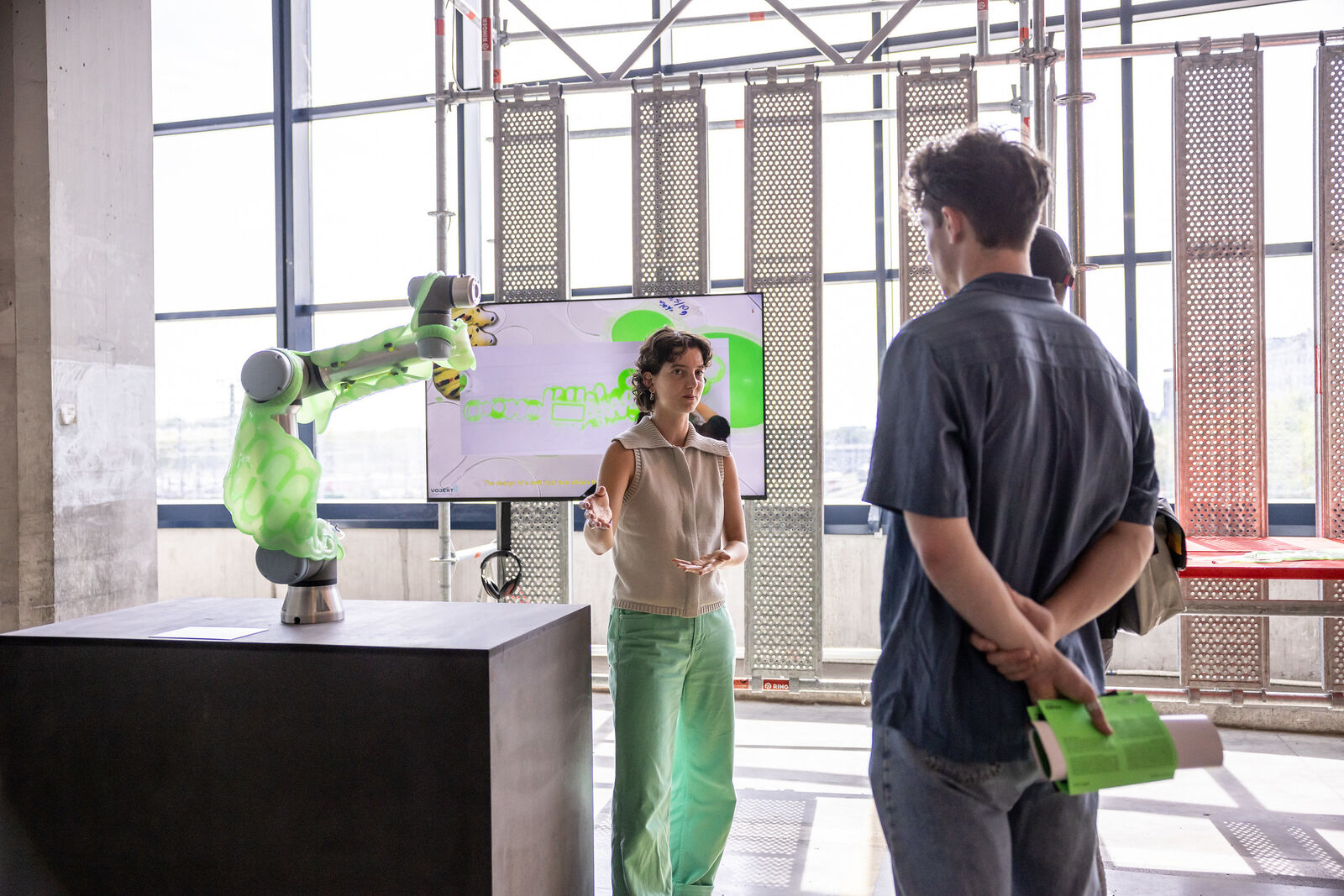
Anna Schaeffner, Soft Collision at Ars Electronica 2024. Copyright: vog.photo / Ars Electronica Flickr
Ars Electronica 2024
Projects by Anna Schäffner and Clemens Winkler Exhibited in the 45th edition of the Festival
Filtering | Object Space Agency | Achievements | Haptics | Performance | Robotics | Teaching This year's Ars Electronica Festival in Linz featured projects by Cluster Members. Anna Schäffner's project »Soft Collision« (2024) was shown as part of the S+T+ARTs Prize. Meet the Artist sessions provided inspiring moments of exchange and debate with a diverse audience. Clemens Winkler's students of the MA Studio »Spiel&Objekt« at the Ernst Busch University of Theatre Arts Berlin were nominated for this year's Ars Electronica Campus Award. Congratulations on this honor!
more
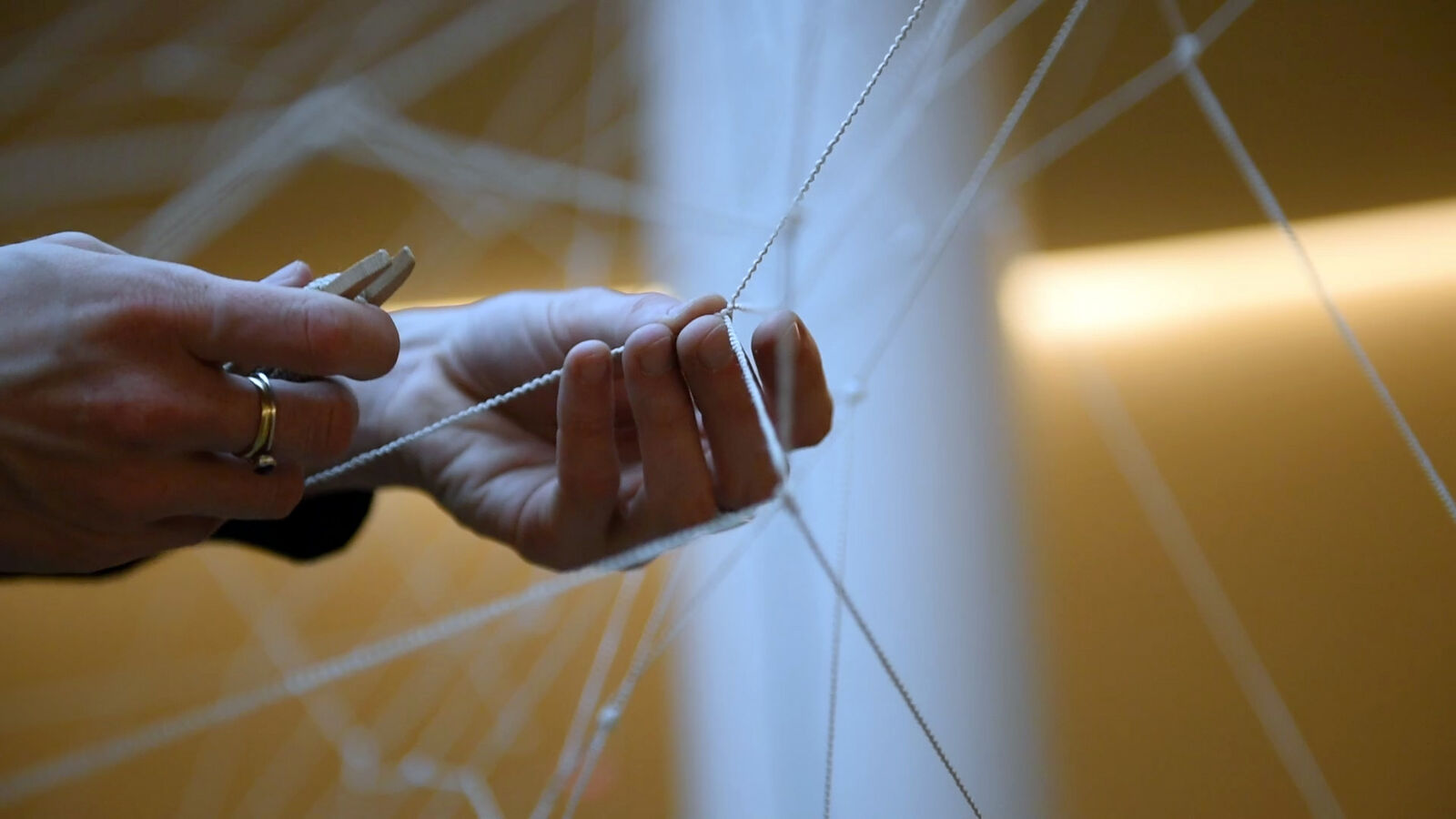
Syntopia 1—Soma I Body, Minimal Machines by Matters of Activity. Copyright: Sebastián Plaza Kutzbach
Call for Papers: Minimal Machines
Cultures of Mixed Reality for Architectural and Construction Robotics
Material Form Function | Weaving | Publications | Artificial Intelligence | Robotics | Computational Design | Prototype / Model Minimal machines are understood as experimental approaches to kinetic processes in an age of robotics, where both hardware and software are reduced to their essential minimum. Cluster members Karola Dierichs and Karin Krauthausen together with Glenda Caldwell (Queensland University of Technology, Australia) and Dagmar Reinhardt (University of Sydney, Australia) aim to edit a Topical Collection reflecting on the rapidly emerging field of Mixed Reality (MR) in architecture, considering not only its technological aspects but also its cultural and human-centered implications. They invite contributions from the fields of Computational Design and Construction as well as the Humanities.
more
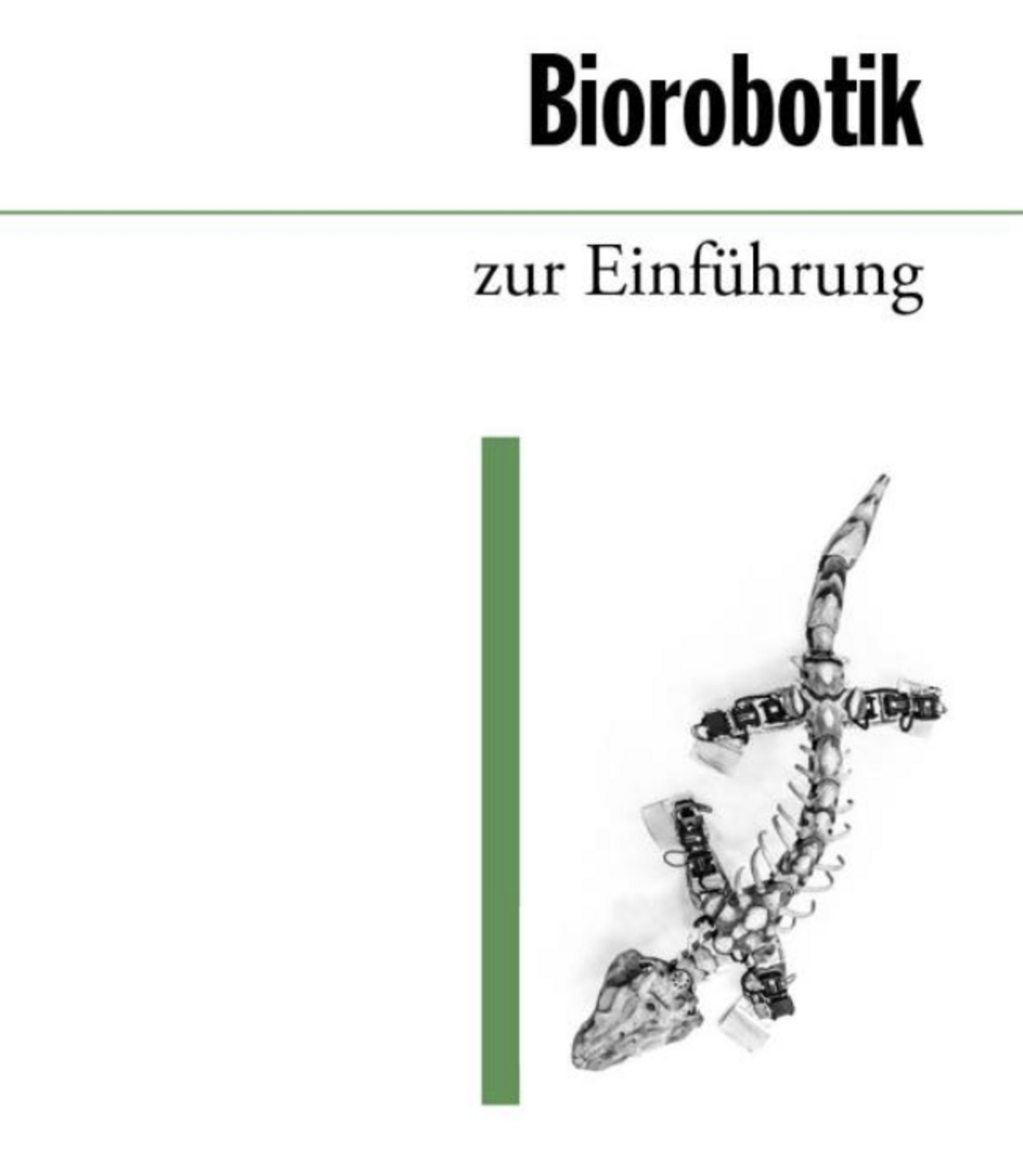
Marco Tamborini: Biorobotik zur Einführung
Biorobotik zur Einführung
Neue Publikation von Clustermitglied Marco Tamborini
Symbolic Material | Publications | Robotics | Biodesign Was ist Biorobotik? Unter welchen philosophischen, historischen und ethischen Voraussetzungen können bioinspirierte Roboter gebaut werden? Wie haben sich das Bild des Menschen und das Verhältnis von Natur und Technik durch die Herstellung von biohybriden Robotern verändert?
more
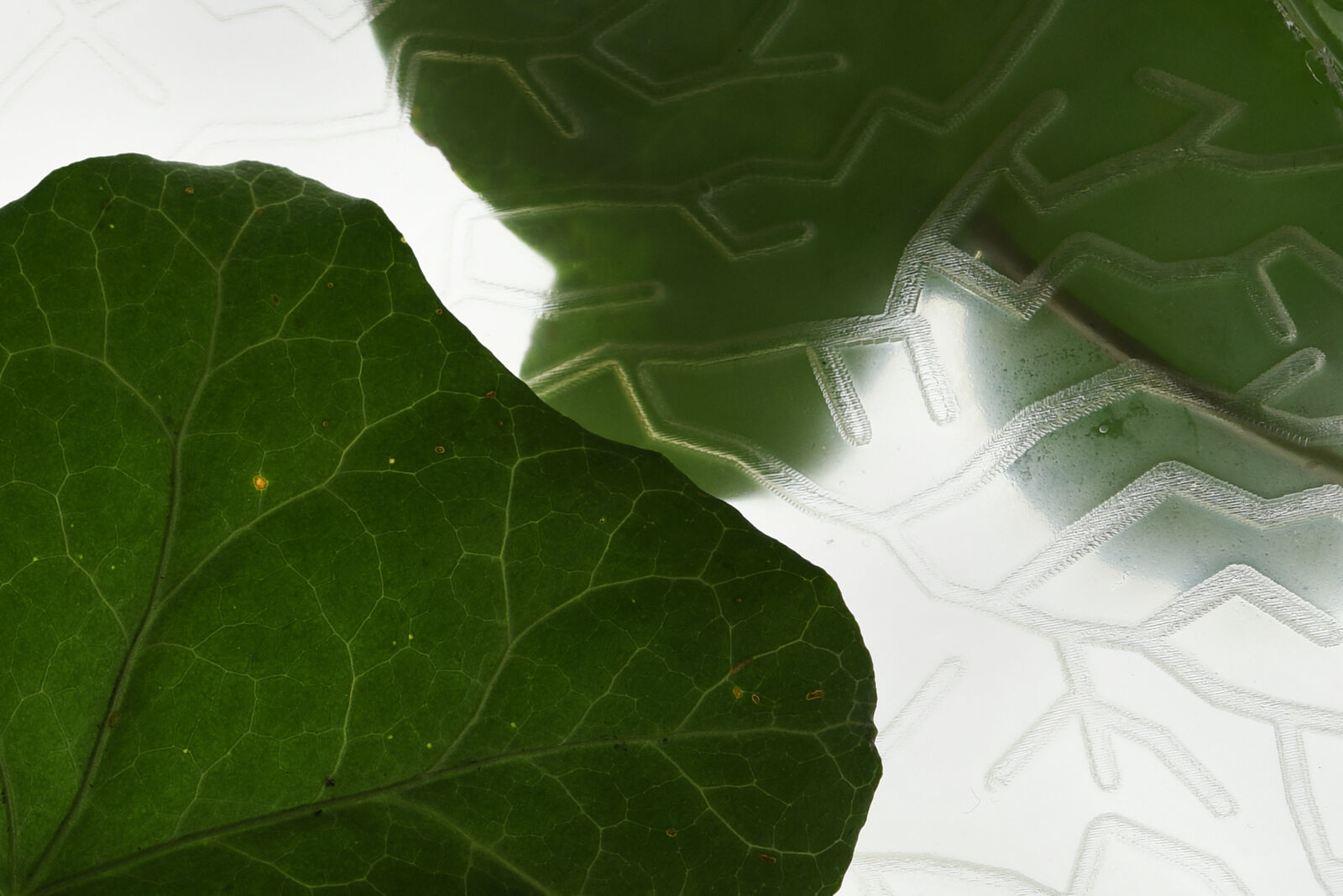
Gestalten mit Cellulose, Wasser und Luft. Copyright: Eva Bullermann
Magic Machines aus Bio-Plastik
Open Lab Abend der Reihe »Materialzukünfte besuchen« im Futurium
Material Form Function | Robotics | Cellulose | Water | Collactive Materials | Speculative Design | Science Communication In diesem Workshop ging es um flexible Materialien wie Cellulose, Bio-Plastik und Silikon als mögliche (neue) Materialien für Soft Robotics oder gar biologische Maschinen. Soft Robotics ist ein relativ junges Forschungsfeld, das sich mit alternativen Ansätzen zur Gestaltung der Maschinen von morgen beschäftigt. Wie können wir Maschinen bauen, damit sie sensibler und anpassbarer werden? Können wir dafür adaptive vielleicht sogar nachhaltige Materialien nutzen, statt immer mehr Metall, Plastik und Energie zu verbrauchen? Mit den Design-Forscherinnen Anna Schäffner und Eva Bullermann spekulieren wir darüber, wie die Maschinen der Zukunft gestaltet sein könnten. Wie sieht deine Magic Machine aus?
more
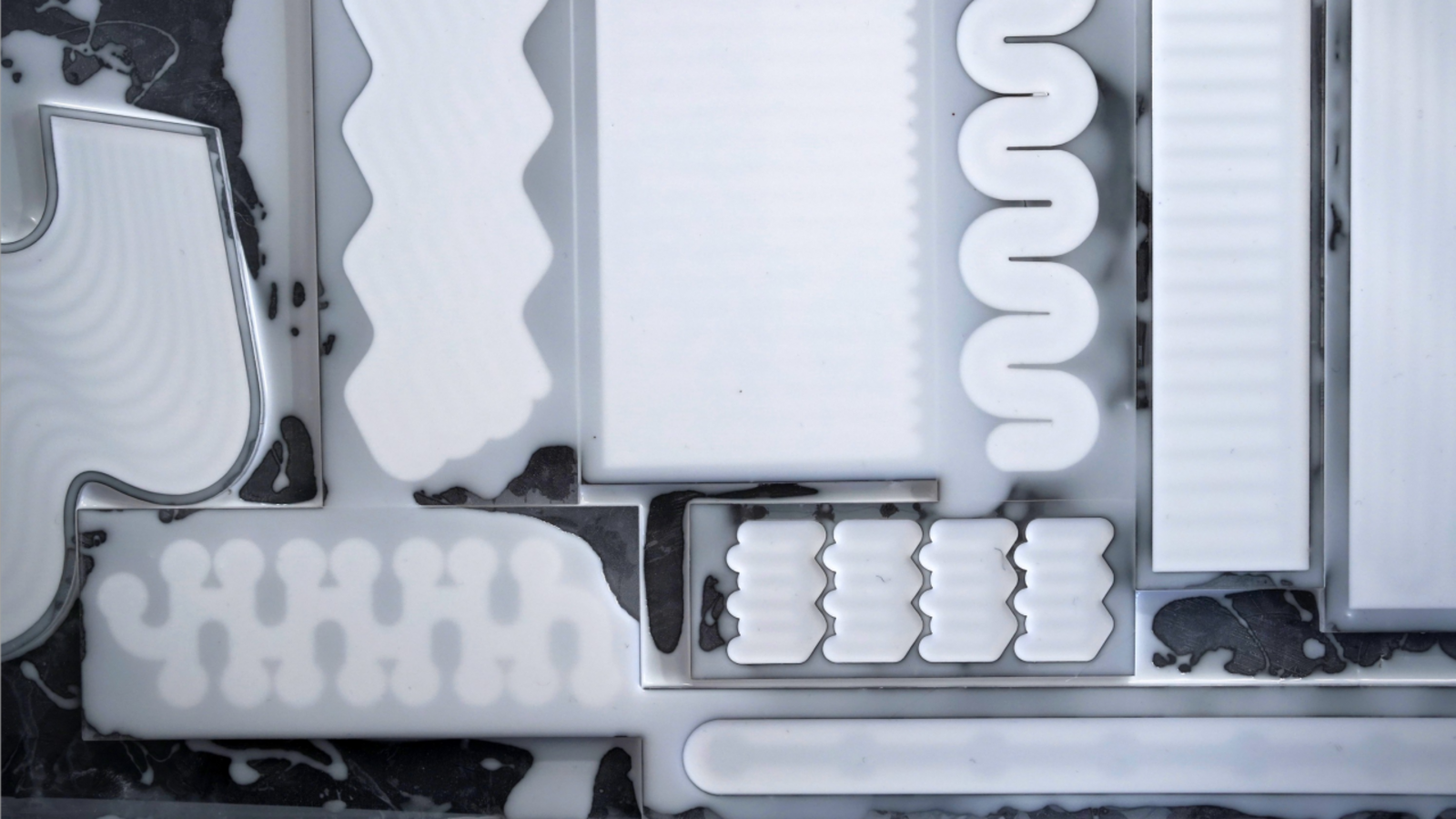
Design of soft robots. Research on form, its deformation and possible function. Copyright: Anna Schaeffner
Symbiosis
Cluster Members Anna Schaeffner and Rasa Weber Presented at Major Event on the Global Electronic Art Scene ISEA2023
Filtering | Material Form Function | Robotics | Doctoral Program | Ocean | More-Than-Human On May 17th and 18th Cluster Members Anna Schaeffner and Rasa Weber Presented at a major event on the global electronic art scene, that aims to strengthen the dialog between artists, researchers, engineers, designers and entrepreneurs from the cultural and creative industries who participate in the advances of research and creation. Anna Schaffner gave an artist talk »For a Design of Deformation« and Rasa Weber presented her paper »A Sympoietic Ocean. Design Research with/in the Marine Holobiont«.
more
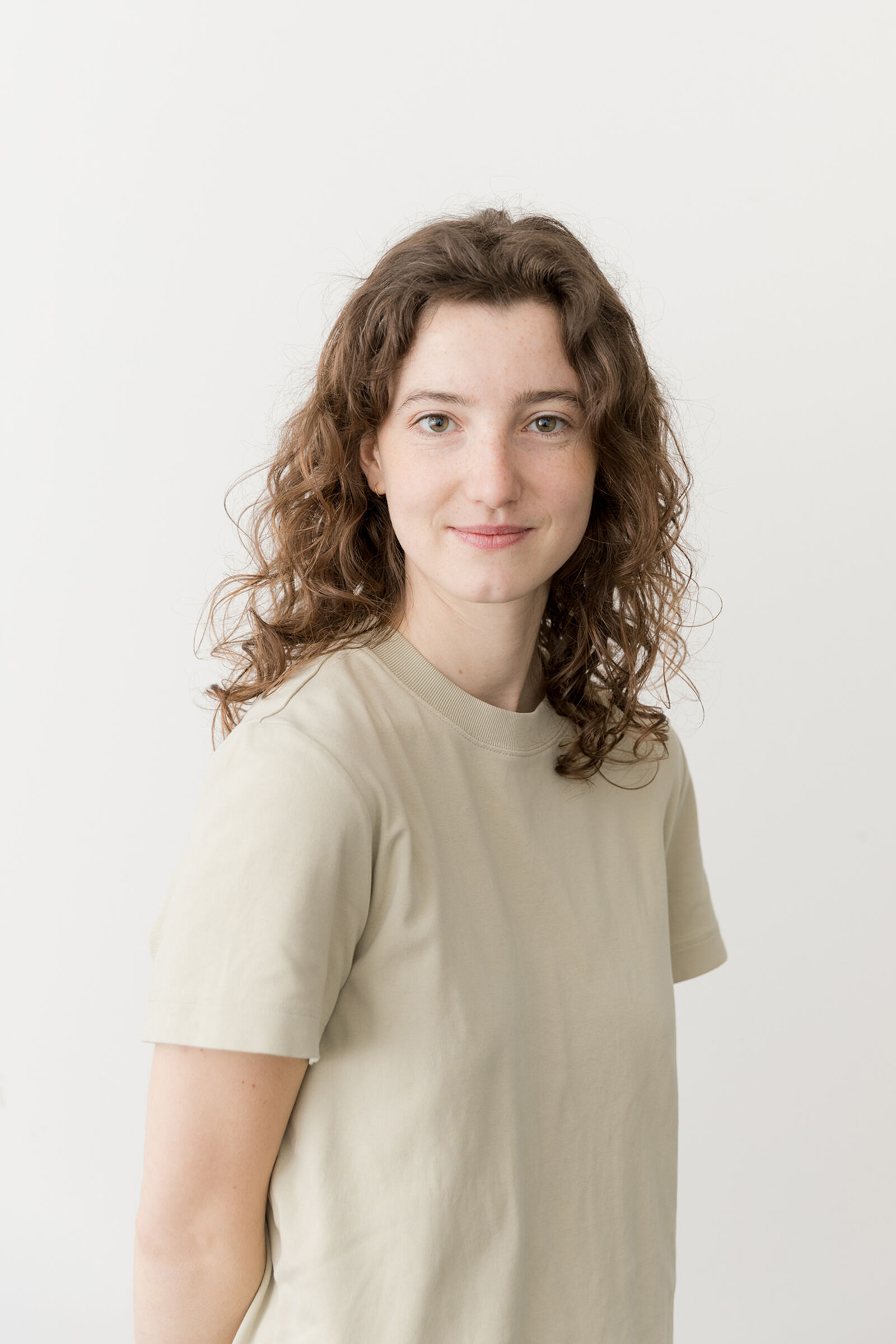
Anna Schäffner. Photo: Michelle Mantel
Cluster Member Anna Schäffner Selected for VOJEXT S+T+ARTS Residency on Robotics
Filtering | Robotics | Doctoral Program | Achievements We congratulate Pre-Doctoral Candidate Anna Schäffner on her successful application to one of the three VOJEXT S+T+ARTS residencies. The selected artists were announced during the S+T+ARTS presentations at European Robotic Forum 2023 in Odense (Denmark). Each artist will receive 30.000 Euros of funding, mentoring and access to robotics labs from March until December 2023. The goals of the VOJEXT S+T+ARTS residencies are twofold: to push for art-driven innovation and societal understanding of human-robot interactions, and to integrate them in industrial manufacturing robotics that work on construction, arts and crafts. Anna Schäffner is taking part in the Social Robots residency, supported by industrial partner and tech-provider IIT (Fondazion Istituto Italiano di Tecnologia). Her project »Soft Collision« focuses on the design of a new robotic membrane that will demonstrate a form of interaction between human and robot through body language.
more
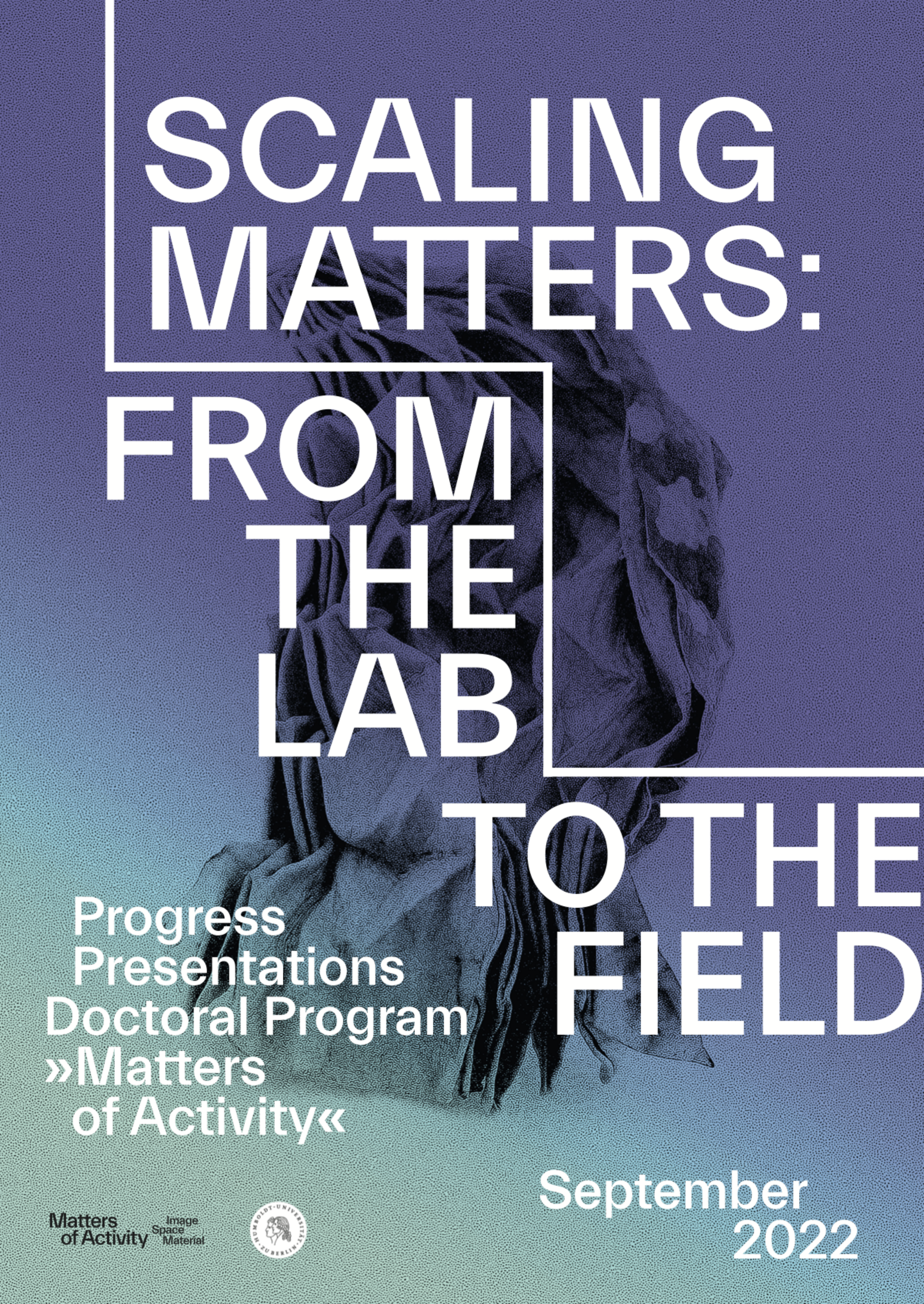
Poster PhD presentations 2022. Layout: Ada Favaron
Scaling Matters: From the Lab to the Field
Doctoral Presentations at the MoA Retreat 2022
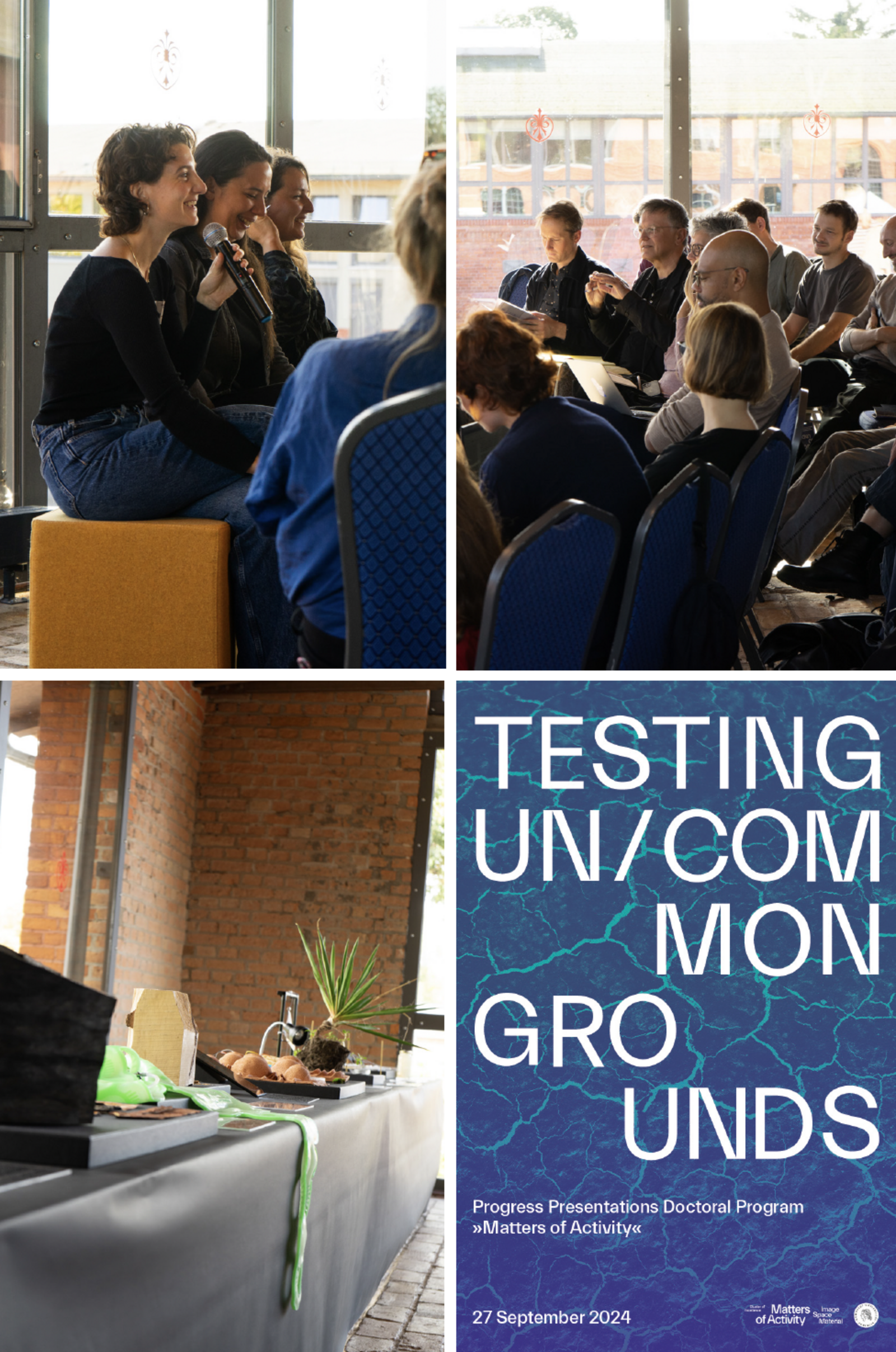
Weaving | Filtering | Cutting | Material Form Function | Object Space Agency | Doctoral Program | Climate | Haptics | More-Than-Human | Ocean | Robotics | Textiles | Tree Bark | Wild Silk | XR | Water | Science Communication The 2022 presentation of the Doctoral Program »Matters of Activity« at the MoA Retreat in September at Landgut Stober was both a review and an outlook of the doctoral research conducted at the Cluster between 2020 and 2022. Under the title »Scaling Matters: From the Lab to the Field, «Pre-Doctoral Researchers at varying stages of their research — from the very beginning to the final phase of their theses — presented their heterogeneous work whilst continuing to negotiate common themes, methods, questions and tools. The format combined talks and an exhibition and invited MoA Members to engage individually with the presentation and a selection of their research objects.
Thanks to everyone involved for making possible this all-around successful event. Enjoy some visual impressions of the exhibition, as well as the talks and have a look at the booklet.
more
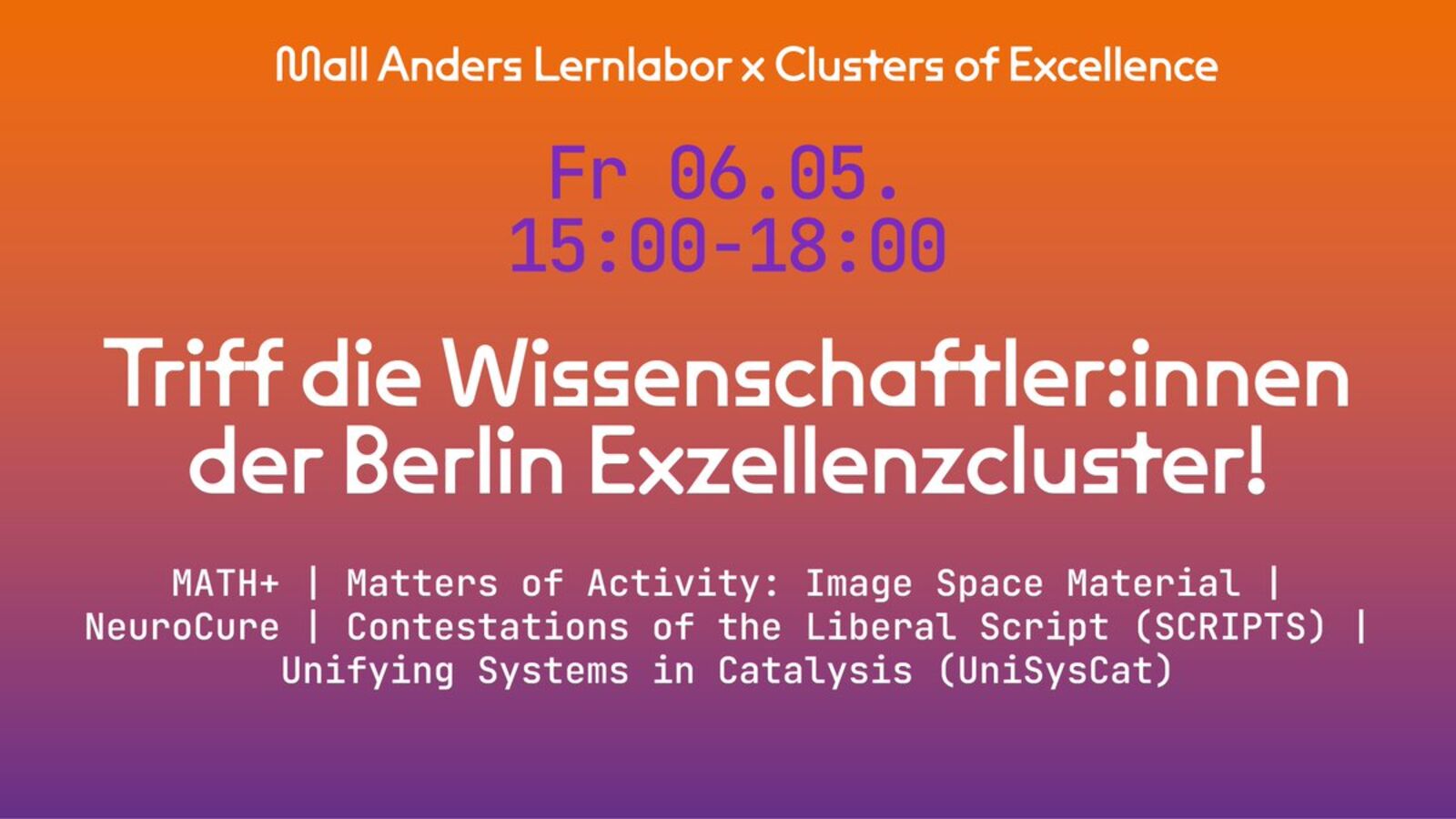
Flyer »Meet the Scientist« at Mall Anders. Copyright: Mall Anders
Mastering Digital Cutting in Robot-Assisted Surgery
Dominic Eger Domingos Presents His Research at the Berlin Cluster of Excellence Event at Mall Anders
Cutting | Science Communication | Robotics What does the work of scientists actually consist of? At the casual »Meet the Scientist« event in the »Mall Anders« in the WILMA Shopping Center, a broad public had the opportunity to meet researchers from the Berlin Clusters of Excellence. For »Matters of Activity«, Dominic Eger Domingos gave insights into his research work on digital cutting in robot-assisted surgery.
more
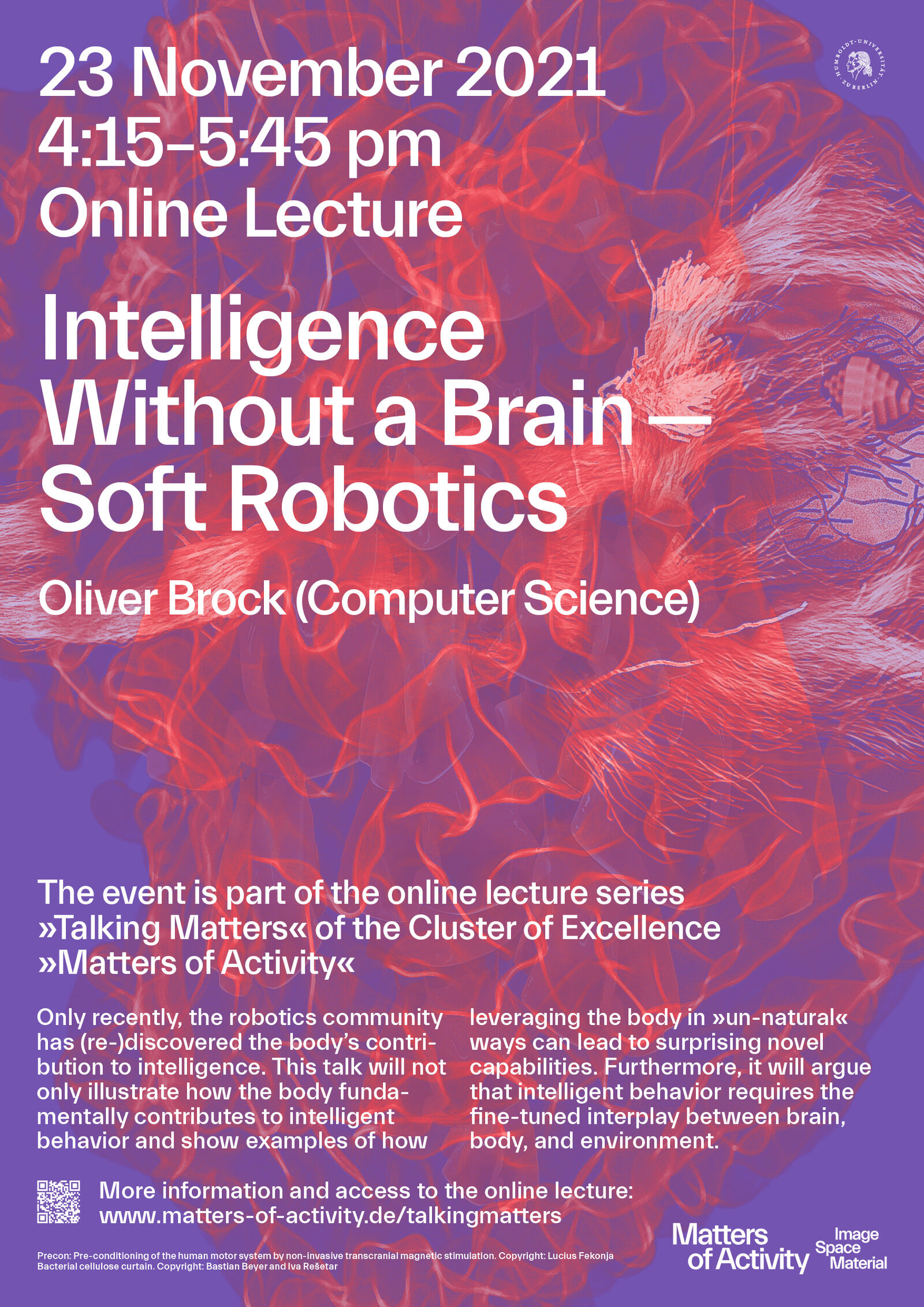
Poster Online Lecture Series »Talking Matters«, Copyright: Lucius Fekonja, Bastian Beyer, Iva Rešetar, adapted by NODE Berlin
Intelligence Without a Brain – Soft Robotics
Alexander von Humboldt Professor of Robotics Oliver Brock About the Fine-Tuned Interplay Between Brain, Body, and Environment
Filtering | Brain | Robotics On Tuesday, 23rd November 2021, Alexander von Humboldt Professor of Robotics and Director of the Cluster of Excellence »Science of Intelligence« Oliver Brock was a guest at our lecture series »Talking Matters«. In his talk entitled »Intelligence Without a Brain – Soft Robotics«, he argued that intelligent behavior requires the fine-tuned interplay between brain, body, and environment, a central aspect that AI research has stubbornly ignored for the last 60 years.
more
Robot-Assisted Surgery
Robotics Robot-assisted surgery (RAS) with the research focus »Mastering Digital Cutting« is an intersectional project between »Cutting« and »Filtering.« Contemporary RAS are advanced filtering technologies that, beyond surgical teams and patients, novelly bring together various actors, such as designers, engineers, and computer scientists.
more