CONQ, Heidi Jalkh & Angie Dub
CONQ at Biennale Architettura 2025
Associated Member Heidi Jalkh Presents Marine Biobased Building Materials in Venice
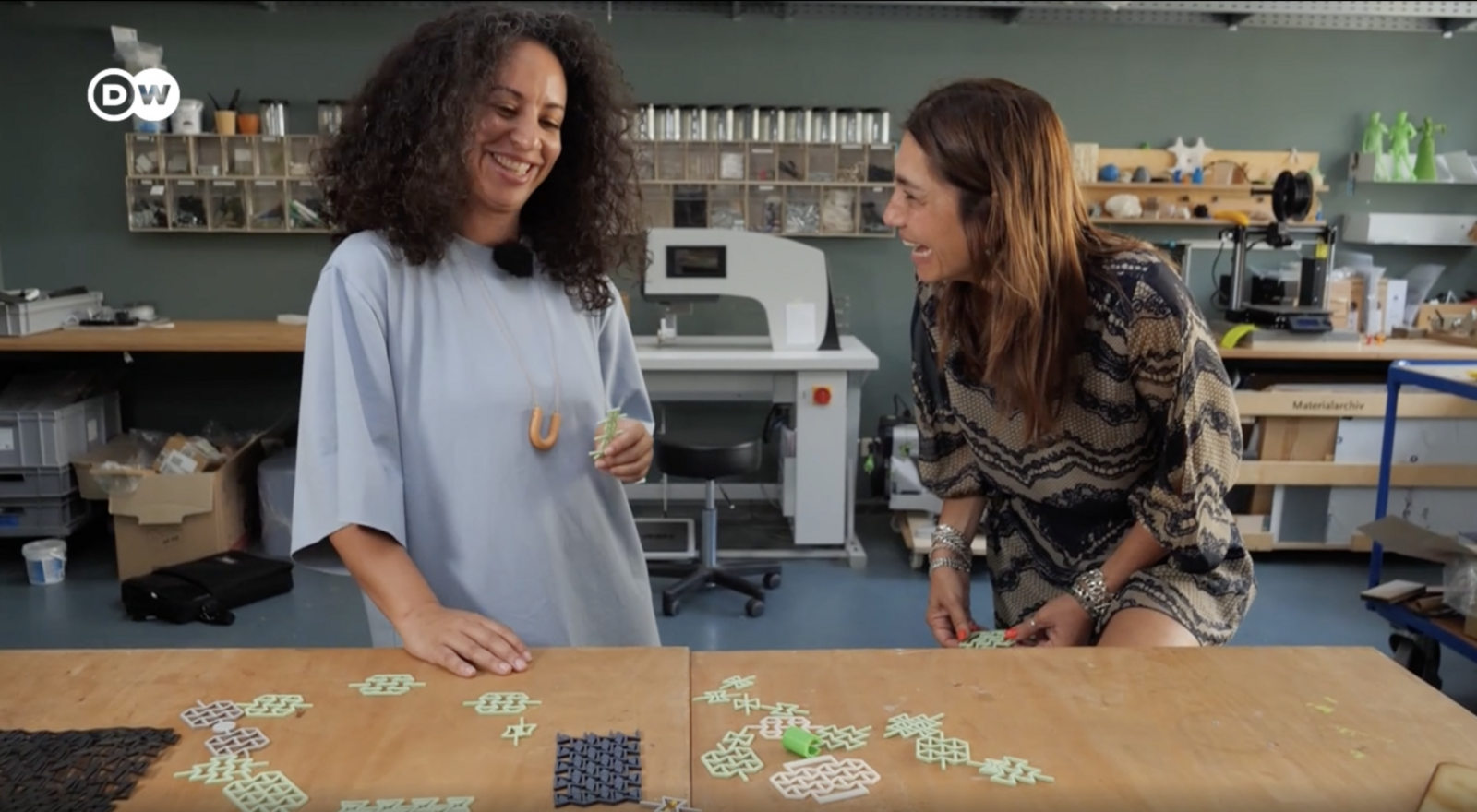
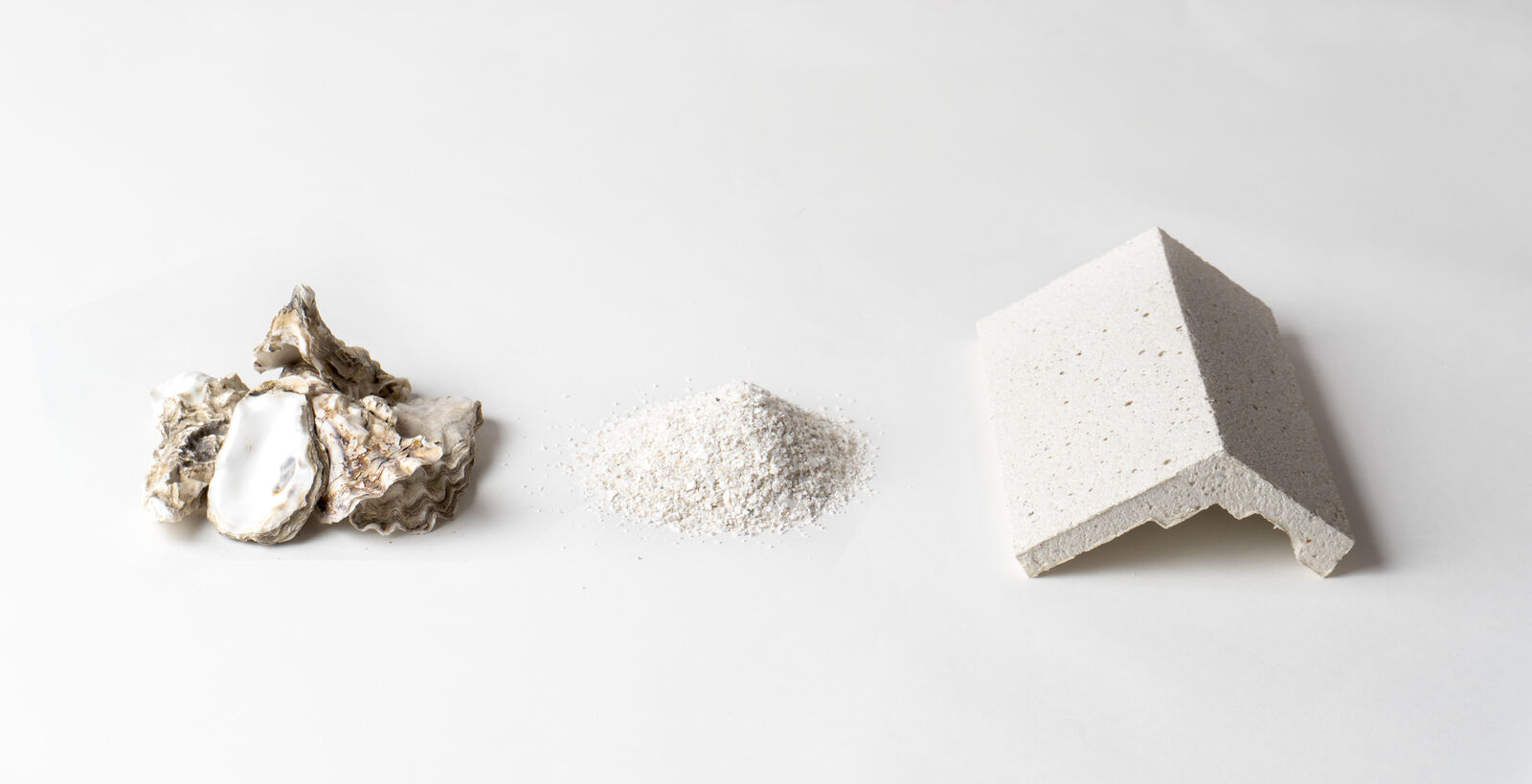
Material Form Function | Circular Economies | Biodesign | Ocean | Prototype / Model | Climate Cluster member Heidi Jalkh and Angie Dub have been invited to contribute to the Biennale Architettura 2025, curated by Carlo Ratti. The theme of the 19th International Architecture Exhibition is »Intelligens. Natural. Artificial. Collective«. Their project »CONQ – Marine biobased building materials«, will be part of the Arsenale Exhibition: Matter Makes Sense. The Venice Biennale will be open to the public from Saturday, May 10th to Sunday, November 23th, 2025.
more
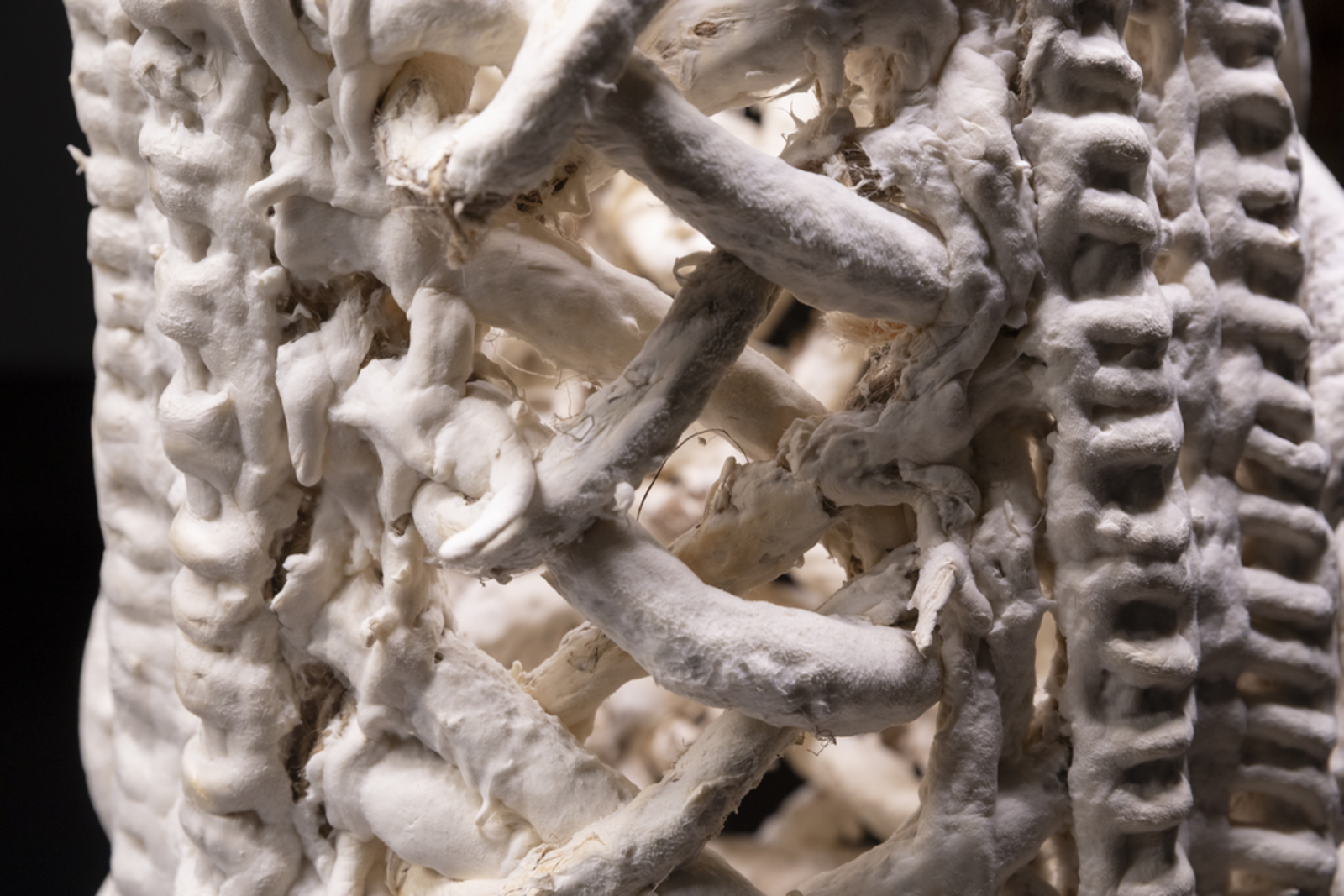
Project »Myko.Plektonik«, Natalija Miodragović & Dimitra Almpani-Lekka. Photo: Michelle Mantel. Copyright: Matters of Activtiy
Active Matter and Environmental Relations
Charlett Wenig and Natalija Miodragović, Together with Alice Jarry, are Panelists at »In.Site2 and Sustainability Across Disciplines«
Weaving | Material Form Function | Object Space Agency | Biodesign | Tree Bark | Forest | Fungi/Mycelium | Circular Economies | Climate In this conversation, designers Alice Jarry (Concordia, CA), Charlett Wenig and architect Natalija Miodragović discuss with »pk langshaw« how engagement with living, semi-living, and sustainable materials that sense, react, and transform with their environment can deploy regenerative and resilient relations and constitute future-forward opportunities for material practices. The whole conference is hosted in Montreal from on March 17th–21st, but will also be available via Zoom.
more
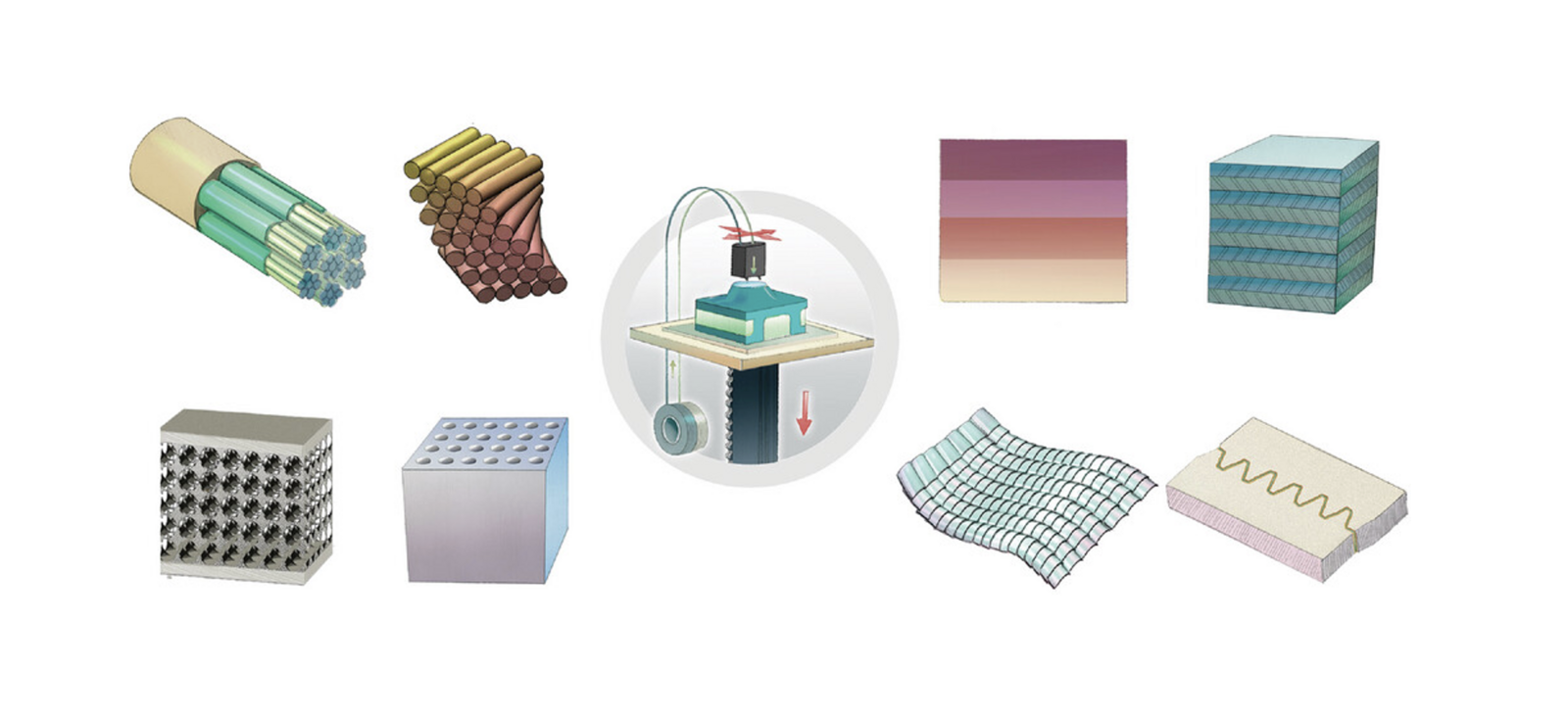
The eight most common biological structural design elements (from upper left to lower right): Fibrous: high tensile strength in one direction, minimal compressive strength; Helical: toughness in multiple directions, in-plane isotropy; Gradient: gradual property transition to reduce interfacial stress, enhancing toughness; Layered: complex composites that improve toughness, especially in brittle materials; Cellular: lightweight porous structures for stress distribution and energy absorption, often in sandwich forms; Tubular: organized porosity for energy absorption and crack deflection; Overlapping: layered plates or scutes for flexible, often armored surfaces. In the center, a 3D printer is shown schematically; Suture: interdigitating interfaces for controlled strength and flexibility (figure inspired by: Naleway et al. 2015). Figure by Konrad Eyferth.
A Bio-Inspired Perspective on Materials Sustainability
New Article Emphasizes Importance of Interdisciplinary Collaboration For Developing a Sustainable and Resilient Materials Economy
Material Form Function | Publications | Circular Economies The article by Wolfgang Wagermaier, together with Cluster member Peter Fratzl and Alumni Associate Khashayar Razghandi, explores materials sustainability through a bio-inspired lens and discusses paradigms that can reshape the understanding of material synthesis, processing, and usage. It addresses various technological fields, from structural engineering to healthcare, and emphasizes natural material cycles as a blueprint for efficient recycling and reuse. The study shows that material functionality depends on both chemical composition and structural modifications, which emphasizes the role of material processing. The article identifies strategies such as mono-materiality and multifunctionality and explores how responsivity, adaptivity, modularity, and cellularity can simplify material assembly and disassembly. It concludes by emphasizing interdisciplinary collaboration as a key factor for developing a sustainable and resilient materials economy in harmony with nature’s material cycles.
more
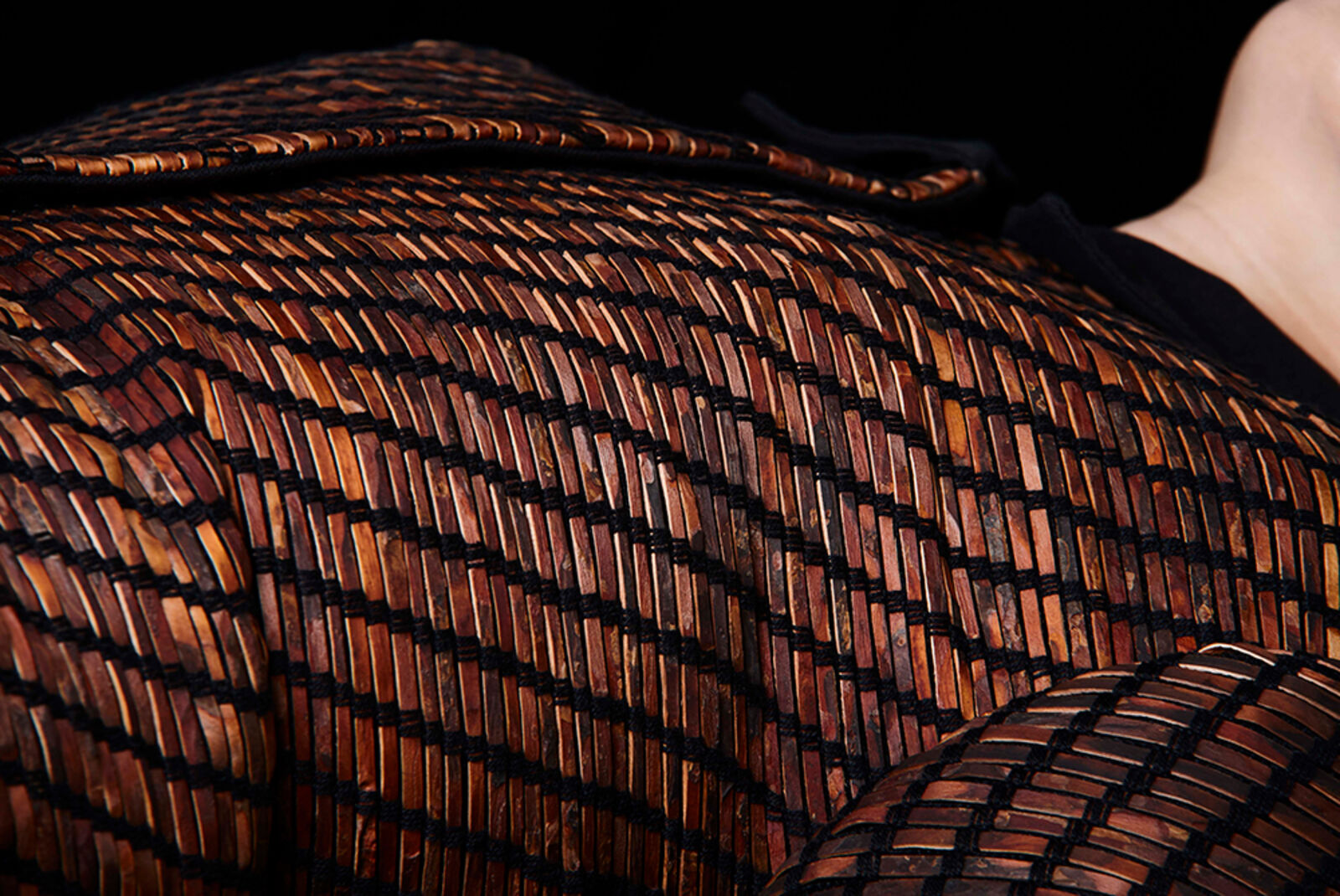
»The Bark Project«, Charlett Wenig. Copyright: Patrick Walter, MPIKG
FUTURES – Material and Design of Tomorrow
Special Exhibition at Grassi Museum Leipzig with Works of Charlett Wenig
Tree Bark | Speculative Design | Circular Economies | Biodesign Humanity has always been fascinated by ideas, visions and versions of the future. Faced with global challenges, themes like resource scarcity, climate crisis and socioeconomic injustice dominate social awareness. Designers and artists increasingly focus on aspects of possible ›futures‹ as shown in the exhibition that is now opening at Grassi Museum of Applied Arts Leipzig. The exhibition’s chapter »READY MADE FUTURE« features works of Charlett Wenig.
more
Planetary Design: Reclaiming Futures
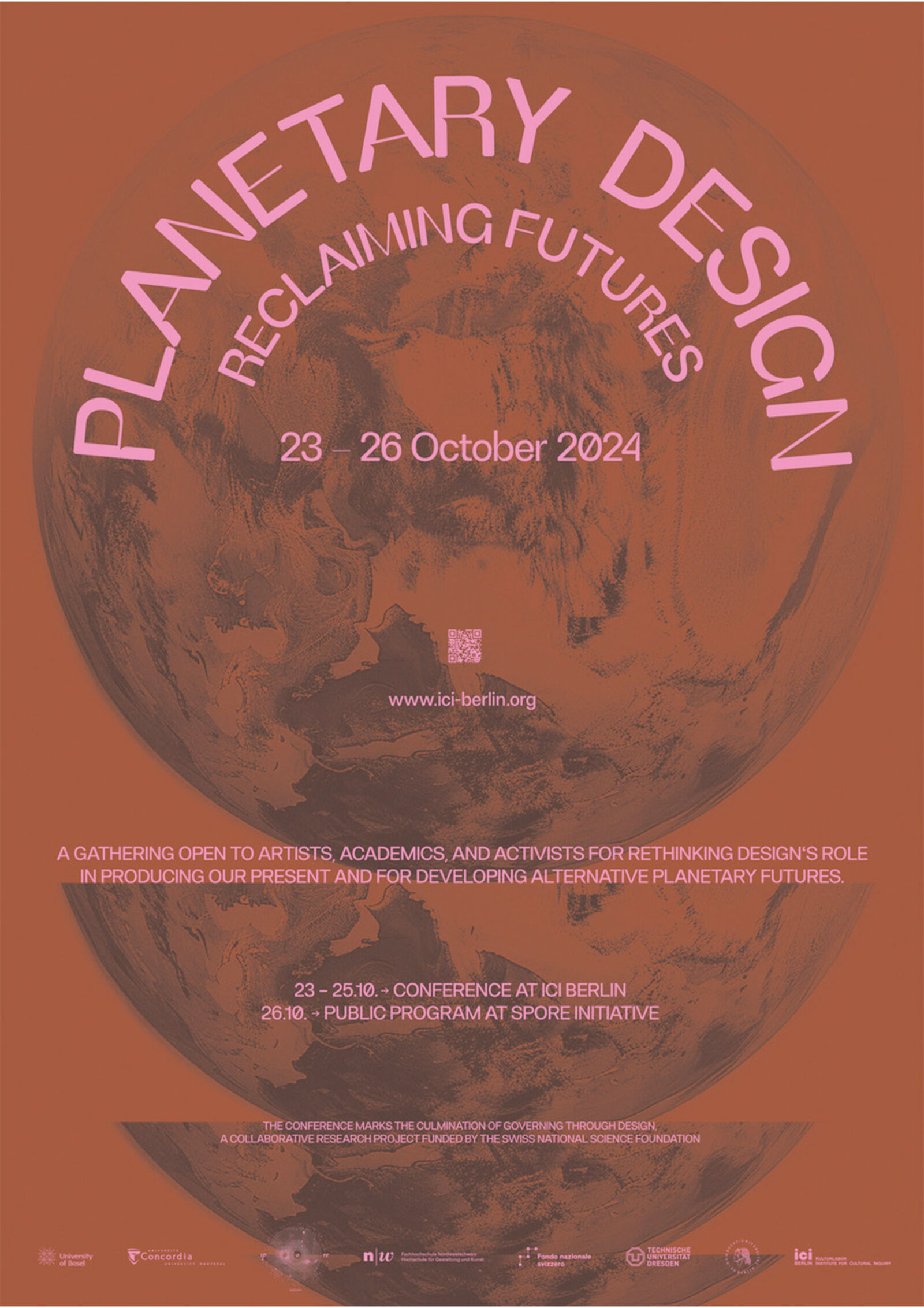
Conference Organized by Claudia Mareis – Conference Contributions Now Online as an Audio Series
Material Form Function | Science Communication | Climate | More-Than-Human | Biodesign | Circular Economies | Speculative Design | Temporality The conference »Planetary Design: Reclaiming Futures« brought together critical thinking and doing around the role of design in making, unmaking and remaking worlds. Starting from the intersection of design, infrastructure, and the planetary environment, it offered a generative platform open to artists, academics, and activists for rethinking design’s role in producing the present and for developing alternative planetary futures. The conference gathered artists, academics, and activists to rethink design's role in producing our present and developing alternative planetary futures. The conference contributions are now online as a podcast!
more
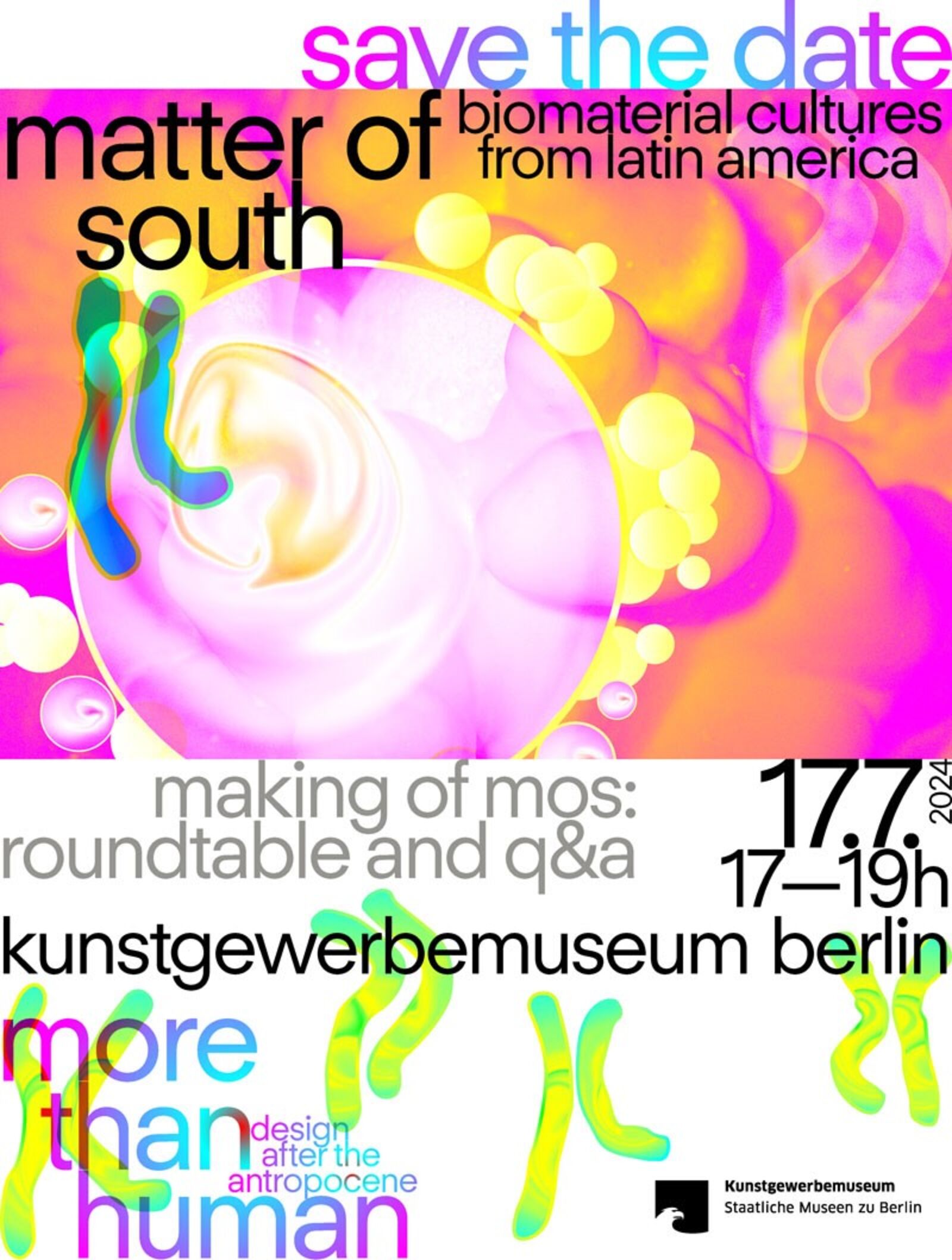
Copyright: Staatliche Museen zu Berlin, Kunstgewerbemuseum / Gestaltung: cyan Berlin
The Making of »Matter of South. Biomaterial Cultures form Latin America«
Roundtable and Q&A
Material Form Function | More-Than-Human | Biodesign | Fungi/Mycelium | Rubber | Water | Climate | Circular Economies On July 12th 2024, the exhibition and research project »Matter of South. Biomaterial Cultures from Latin America« opened its doors. Its curators Heidi Jalkh, Gisela Pozzetti and Valentina Aliaga Vargas are investigating to which extent the development of biomaterials can create new relationships between people and their environment in the future. What alternatives can there be to our extractivist practices? In this round table discussion with the three curators and further players, on July 17th, you can find out more about the background and vision of the »Matter of South« initiative.
more
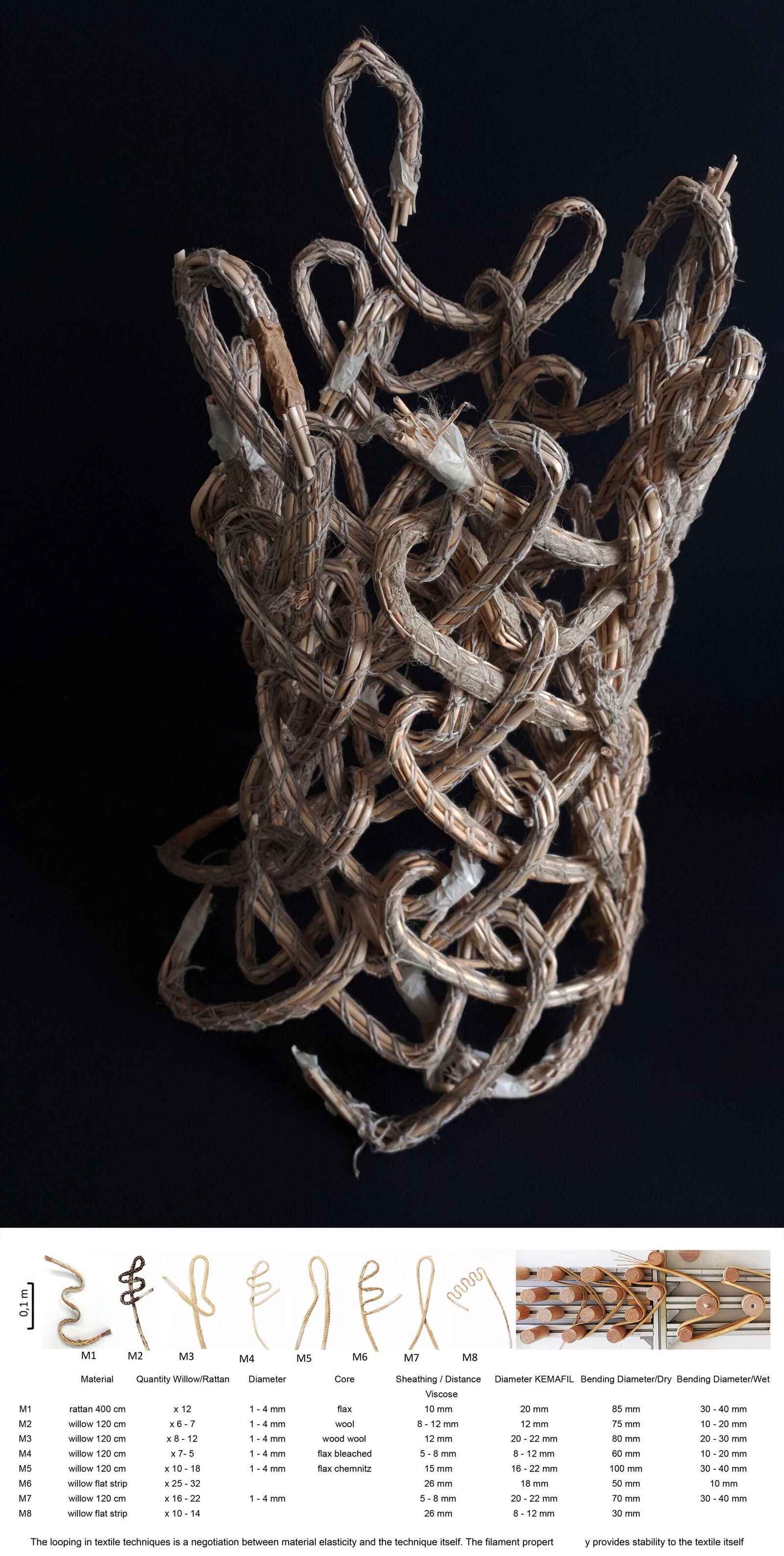
Plektonik Structural Textiles column – continuous wooden ›Active Yarns‹ 40 mm diameter loops. Copyright: Daniel Suárez & Natalija Miodragović
Design for Rethinking Resources
Cluster Members Beyer, Miodragović, Mossé and Suárez Publish in Proceedings of the UIA World Congress of Architects Copenhagen 2023
Weaving | Object Space Agency | Bacteria | Cellulose | Circular Economies | Publications | Textiles | Willow The book provides new perspectives from leading researchers accentuating and examining the central role of the built environment in conceiving and implementing multifaceted solutions for the complex challenges of our understanding of planetary resources and circularity, revealing critical potentials for architecture and design to contribute in more informed and long-term ways to the urgent transition of our society. Bastian Beyer et. al. contributed with the article »Towards a Bacterially-Induced Textile Architecture« and Daniel Suárez and Natalija Miodragović an article on »Plektonik— Active Yarns for Adaptive Loop-Based Material Systems«.
more
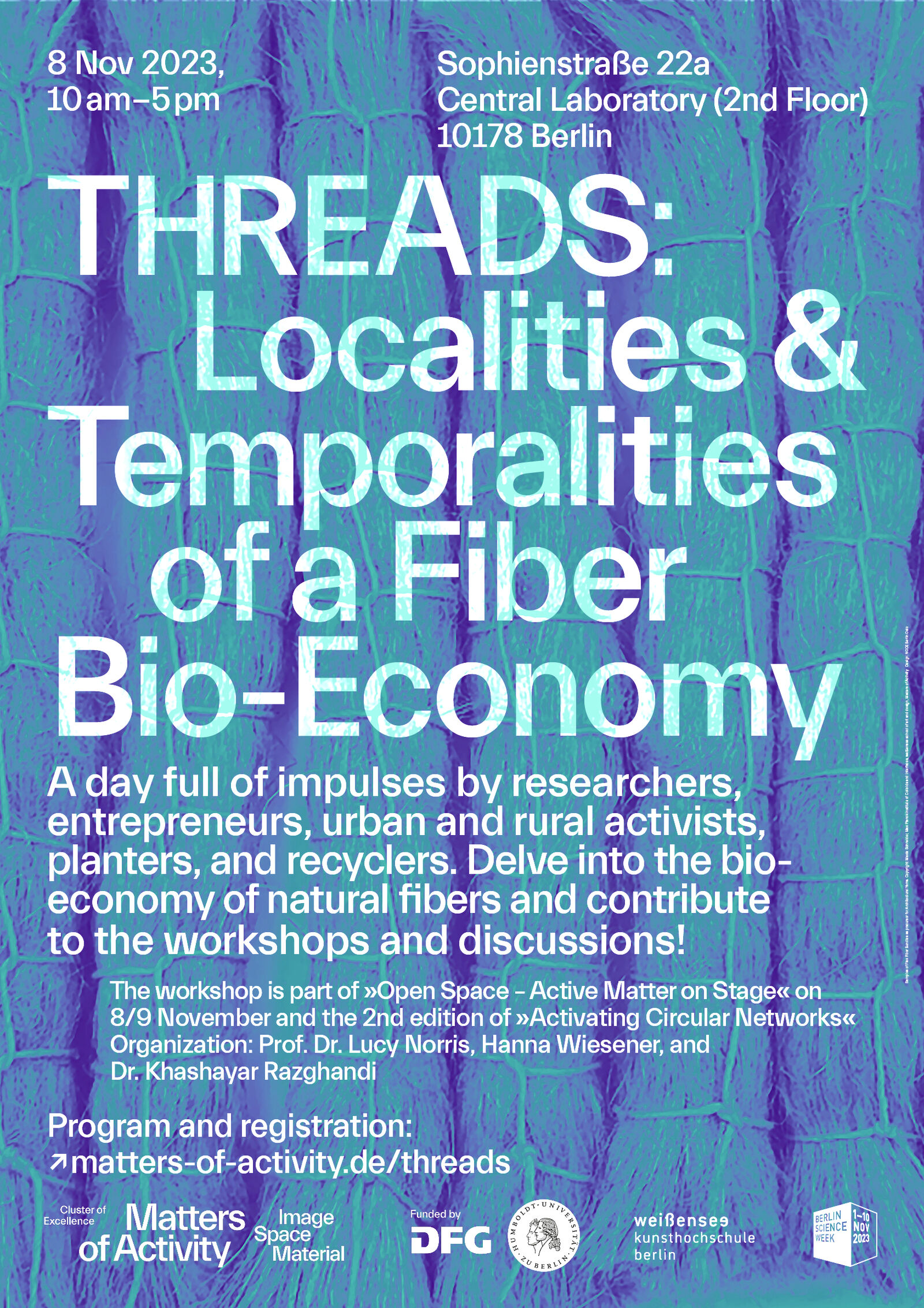
Samples of Flax Fiber Bundles as a precursor for Architectural Yarns, adapted by Node Berlin/Oslo. Copyright: Maxie Schneider, Max Planck Institute of Colloids and Interfaces, weißensee school of art and design, Matters of Activity
Threads: Localities & Temporalities of a Fiber Bio-Economy
Activating Circular Networks Goes Berlin Science Week 2023
Weaving | Material Form Function | Filtering | Science Communication | Yarns/Fibers | Circular Economies How can we deal with the complexities of transitioning to a bio-economy in which natural fiber could play a major role? The second event in the »Activating Circular Network« series unfolded on November 8th, 2023 as a pivotal part of MoA Berlin Science Week. The aim of the organizers Lucy Norris, Khashayar Razghandi, and Hanna Wiesener was to bring together diverse actors — researchers, designers, entrepreneurs, activists and artists — to explore the complexities of transitioning to a bio-economy of natural fibres.
more
Talking Wool – Wool in Exchange
Activating Circular Networks Event Series Will Kick Off on 1 June at Uferhallen Wedding
Filtering | Material Form Function | Wool | Circular Economies On June 1st, 2023, from 3 to 7 pm, at the Uferhallen in Wedding, the ›Activating Circular Networks‹ event series will kick off with »Talking Wool«: an event that brings designers, academics, politicians, and farmers together to discuss the issues surrounding European and local German wool, the problem of wool waste in particular, and fiber security. The workshop takes place within the ongoing group exhibition »Zur Nachahmung empfohlen - Erkundungen in Ästhetik und Nachhaltigkeit«. Our host for the event is professor and artist Folke Köbberling, an expert in exploring these challenges and potentials of coarse wool for years.
more
Activating Circular Networks
New Cluster Event Series Critically Explores Material Sustainability Concepts
Weaving | Filtering | Material Form Function | Circular Economies | More-Than-Human | Wool | Yarns/Fibers | Tree Bark Transforming linear economies into resource, energy, and more-than-human friendly processes means to bridge different areas of expertise. Ongoing discussions in different Cluster research groups such as MFF, Filtering, Weaving etc. have shown the importance of involving the perspectives of various actors, practitioners and experts into further research processes. Promising solutions and insights for a new material economy and culture are facing similar problems when it comes to transfer them from laboratory to the market. (Material) engineers, designers and activists face numerous challenges in expanding their activities, be they technological, political, economic or social. Kicking-off in June 2023, a new series of events will connect members of the Cluster interested in critically exploring material sustainability concepts with different practitioners and stakeholders from outside the Academy, and foster knowledge exchange in both directions.
more
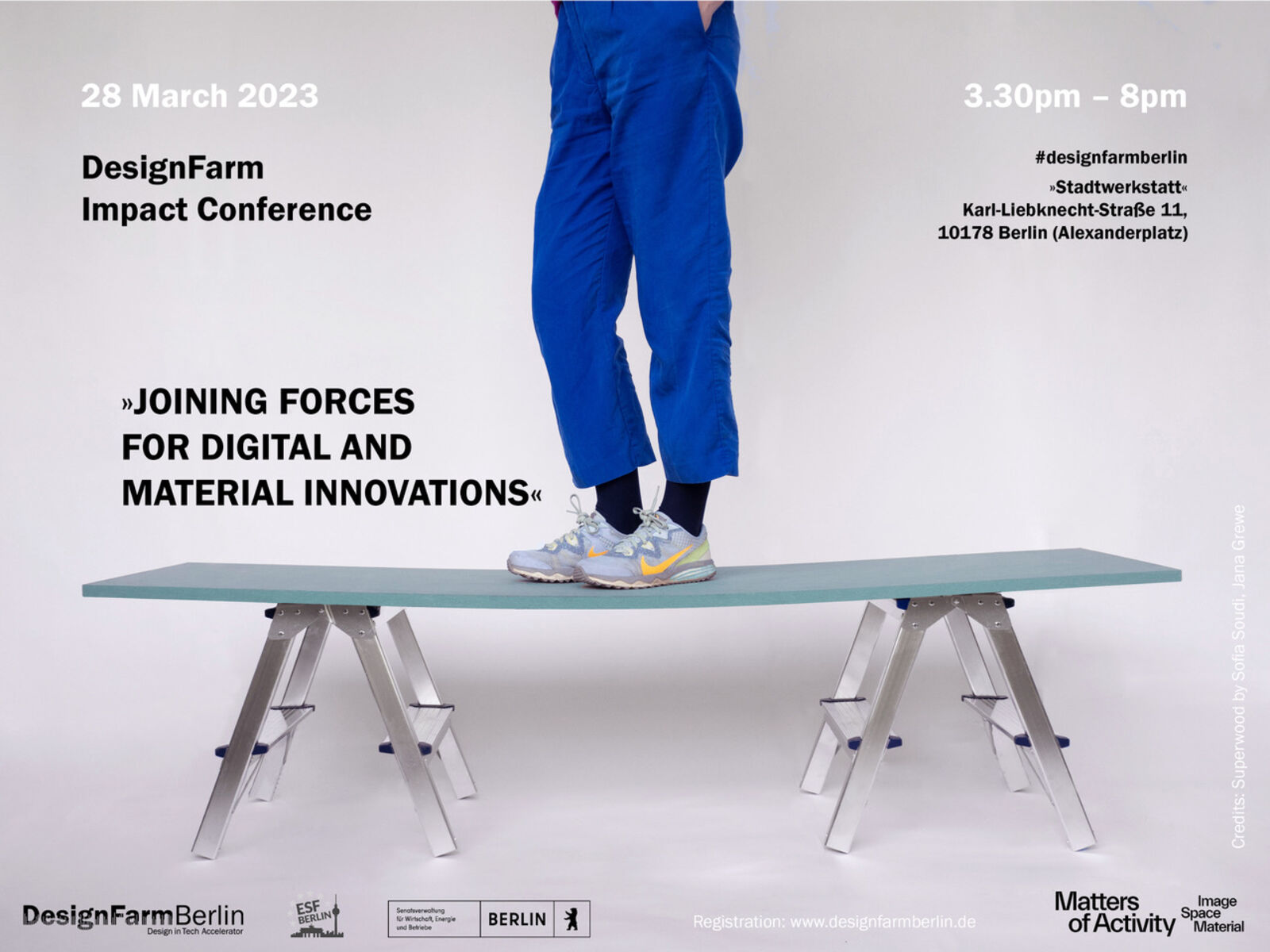
Design Impact Conference 2023, Image: Superwood by Sofia Soudi, Jana Grewe. Copyright: DesignFarmBerlin
DesignFarm Impact Conference
Joining Forces for Digital and Material Innovations
Filtering | Science Communication | Circular Economies Tuesday, March 28th, 2023, from 3:30-8:00 pm, DesignFarm Berlin invites you to the Design Impact Conference at Stadtwerkstatt near Alexanderplatz. Current startups will present their latest digital, material-based, and textile innovations and discuss their results with various practitioners and stakeholders. The conference is supported by scholars of weißensee school of art and design berlin and the Cluster of Excellence »Matters of Activity. Image Space Material« of Humboldt-Universität zu Berlin. The conference is part of the talk series about new qualities of entrepreneurship and circular economy within the Cluster.
more
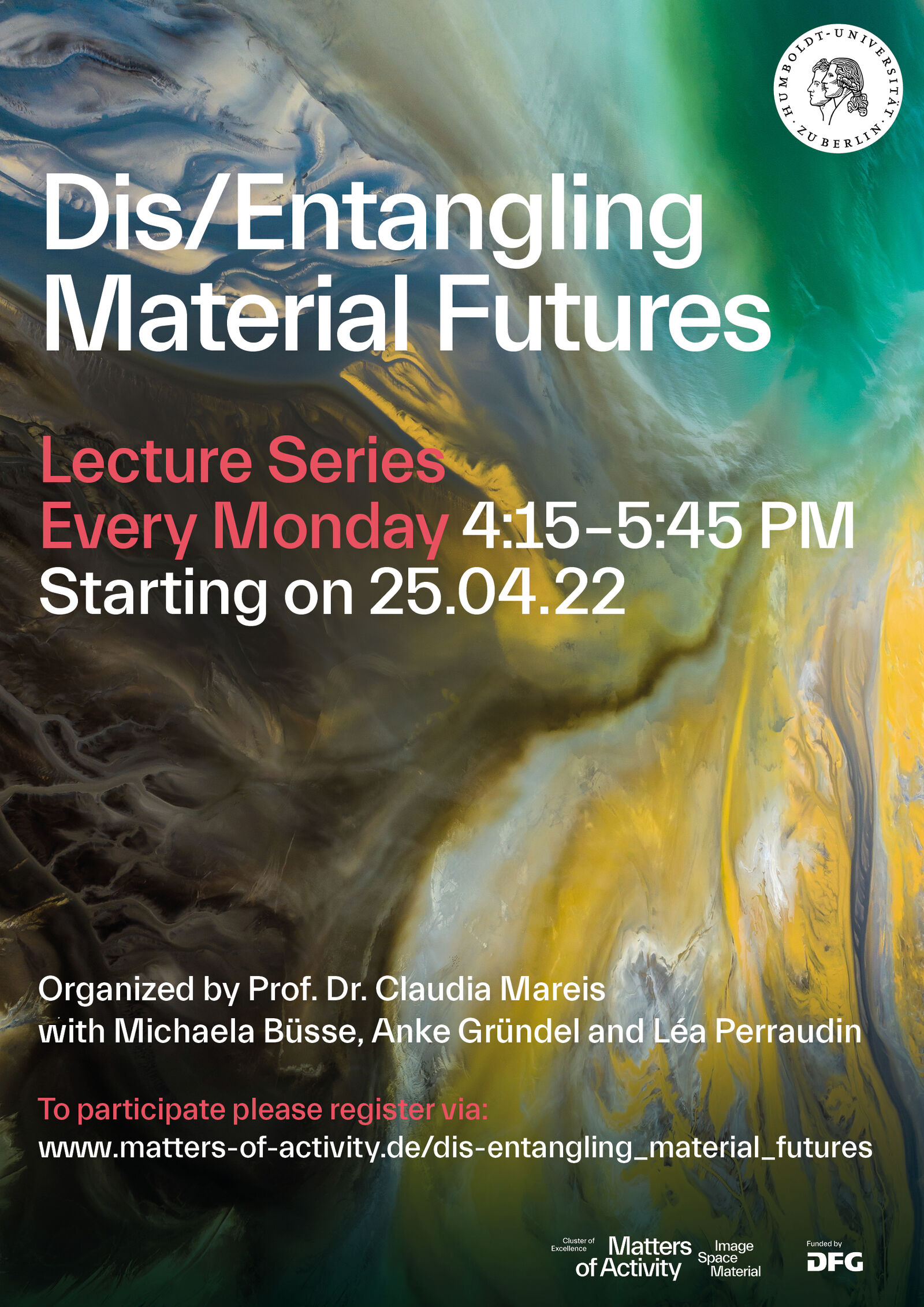
Dis/Entangling Material Futures. Copyright: Claudia Mareis
Dis/Entangling Material Futures
Lecture Series by Cluster Co-Director Claudia Mareis Continues
Material Form Function | Air | Circular Economies | Climate | More-Than-Human | Teaching | Sand The lecture series takes up the ambiguous role of materials in future-making practices along with the possible geo and bio-political precarity they may generate. Different materials from sand, water, or air to living cells and whole ecosystems are the objects and interface of a range of technologies that generate images of the future. Their probabilistic methods prepare the ideational and physical ground for large and small-scale design interventions (e.g., climate-resilient infrastructures). Register now and take part in the lecture series that continues until July 18th, every Monday 4.15 pm.
more
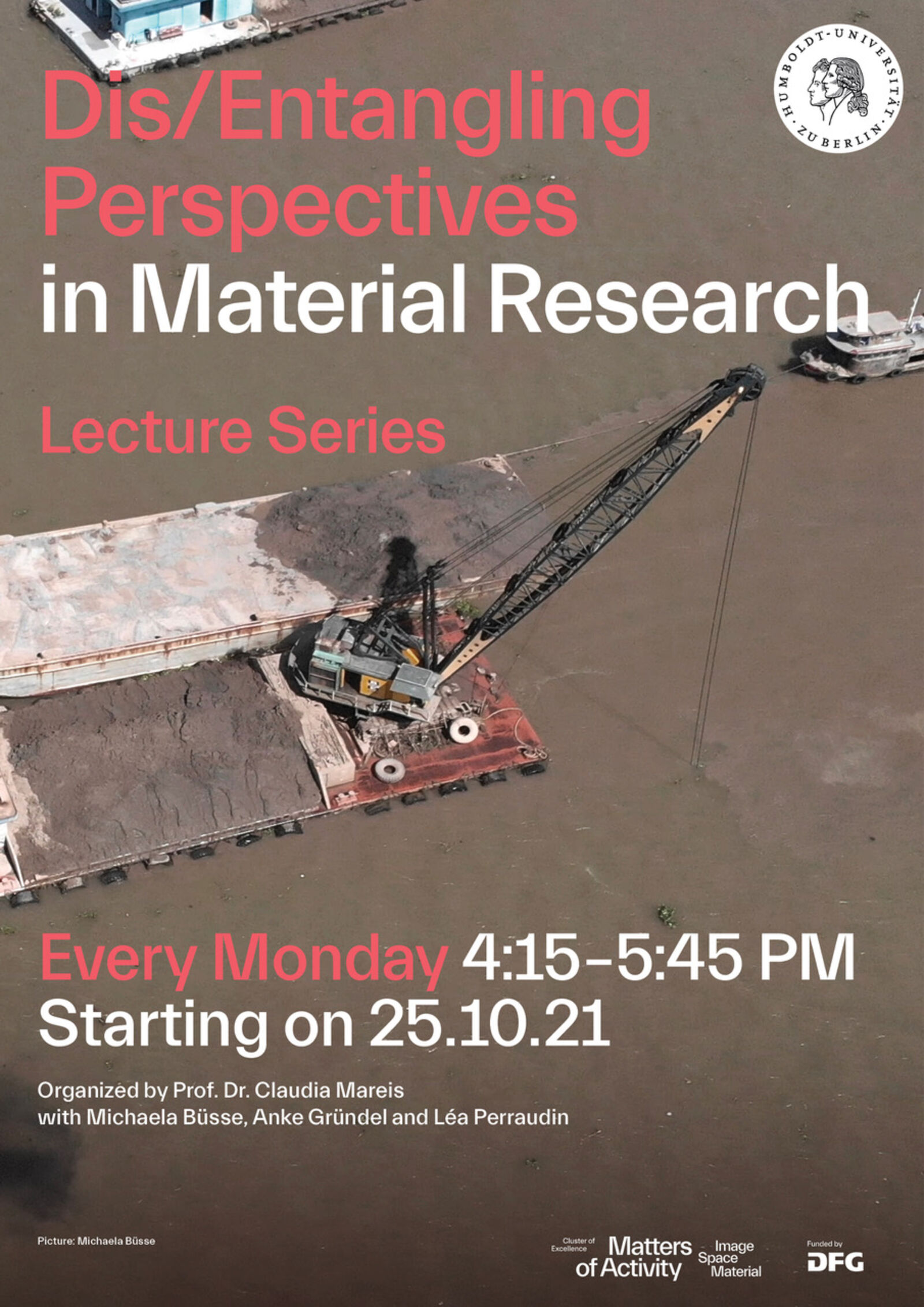
Poster »Dis/Entangling Perspectives in Material Research«. Copyright: Matters of Activity | Image: Michaela Büsse
Dis/Entangling Perspectives in Material Research
Online Lecture Series Starting on 25 October 2021, every Monday 4:15 pm–5:45 pm (CEST)
Material Form Function | Teaching | Circular Economies Materials such as water, sand, coal or crude oil are essential resources for industrial production, technological and infrastructural development. Although they are omnipresent in everyday life, their genealogies, epistemologies and ontologies are rarely called into question.
This lecture series, organized by Cluster Co-Director Claudia Mareis, focused on the ecological, sociopolitical and symbolic interrelations that unfold around the industrial utilization and commodification of materials. A critical historical perspective shows, among other things, that materials are often the result of and object to precarious geopolitics and biopolitics as well as unsustainable modes of production and consumption. As such the lecture series connected two discourses on material/political and power/knowledge relations.
more
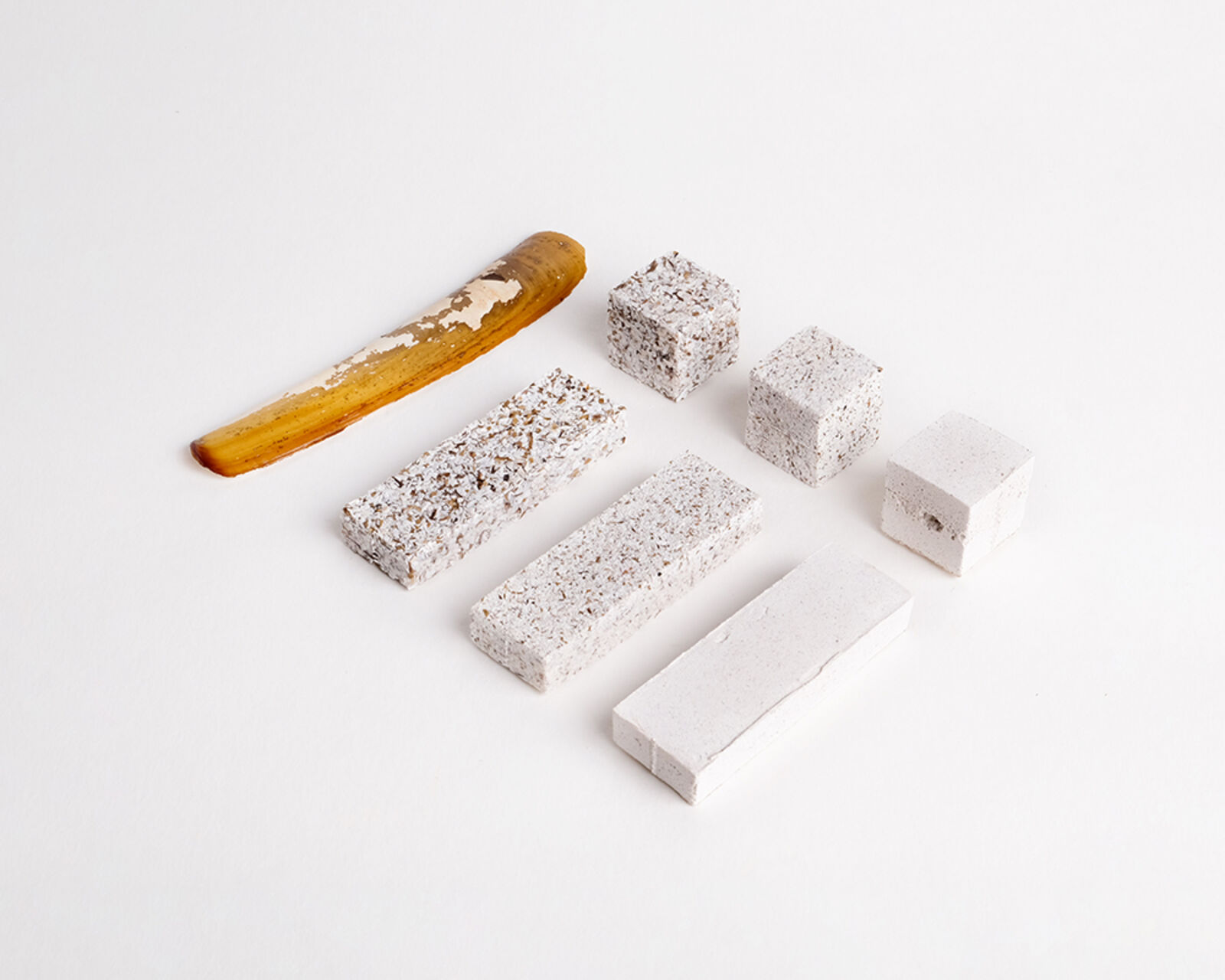
CONQ samples. Copyright: Heidi Jalkh and Angie Dub
CONQ
Marine Biobased Materials for the Built Environment
Biodesign | Ocean | Circular Economies | Prototype / Model Environmental architect Angie Dub and experimental designer Heidi Jalkh, based in Buenos Aires, are finding ways to turn sea shell waste into a sustainable material for the built environment. By combining crushed seashells with algae-based biopolymers, they create a heat-free bioceramic made entirely from marine biomass. In the current phase, material samples are undergoing testing to determine their physical properties and characteristics. These evaluations will inform and guide the exploration of possible implementation scenarios for the material in various applications.
more