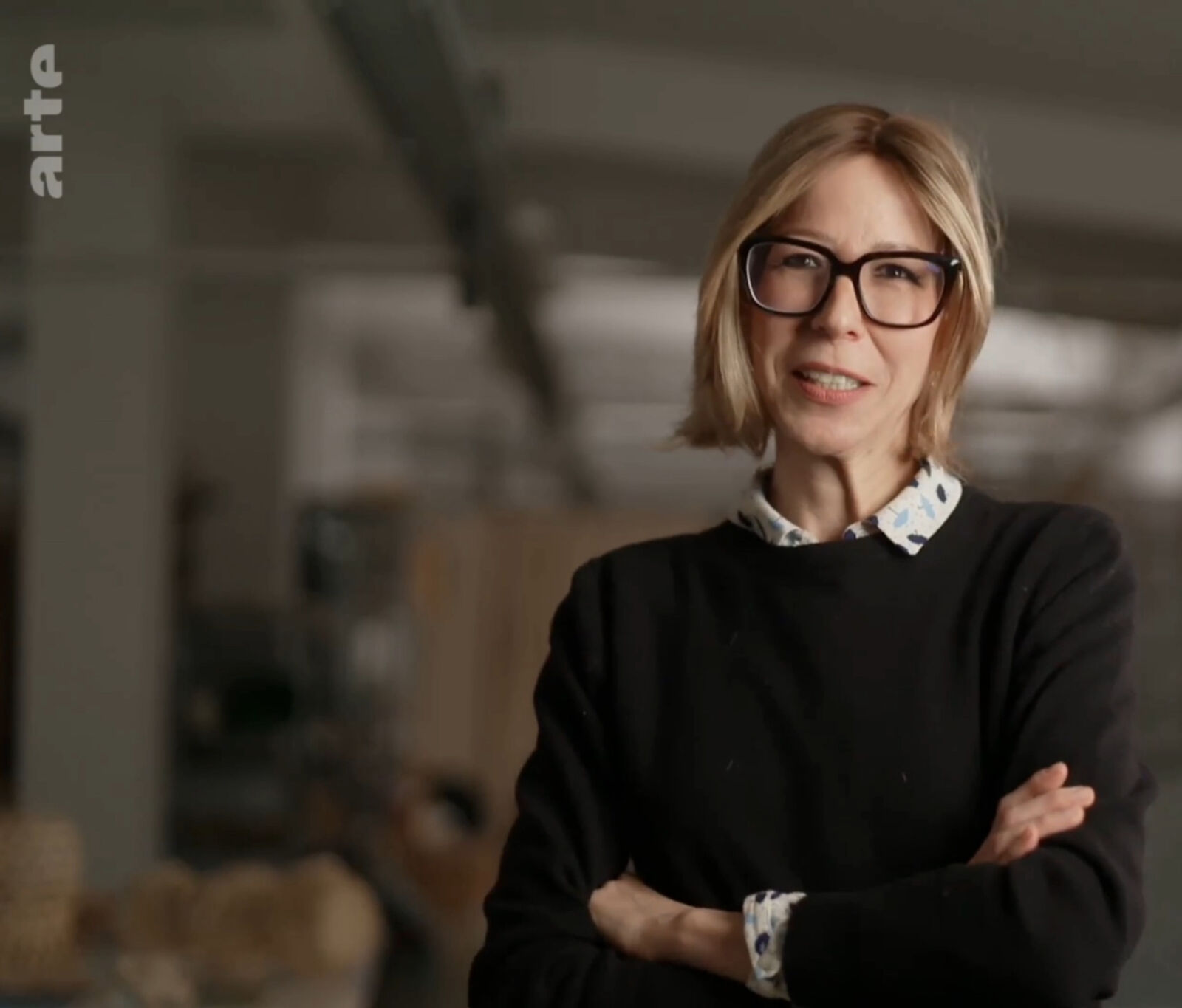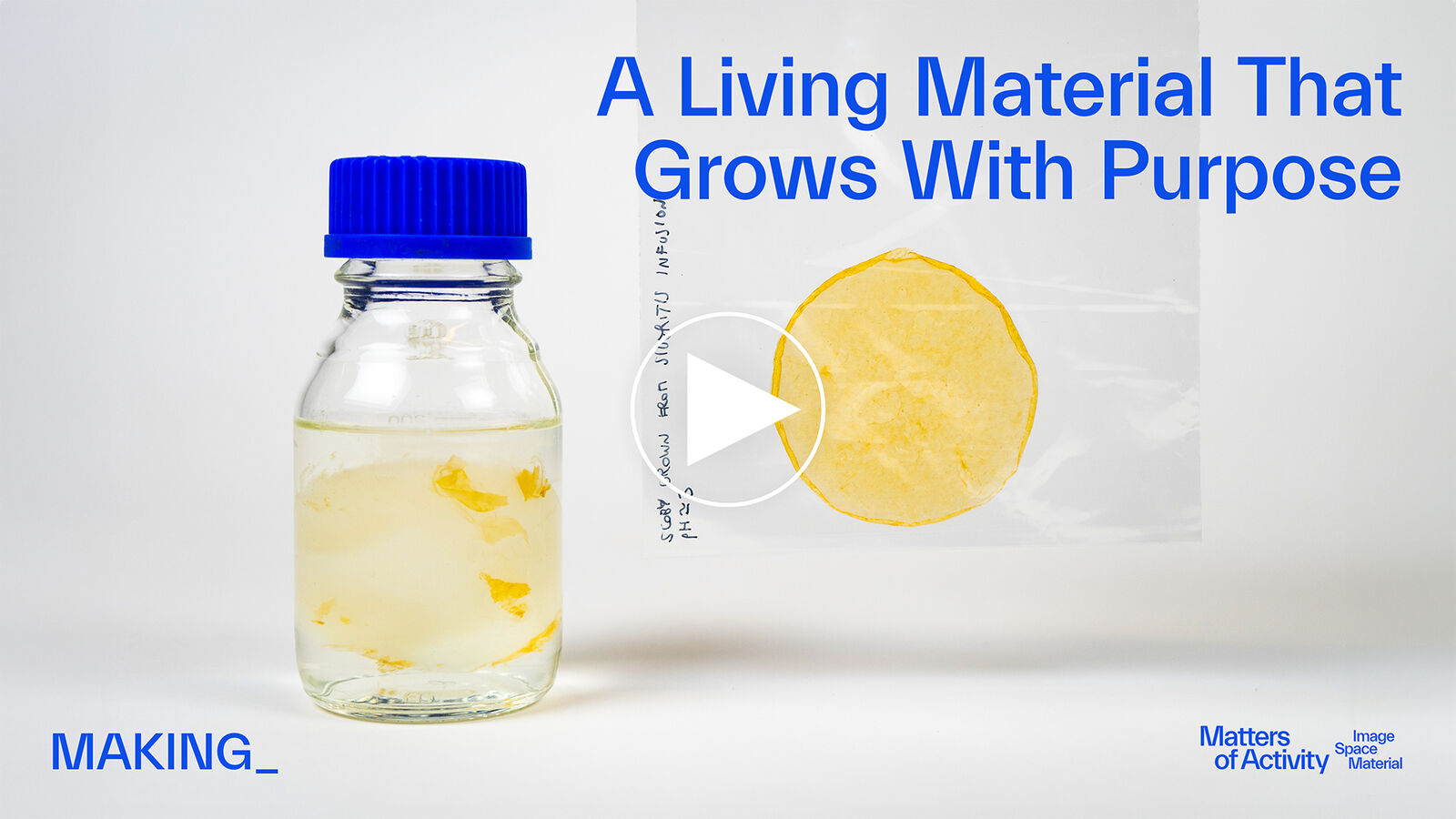
MAKING Scoby Grow with Emma Sicher. Copyright: Matters of Activity
MAKING Scoby Grow
New Episode with Emma Sicher
Weaving | MAKING_ | Cellulose | Biodesign | More-Than-Human | Bacteria | Biofilm | Science Communication Remember that cup of tea you left forgotten on your table for weeks? Don’t worry – you might have created something amazing without even realizing it! Meet the SCOBY – a symbiotic structure made of bacteria and yeast, a true powerhouse of bio-design! Find out more and watch the newest episode of »MAKING_«!
more
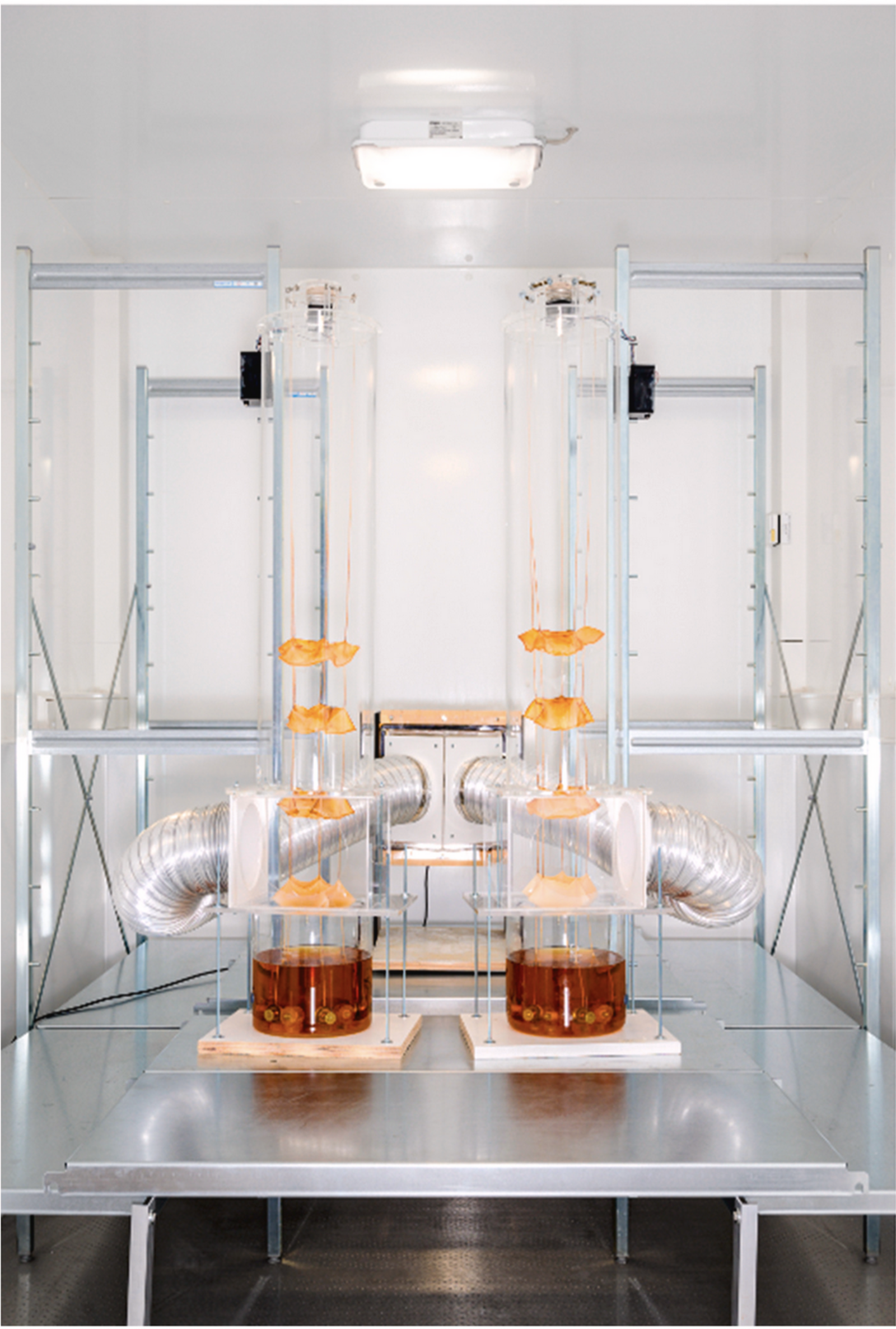
Automated elevator system for harvesting BC, photo: Marius Land. Detail of fig. 6 in: N. Rackov, N. Janßen, A. Akkache, B. Drotleff, B. Beyer, E. Scoppola, N.E. Vrana, R. Hengge, C.M. Bidan, S. Hathroubi, in: Bacterial cellulose: Enhancing productivity and material properties through repeated harvest, in: Biofilm Volume 9, June 2025, 100276, https://doi.org/10.1016/j.bioflm.2025.100276
Enhancing Productivity and Material Properties Through Repeated Harvest
New Paper on Bacterial Cellulose Out Now
Material Form Function | Weaving | Biofilm | Cellulose | Publications Bacterial cellulose (BC), a promising versatile biopolymer produced by bacteria, has immense potential in various industries. However, large-scale application is hindered by high production costs and low yields. This study introduces an innovative approach combining a prolonged static culturing with intermittent harvesting. The findings by the interdisciplinary team, which also included Cluster members Bastian Beyer, Cécile Bidan, Regine Hengge, and Skander Hathroubi, highlight the potential of intermittent harvesting for sustainable BC production and the role of bacterial adaptation in tuning BC properties.
more
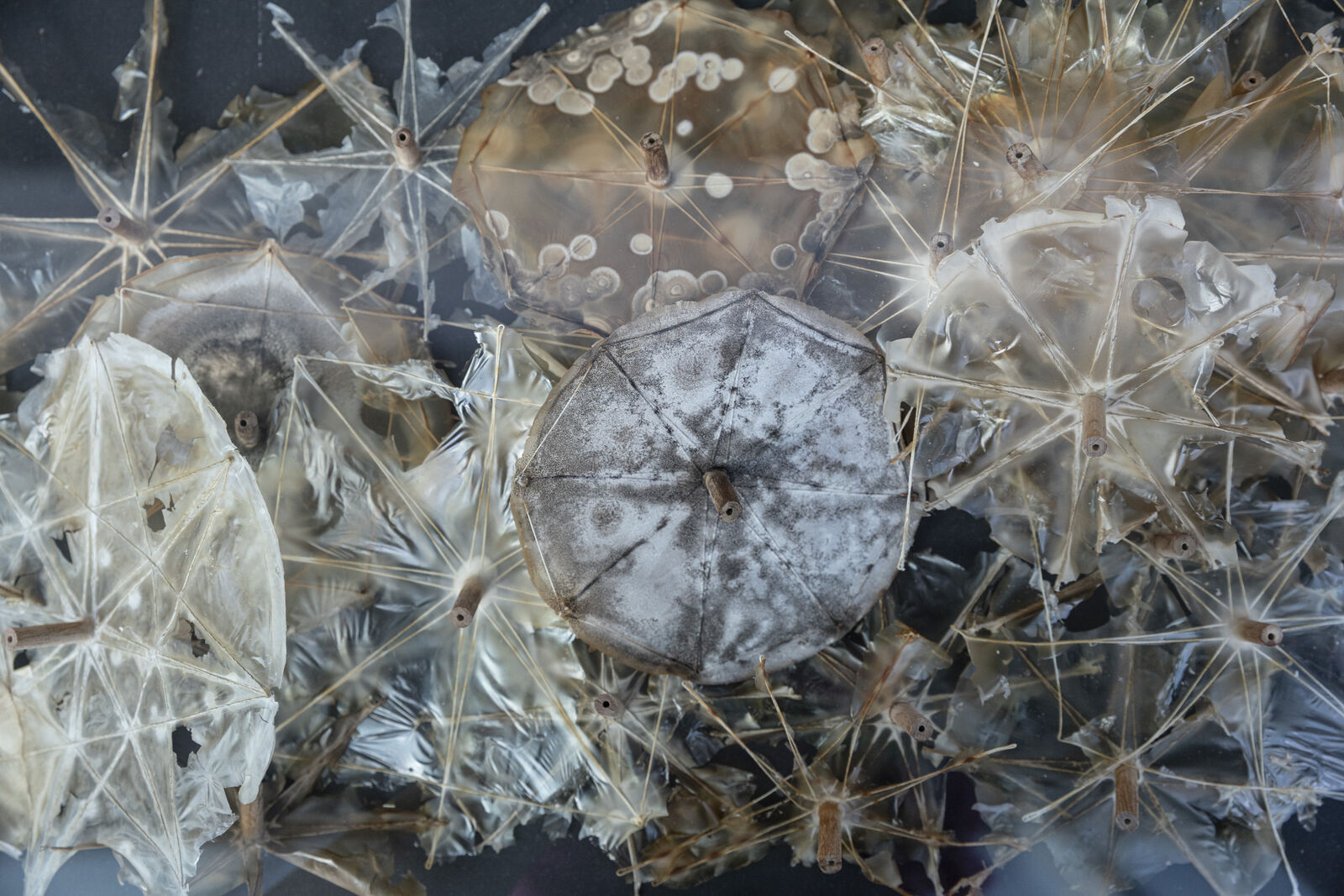
Co-Weaving Biofilms, Bastian Beyer, Iva Rešetar, Moritz Liedtke, Regine Hengge, Installation for Bauhaus Museum Dessau, 2025, photo: Michelle Mantel. Copyright: Matters of Activity
Bauhaus Ecologies
Installation »Bacterial Cellulose: Co-Weaving Biofilms« Featured at Exhibition in Dessau
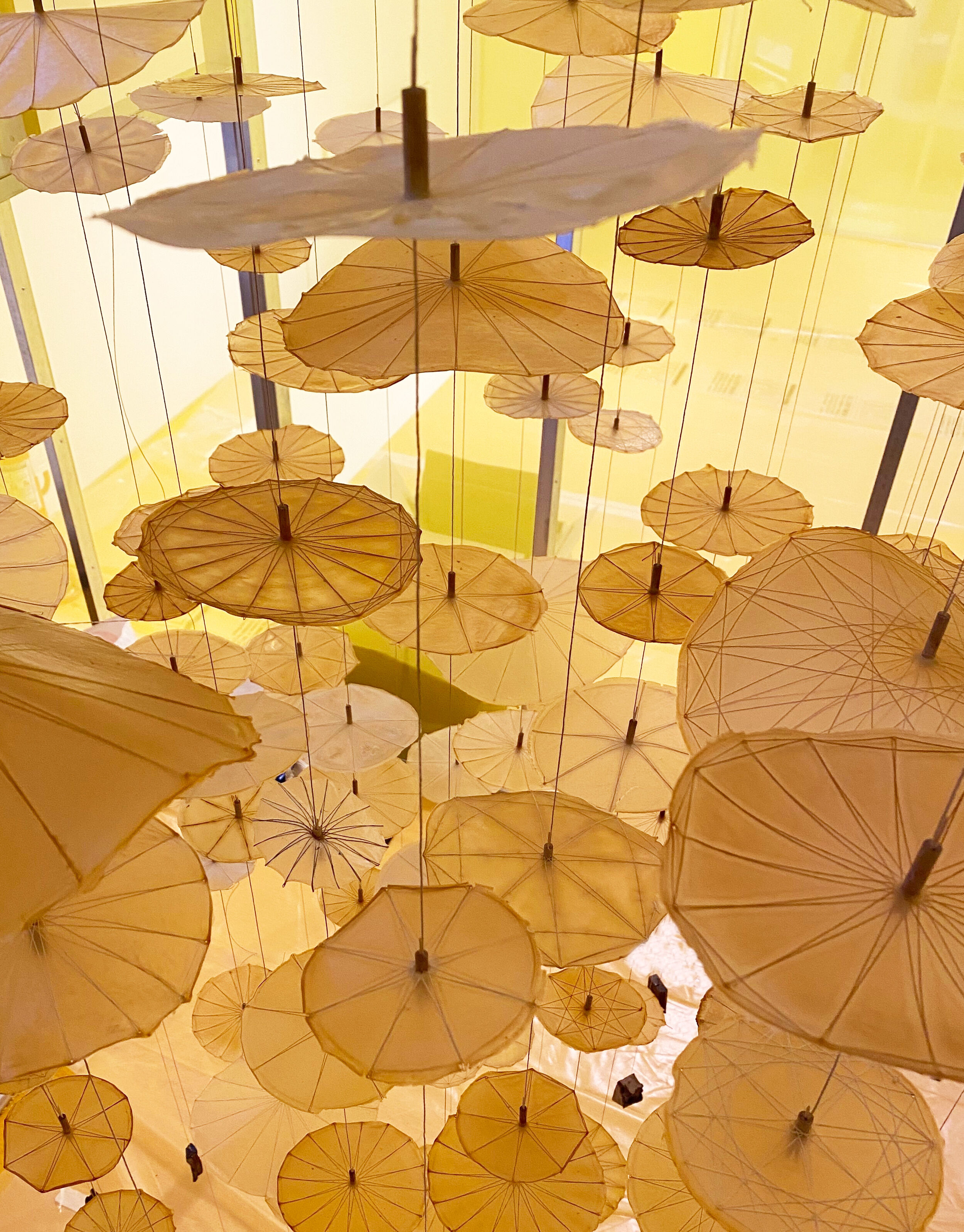
Material Form Function | Weaving | Bacteria | Bauhaus | Biodesign | Biofilm | Cellulose Was the historic Bauhaus interested in ecology? Presumably in a different context than today. The exhibition »Bauhaus Ecologies«, on view from April 11th to November 2nd, 2025 at Bauhaus Museum Dessau, explores approaches to ecological thinking in modern design. We are thrilled to share that the exhibition also features the installation »Bacterial Cellulose: Co-Weaving Biofilms« developed in the Cluster of Excellence »Matters of Activity«. The project of architects Bastian Beyer and Iva Rešetar and microbiologist Regine Hengge presents the latest results of research at the interface between design, materials science, and biology.
more
Rethinking Raw Materials: Design, Brains and the Future
Cluster Member Emma Sicher Gives Talk at Futurium
Weaving | Climate | Brain | Biodesign | Cellulose | Biofilm | Bacteria Moderator Pireeni Sundaralingam, a cognitive scientist, and her guests, Emma Sicher, MoA Pre-Doctoral Researcher and Anna Yona, founder and managing director of »Wildling« will discuss the future of sustainable design and the unconventional use of raw materials at Berlin’s ›House of Futures‹. Emma is a designer investigating materials and foods at the intersection of microbiology and anthropology to envision relational futures. What would happen if we used different materials for our clothes and our shoes? How could our food systems or our buildings use completely different raw materials? A ticket is required, but the admission is free of charge.
more
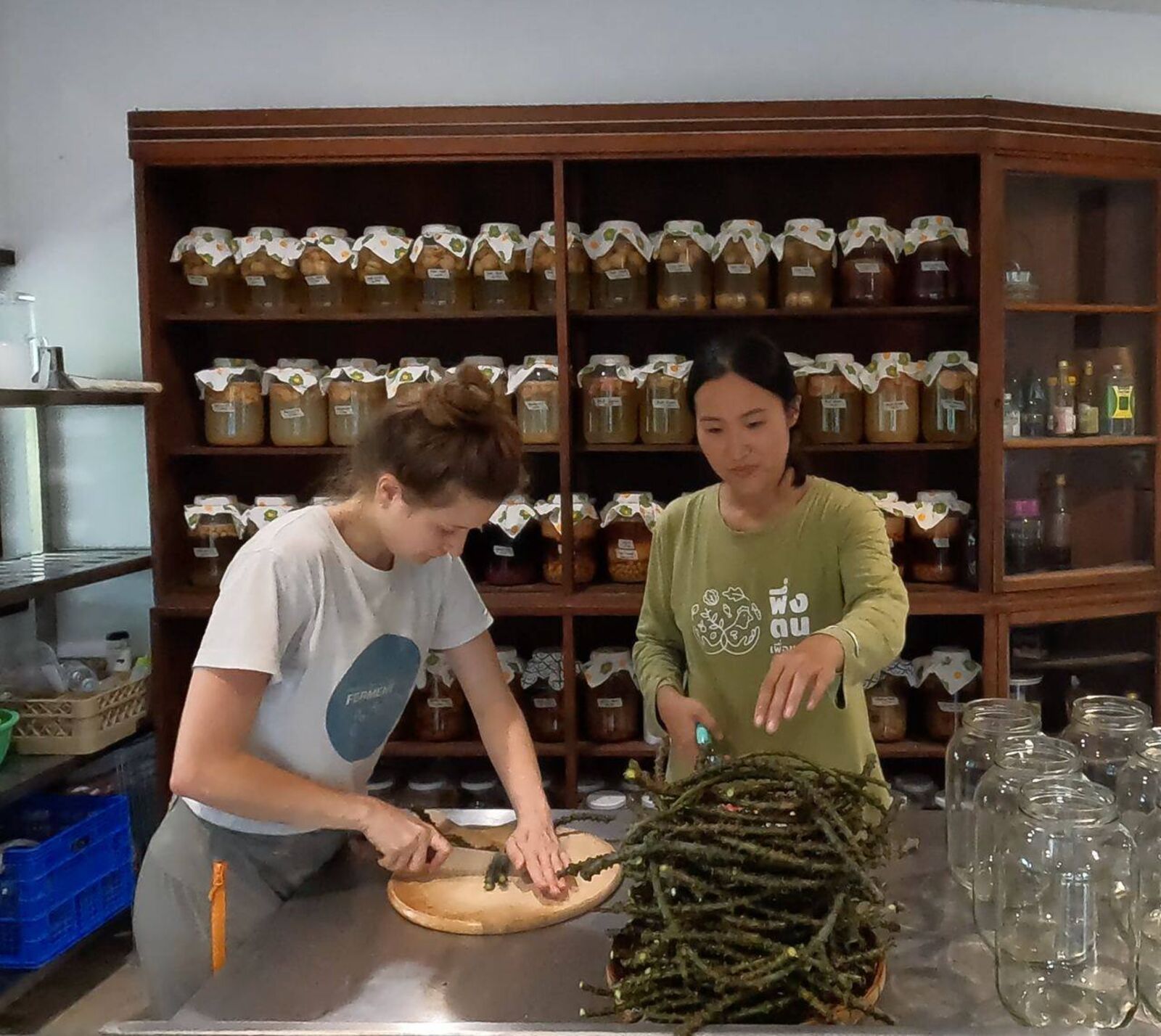
Fermentation preparation with Tanyaporn Tantasathien. Thailand 2024. Copyright: Emma Sicher
Generating Biomaterials By Acetic Fermentation
Emma Sicher Exchanged Knowledge with Researchers and Practitioners in Thailand
Weaving | Bacteria | Biodesign | Biofilm | Cellulose | Doctoral Program Between May and June, doctoral researcher Emma Sicher spent three weeks in Thailand as part of her PhD in Design Studies. Invited by Professor Aracha Krasae-in, she presented the work of the Cluster and her current research at the Faculty of Architecture of Kasetsart University in Bangkok. There, she also exchanged ideas with Professor Prakit Sukyai, an expert in Biotechnology and Biopolymers. Additionally, she presented at the Faculty of Fine and Applied Arts of Thammasat University, invited by Professor Wuthigrai Siriphon.
The heart of the experience consisted of visits to two sites associated with acetic fermentation techniques that can generate biomaterials. These techniques range from ancient practices to more recent methods, employed in various ways from fertilizers to health-promoting substances. The visits took place in small artisanal production realities in Nakhon Ratchasima province, including Stefano and Somporn Abbruzzese, and Micro Friends, an initiative run by Tanyaporn Tantasathien and Waratchanat Thongthiangtham at the Baan Ama farm stay.
more
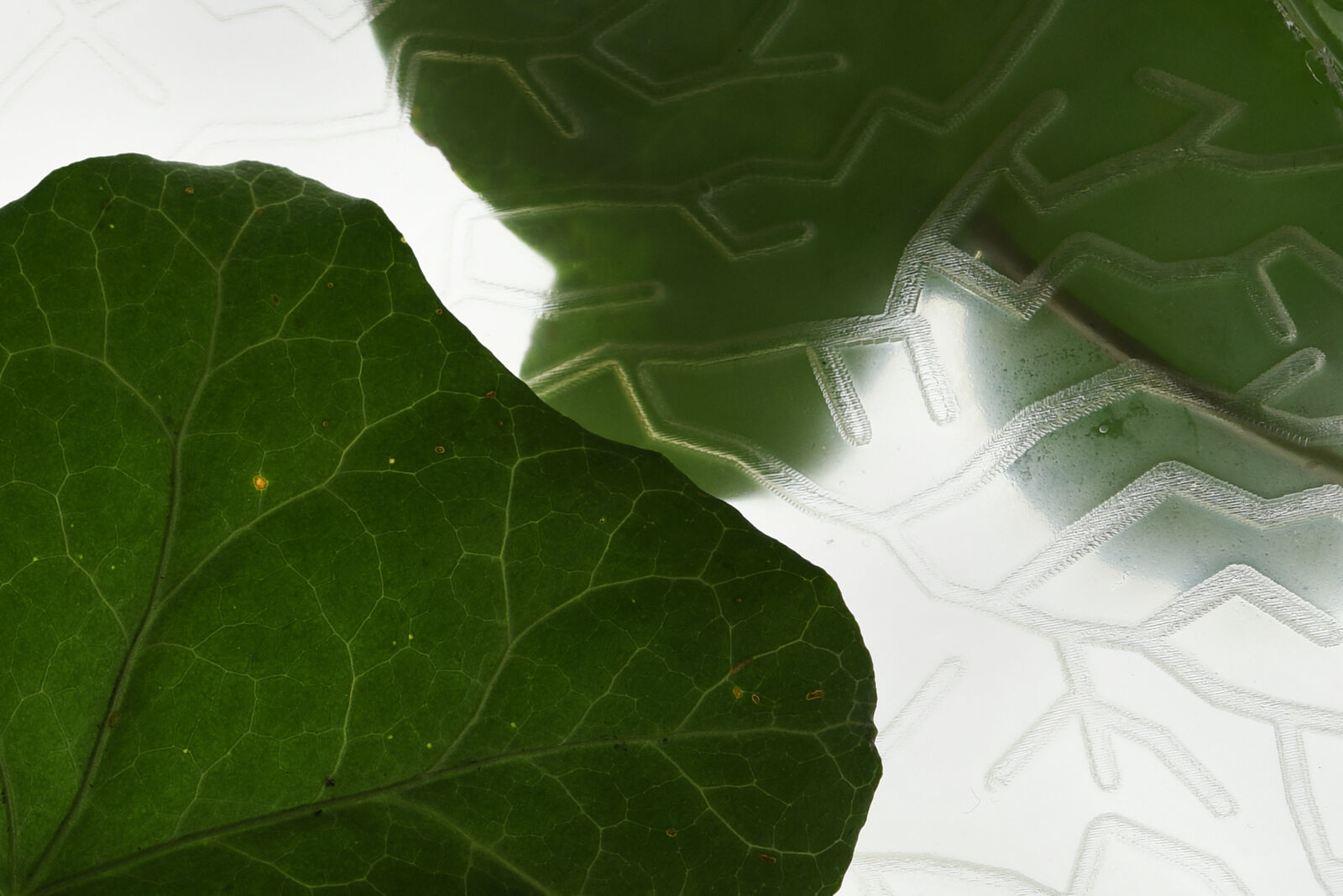
Gestalten mit Cellulose, Wasser und Luft. Copyright: Eva Bullermann
Magic Machines aus Bio-Plastik
Open Lab Abend der Reihe »Materialzukünfte besuchen« im Futurium
Material Form Function | Robotics | Cellulose | Water | Collactive Materials | Speculative Design | Science Communication In diesem Workshop ging es um flexible Materialien wie Cellulose, Bio-Plastik und Silikon als mögliche (neue) Materialien für Soft Robotics oder gar biologische Maschinen. Soft Robotics ist ein relativ junges Forschungsfeld, das sich mit alternativen Ansätzen zur Gestaltung der Maschinen von morgen beschäftigt. Wie können wir Maschinen bauen, damit sie sensibler und anpassbarer werden? Können wir dafür adaptive vielleicht sogar nachhaltige Materialien nutzen, statt immer mehr Metall, Plastik und Energie zu verbrauchen? Mit den Design-Forscherinnen Anna Schäffner und Eva Bullermann spekulieren wir darüber, wie die Maschinen der Zukunft gestaltet sein könnten. Wie sieht deine Magic Machine aus?
more
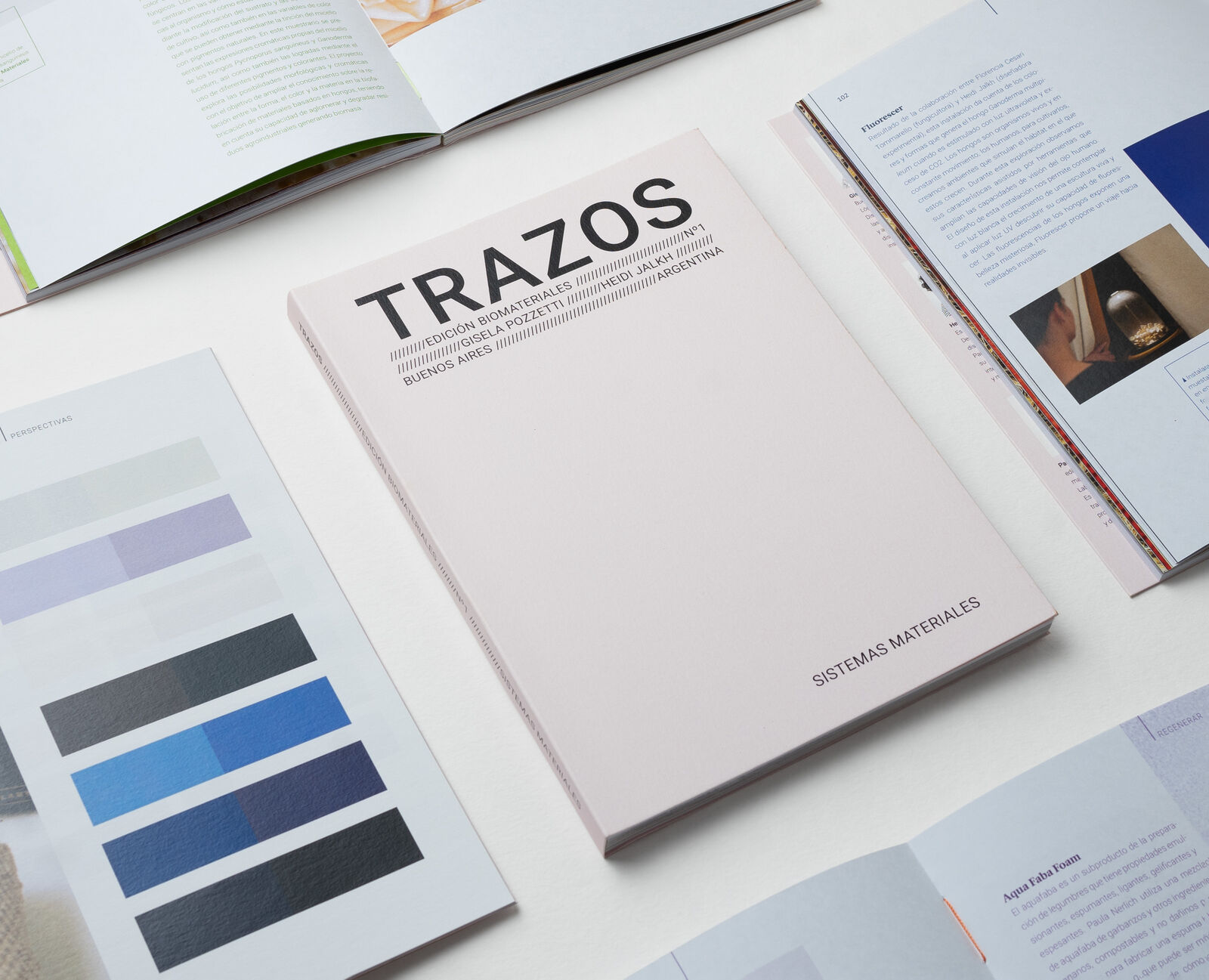
Copyright: Sistemas Materiales
Trazos
Pioneering Publication on Biomaterials Launched in Buenos Aires
Material Form Function | Bacteria | Biofilm | Cellulose | Publications | Tree Bark | Fungi/Mycelium »Trazos« is a pioneering publication in Spanish in the interdisciplinary field of biomaterials developments. The book is divided into three sections which explore, interrogate, shape, and reflect on these scientific and creative advancements. This book encourages interaction between the Spanish-speaking community and provides access to a topic predominantly discussed in English. It seeks to stimulate dialogue and amplify the reach of the Latin American biomaterials field to a broader audience. Likewise, it aspires to foster collaborations that transcend language barriers, promoting enriching exchanges of ideas and knowledge. The book, edited by MoA Associated Member Heidi Jalkh and Gisela Pozzetti, and designed by Paula Rodríguez, includes contributions by MoA researchers Bastian Beyer, Johanna Hehemeyer-Cürten, Wolfgang Schäffner, Daniel Suárez, Charlett Wenig and by Rodrigo Martin Iglesias, Coordinator of the Master Open Design.
more
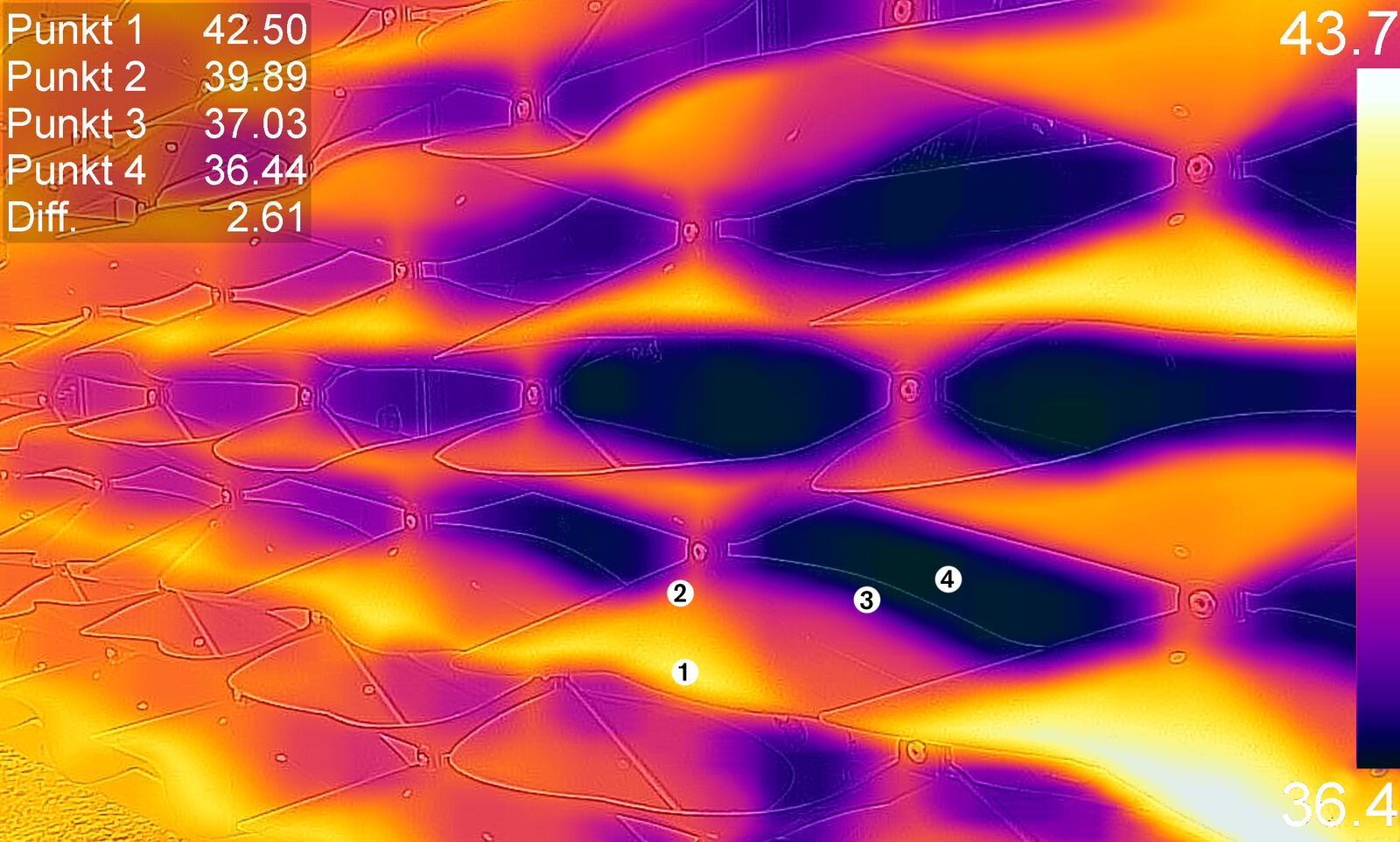
Thermography shows the effect of shading and the influence of solar radiation on surface temperatures. Copyright: Maxie Schneider
Materialzukünfte besuchen: Smartes Material für überhitzte Städte
Workshop Series at Futurium
Climate | Cellulose | Biofilm | Collactive Materials | Science Communication | Prototype / Model | Speculative Design | Yarns/Fibers Gestaltet das Futurium Lab selbst mit! In der öffentlichen Workshopreihe »OPEN LAB ABEND: Materialzukünfte besuchen« spekulierten Teilnehmende darüber, aus welchen Materialien die Welt von morgen gemacht sein könnte. Die Workshopreihe umfasste 4 Termine und fand von März bis Juni im Futurium statt. Forschende von »Matters of Activity« (MoA) gaben Einblick in ihre Arbeit. Davon ausgehend entwickelten Teinehmende Zukunftsszenarien und gestalteten Prototypen, die im Anschluss zusammen mit Objekten aus der MoA-Forschung im Lab ausgestellt wurden. Begleitet wurden Teilnehmende dabei vom spekulationserfahrenen Team von »CollActive Materials«.
It’s getting hot in here... In diesem ersten Workshop ging es darum, wie wir mit smarten Materialien die Städte der Zukunft gestalten können. Im Sommer machen steigende Temperaturen, Metall und Beton das Leben in der Innenstadt für alle Bewohnenden immer mehr zur Herausforderung. Welche Materialien schaffen Abhilfe in überhitzten Städten?
more
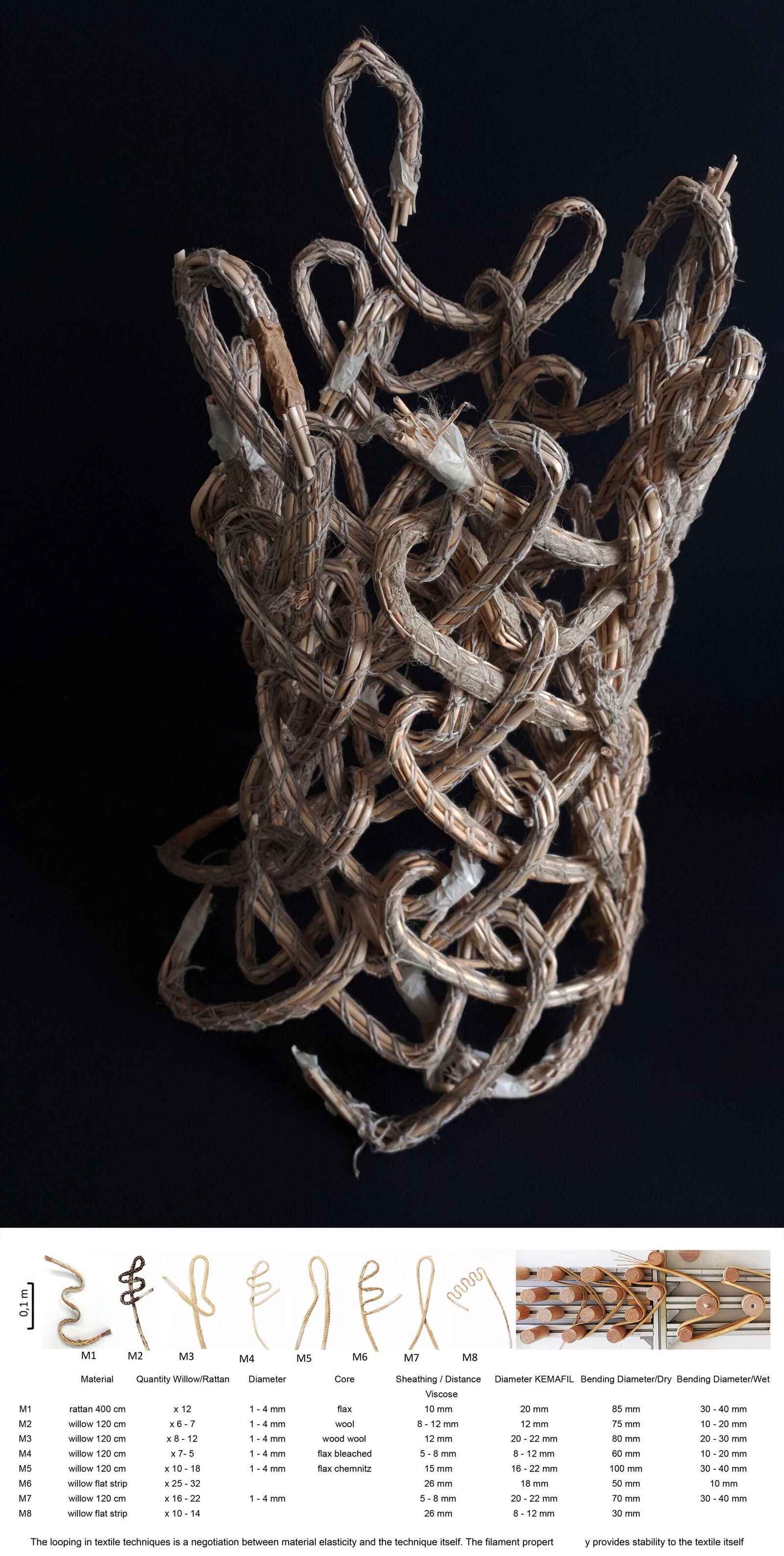
Plektonik Structural Textiles column – continuous wooden ›Active Yarns‹ 40 mm diameter loops. Copyright: Daniel Suárez & Natalija Miodragović
Design for Rethinking Resources
Cluster Members Beyer, Miodragović, Mossé and Suárez Publish in Proceedings of the UIA World Congress of Architects Copenhagen 2023
Weaving | Object Space Agency | Bacteria | Cellulose | Circular Economies | Publications | Textiles | Willow The book provides new perspectives from leading researchers accentuating and examining the central role of the built environment in conceiving and implementing multifaceted solutions for the complex challenges of our understanding of planetary resources and circularity, revealing critical potentials for architecture and design to contribute in more informed and long-term ways to the urgent transition of our society. Bastian Beyer et. al. contributed with the article »Towards a Bacterially-Induced Textile Architecture« and Daniel Suárez and Natalija Miodragović an article on »Plektonik— Active Yarns for Adaptive Loop-Based Material Systems«.
more
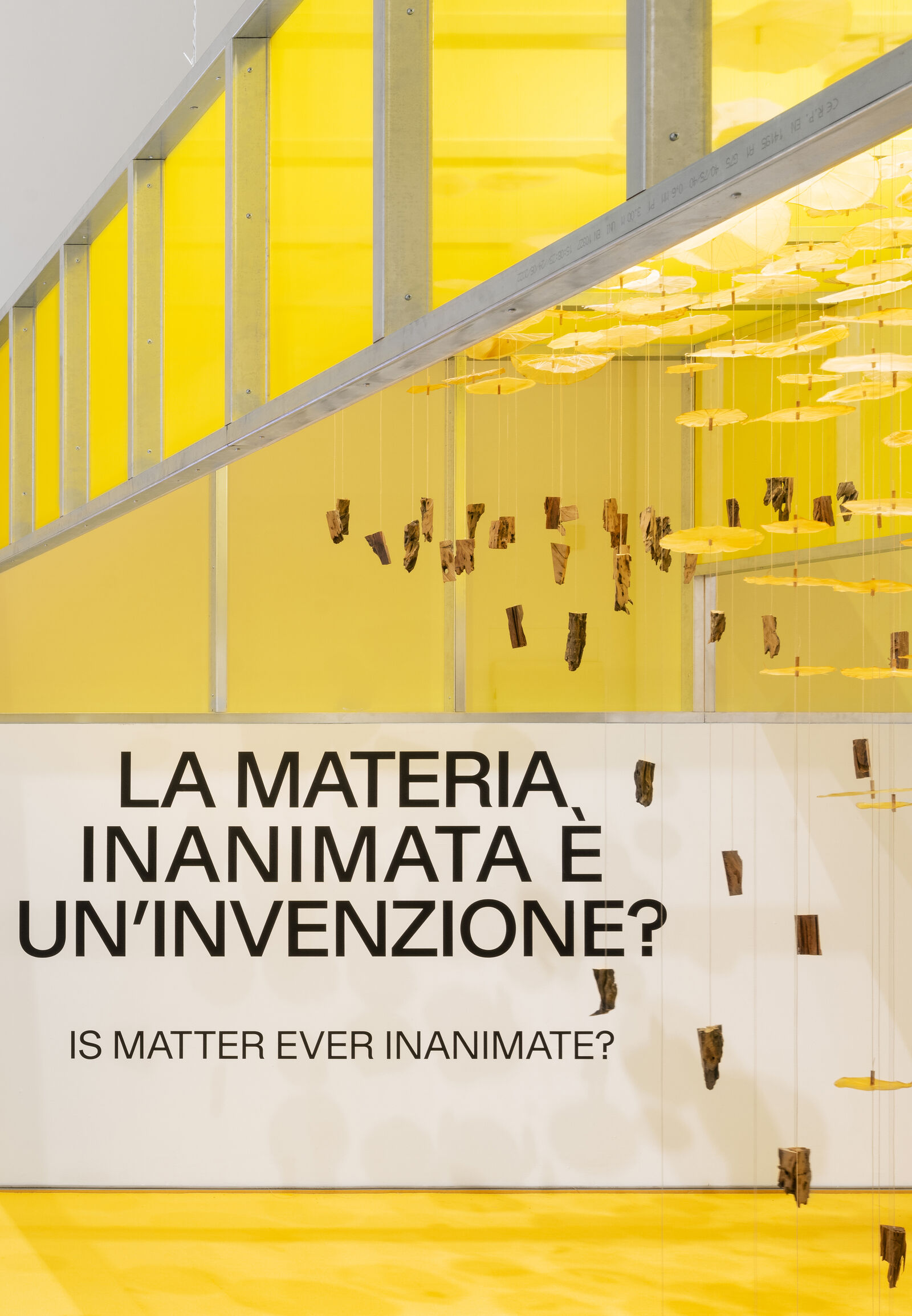
MoA Project »Bacterial Cellulose: Co-Weaving Biofilms« at the Milano Triennale 2022. Copyright: Triennale Milano – photo by DSL Studio
Bacterial Cellulose: Co-Weaving Biofilms
An Installation for the Triennale XXIII: »Unknown Unknows, An Introduction to Mysteries«
Weaving | Material Form Function | Object Space Agency | Bacteria | Biofilm | Science Communication | Cellulose Cellulose of different forms and origins is woven together in this structure: pieces of wood, paper threads and biofilms grown by bacteria. A collaborative textile is created – human, plant and microbial. Three MoA research projects, Weaving, Material Form Function and Object Space Agency and with that many MoA Members worked together on the project »Bacterial Cellulose: Co-Weaving Biofilms« shown at the Triennale di Milano XXIII »Unknown Unknows, An Introduction to Mysteries«, in the thematic exhibition »Alchemic Laboratory«, curated by Ingrid Paoletti, from July 15th to December 11th, 2022.
more
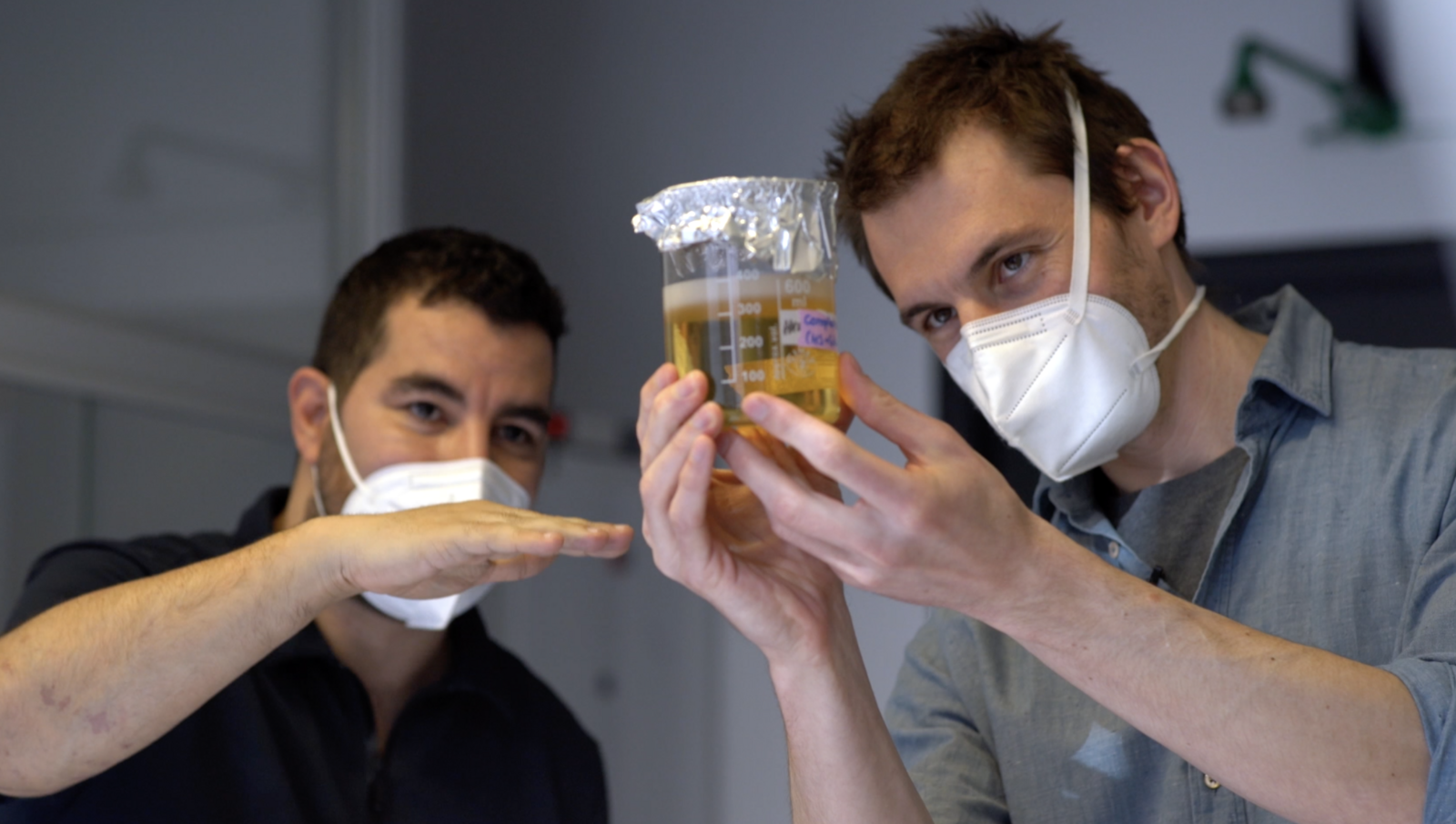
Still from Interview with Bastian Beyer and Skander Hathroubi showing the making of parts of the »Active Curtain Project« shown at the exhibition »After Nature« at Humboldt Lab. Copyright: Anne von Petersdorff (info@annevonpetersdorff.com) for Humboldt-Universität zu Berlin
Bacteria as Architects
Interview with Bastian Beyer and Skander Hathroubi
Weaving | Bacteria | Biofilm | Cellulose | Science Communication The Cluster of Excellence »Matters of Activity. Image Space Material« investigates materials that are built by bacteria. Architects and biologists work together to explore new, sustainable materials. Some of these bacterial structures were on display at the Humboldt Lab. In the interview with Cluster Members Bastian Beyer and Skander Hathroubi, parts of the development of the »Active Curtains Project« are presented in more detail.
more
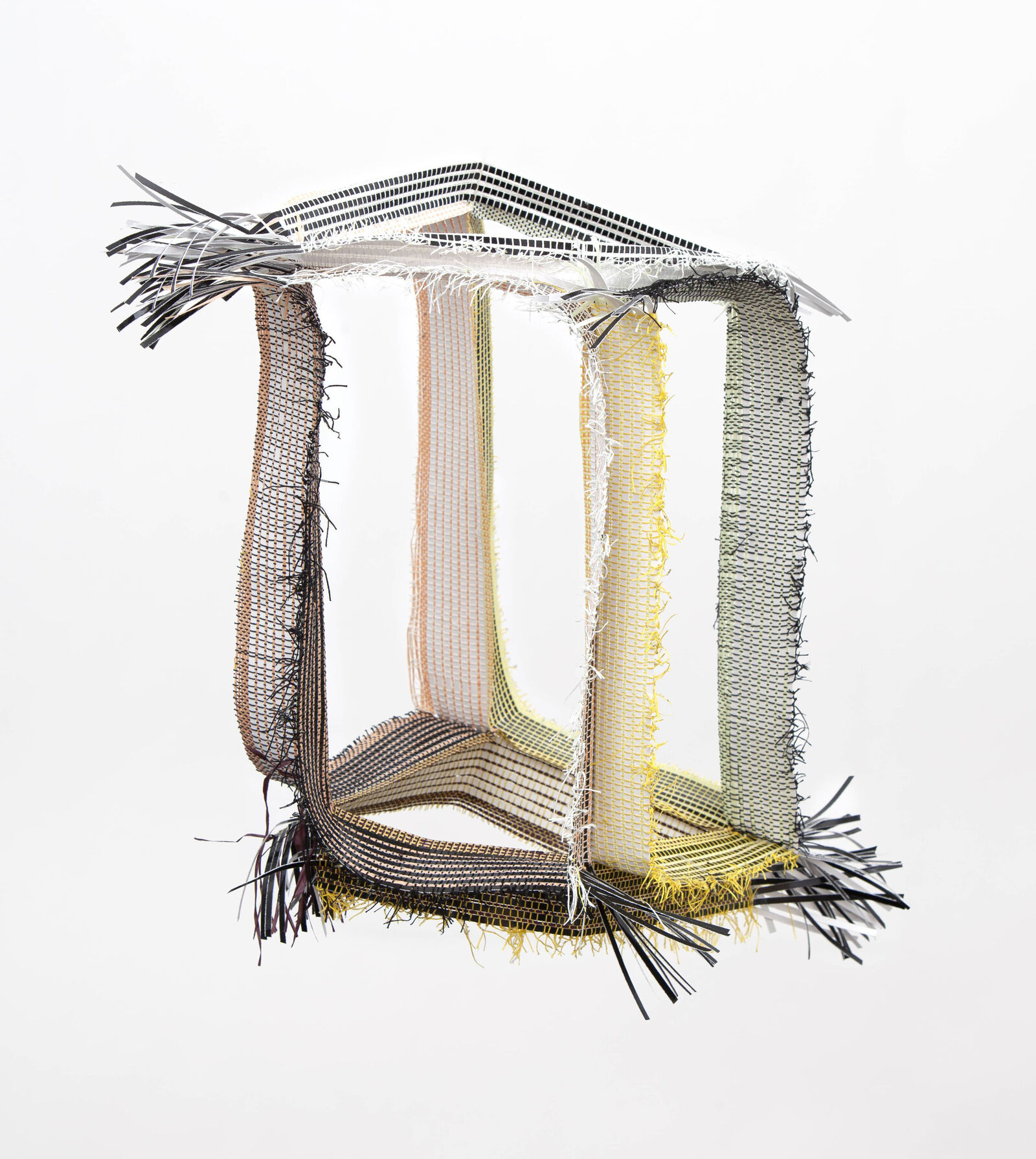
Hella Jongerius, Woven Cosmos – Pliable Architecture (2021), Copyright: Hella Jongerius / VG Bild-Kunst 2021, Photo: Laura Fiorio.
The Event of a Fibre
Essay by Regine Hengge and Karin Krauthausen on the Occasion of the Exhibition »Hella Jongerius: Woven Cosmos« Published
Weaving | Yarns/Fibers | Bacteria | Biofilm | Cellulose | Publications Regine Hengge's and Karin Krauthausen's essay »The Event of Fibre« has been published in the volume accompanying the exhibition »Hella Jongerius: Woven Cosmos« which was shown in Berlin's Gropius Bau from April 29th to September 15th, 2021.
Whether in DNA interactions, bacterial biofilms or city architectures, weaving can be a model for different and relational »ecologies of life«. Ranging across artistic practices, cell biology, and human forms, molecular biologist Hengge and cultural historian Krauthausen (both Project »Weaving«) examine what we can learn from nature's enmeshed processes.
more
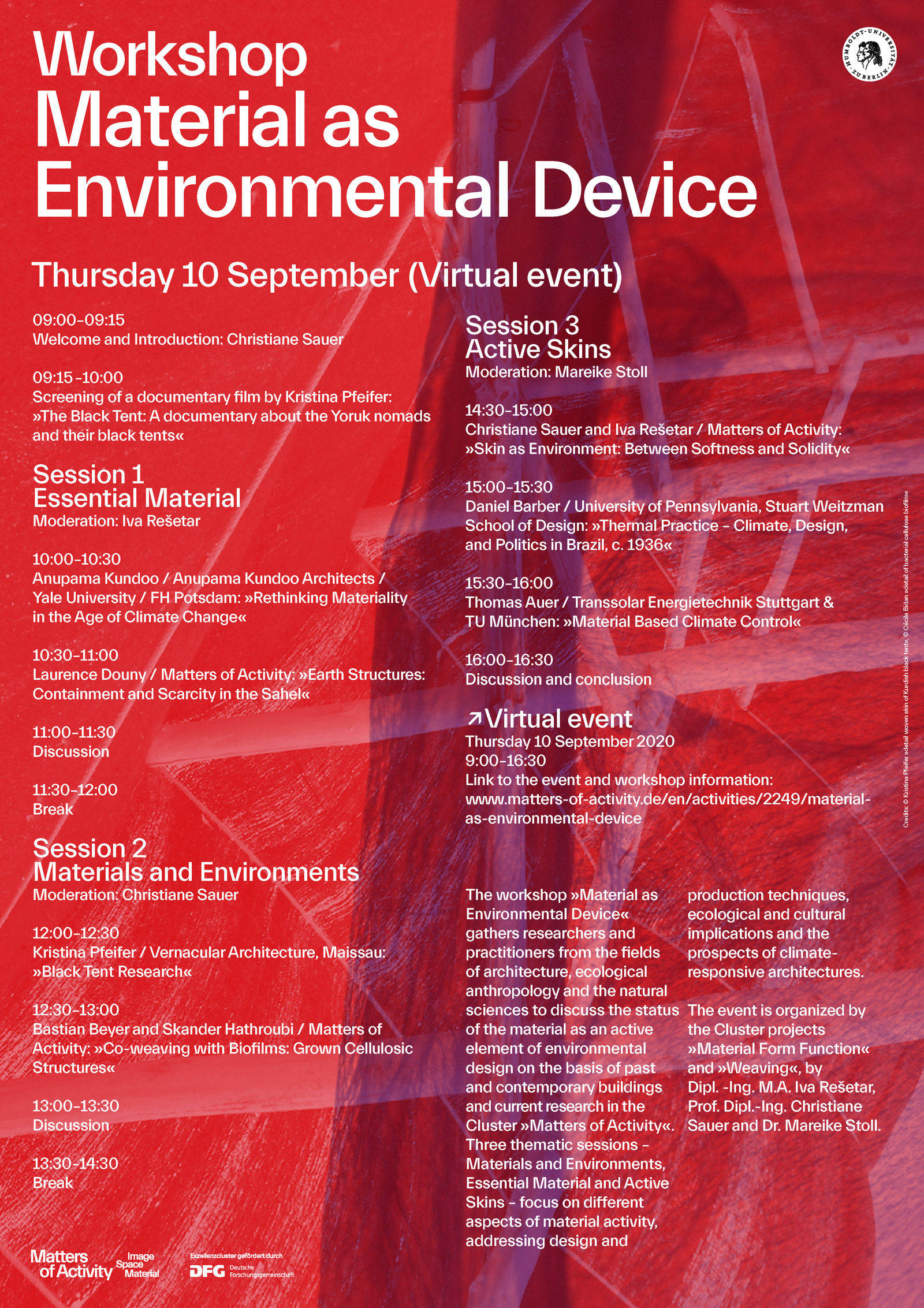
Poster Workshop »Material as Environmental Device«. Copyright: Kristina Pfeifer »detail woven skin of Kurdish black tent« & Cécile Bidan »detail of bacterial cellulose biofilm«
Material as Environmental Device
A Zoom Workshop on 10 September 2020
Weaving | Material Form Function | Bacteria | Biofilm | Cellulose | Climate | Prototype / Model | Yarns/Fibers The workshop »Material as Environmental Device« on September 10th, 2020 gathers researchers and practitioners from the fields of architecture, ecological anthropology and the natural sciences to discuss the status of the material as an active element of environmental design on the basis of past and contemporary buildings and current research in the Cluster »Matters of Activity«. Three thematic sessions – »Materials and Environments«, »Essential Material« and »Active Skins« – focus on different aspects of material activity, addressing design and production techniques, ecological and cultural implications and the prospects of climate-responsive architectures.
more
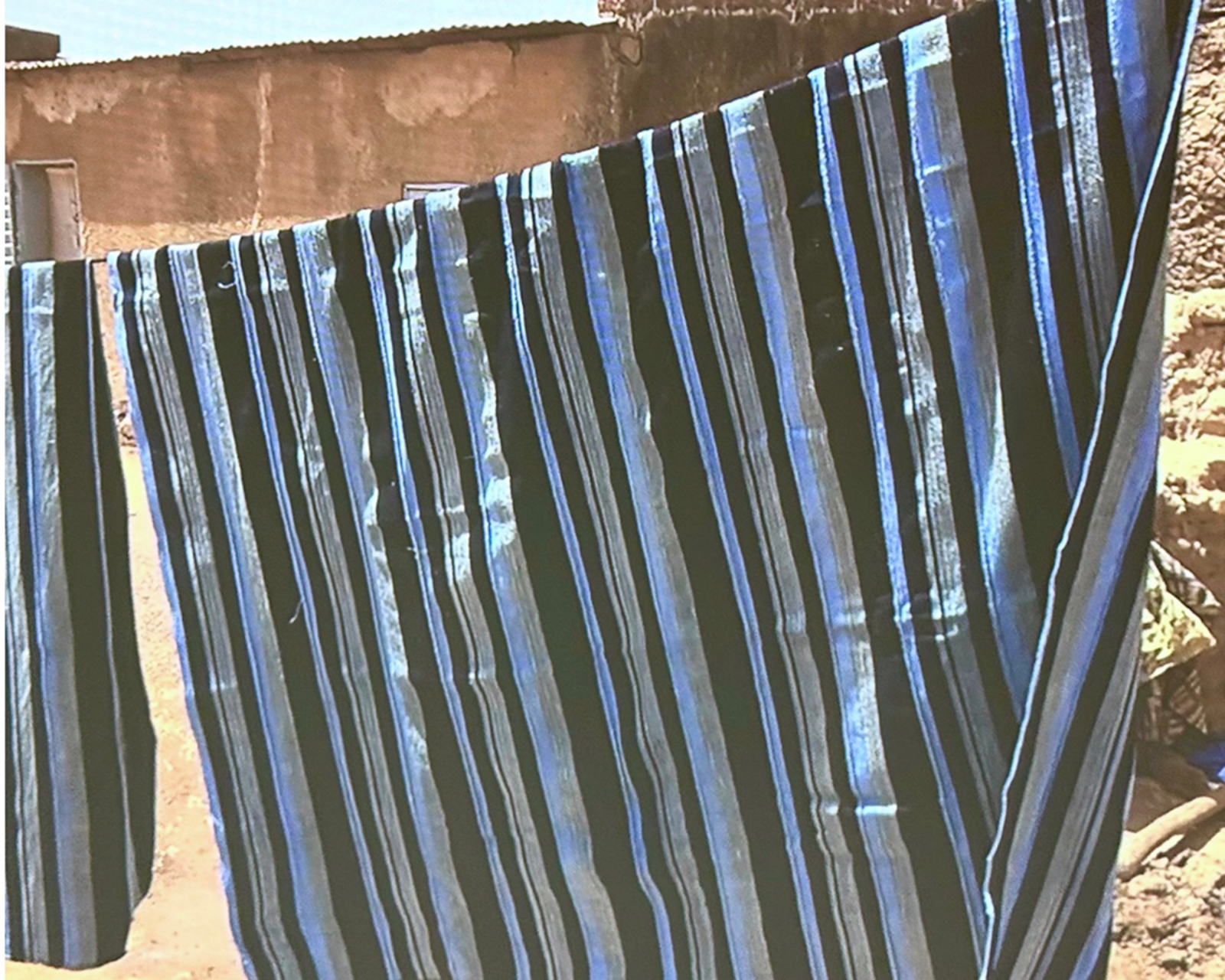
Wild silk wrapper from the Marka Dafing in Safané, Burkina Faso (showing the sheen). Video still from the film installation at the exhibition »DAOULA | Sheen. West-African Wild Silk On Its Way« (Tieranatomisches Theater Berlin). Film installation by Thabo Thindi with film material from Salif Sawadog and others.
Daoula | Sheen
West-African Textile Craft Meets European Science and Design
Bacterial Weavings
From Microbiological Activity and Fibrous Biofilm Matrices to Design and Architecture

Open Space Event, 9 November 2023. Copyright: Matters of Activity
Activarium
MoA's Showroom and Workspace
Science Communication | Air | Sand | Bacteria | Cellulose | Cloud | Fungi/Mycelium | Hemp | Prototype / Model | Stretching Materialities | Material Legacies | Daoula Sheen | Textiles | Tree Bark | Yarns/Fibers | XR | Willow | Wool | Water | Wood With the »Activarium«, we want to actively engage with potential partners from the industry, start-ups, NGOs, politics and society as a whole to initiate an exploratory exchange on active materials, bio- & culture-inspired innovation as well as sustainability approaches. We want visitors to experience our prototypes, making MoA’s intentions and research tangible and accessible. The »Activarium« serves as a work-in-progress showcase of different research strands and processes. Our visitors can dive into the research as it's happening before its published results.
If you are interested in a visit, please contact us via
moa.activarium [at] hu-berlin.de to visit!
more