Bacterial Weavings
From Microbiological Activity and Fibrous Biofilm Matrices to Design and Architecture


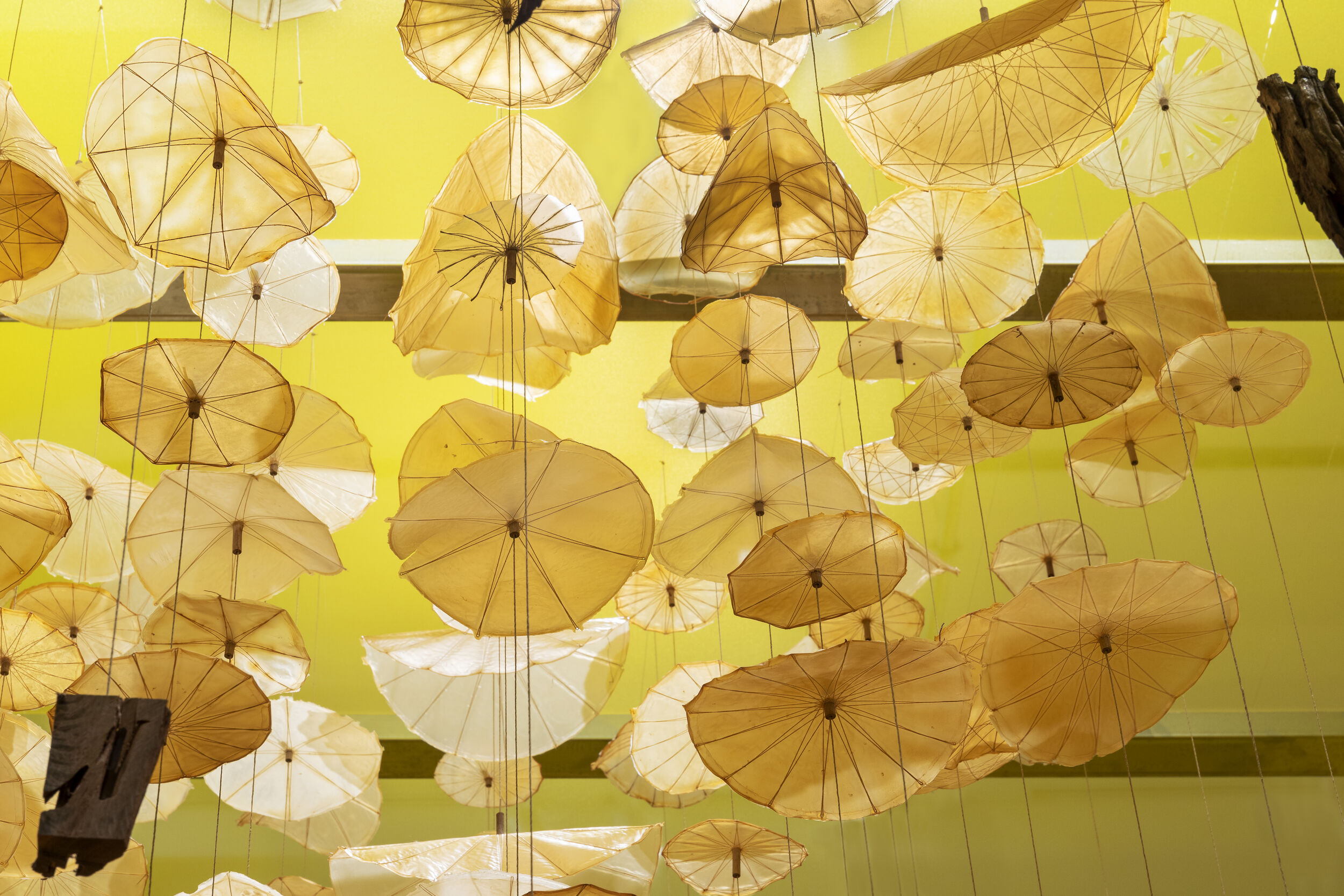
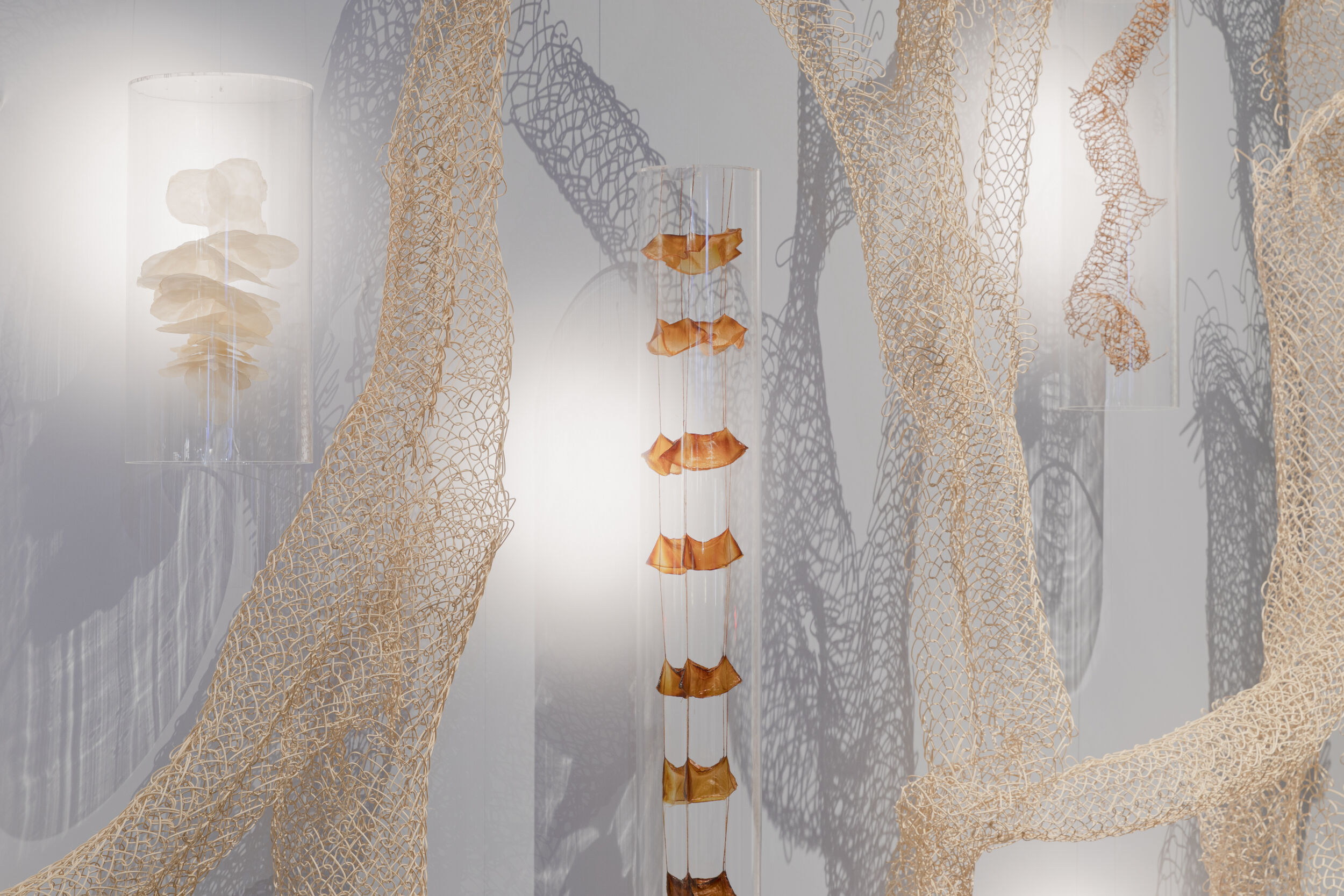
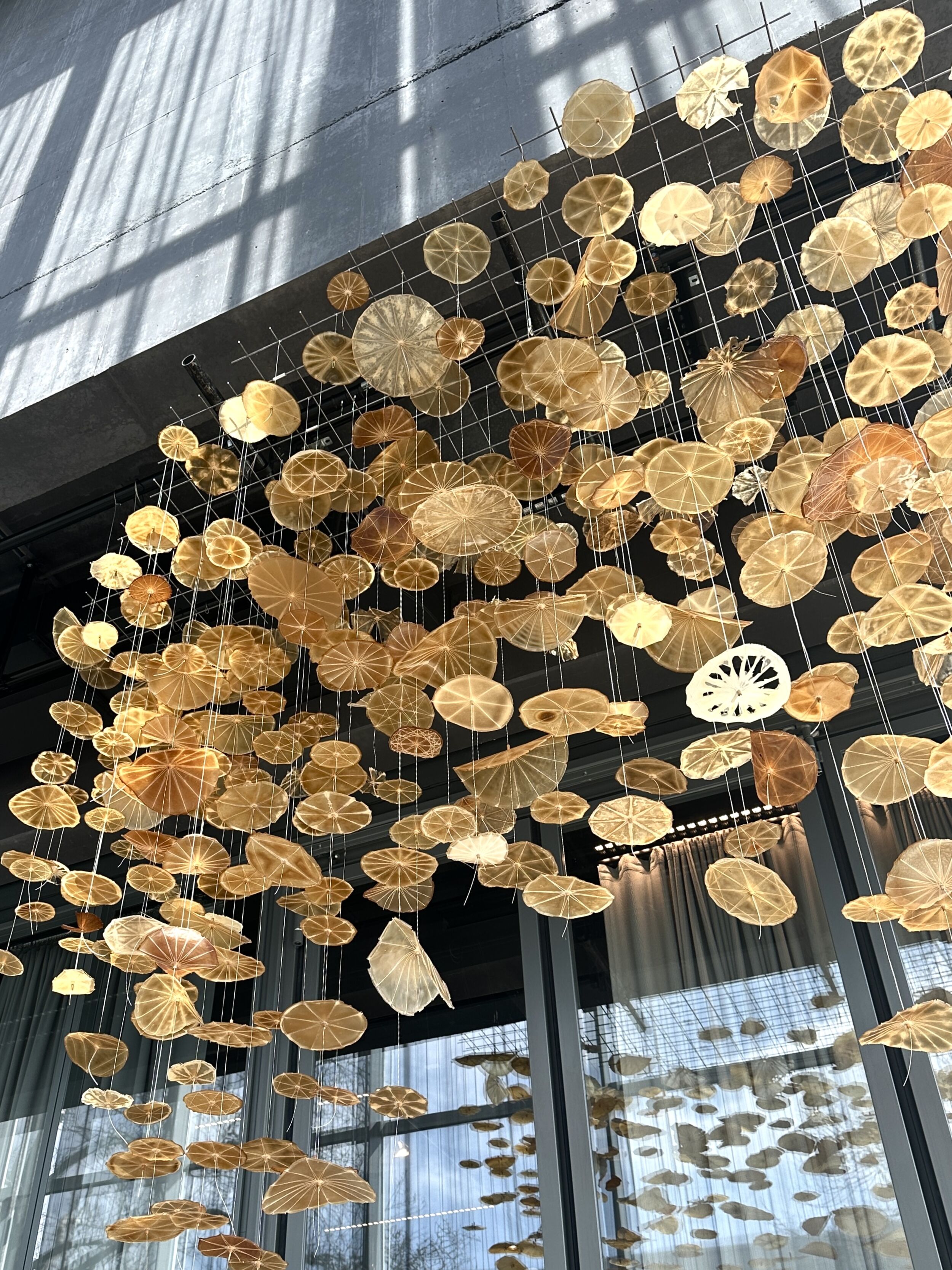
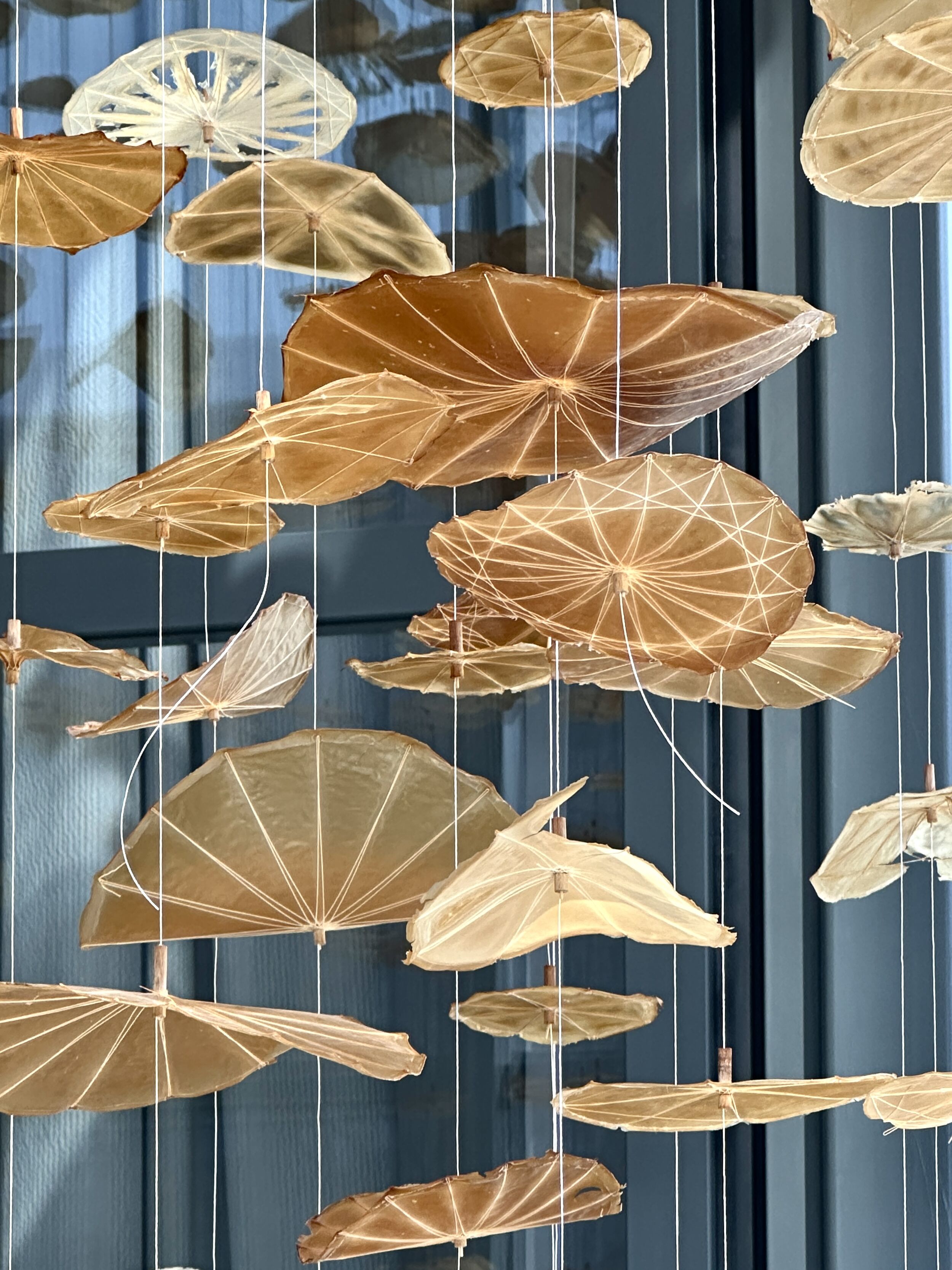
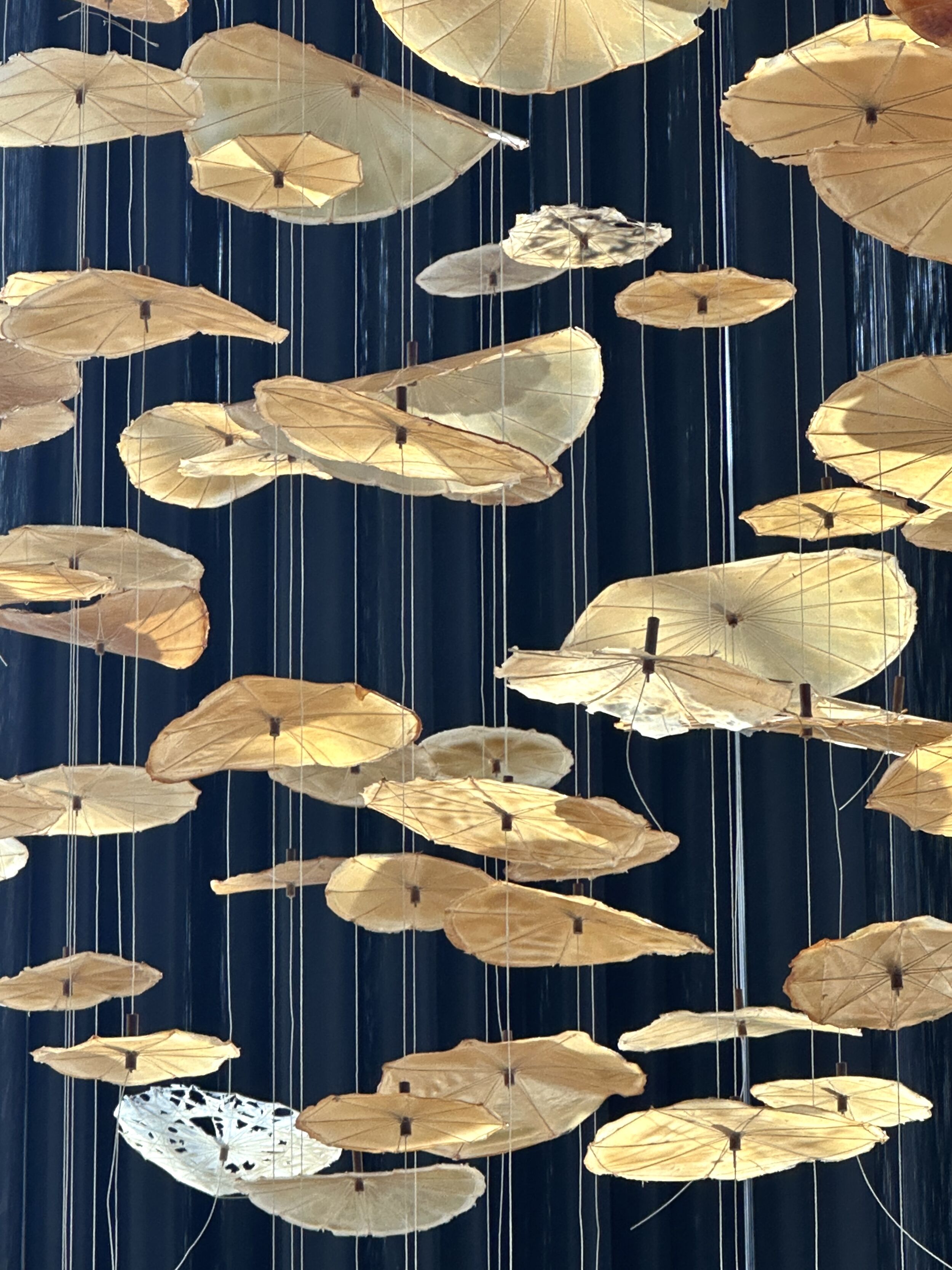
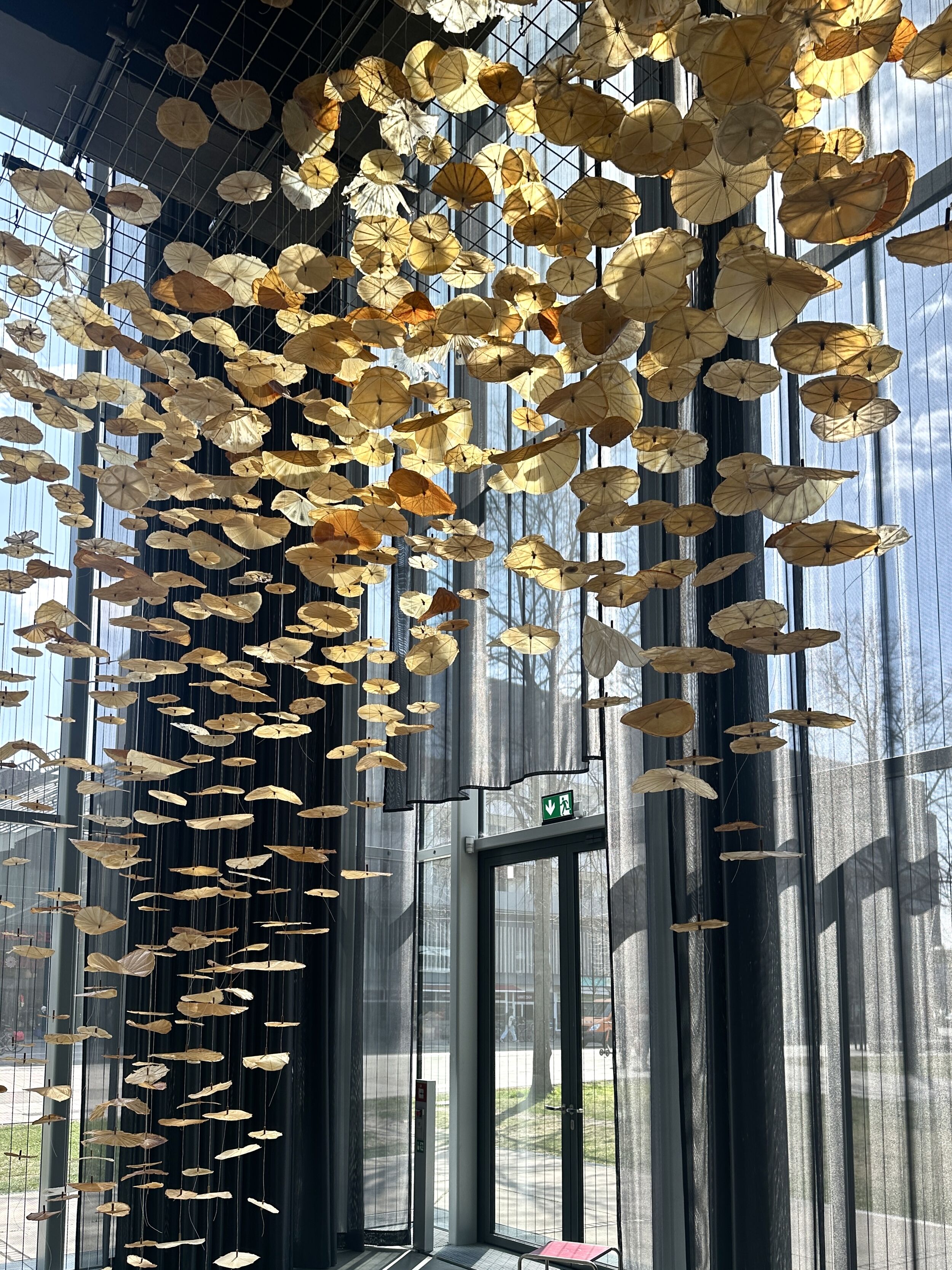

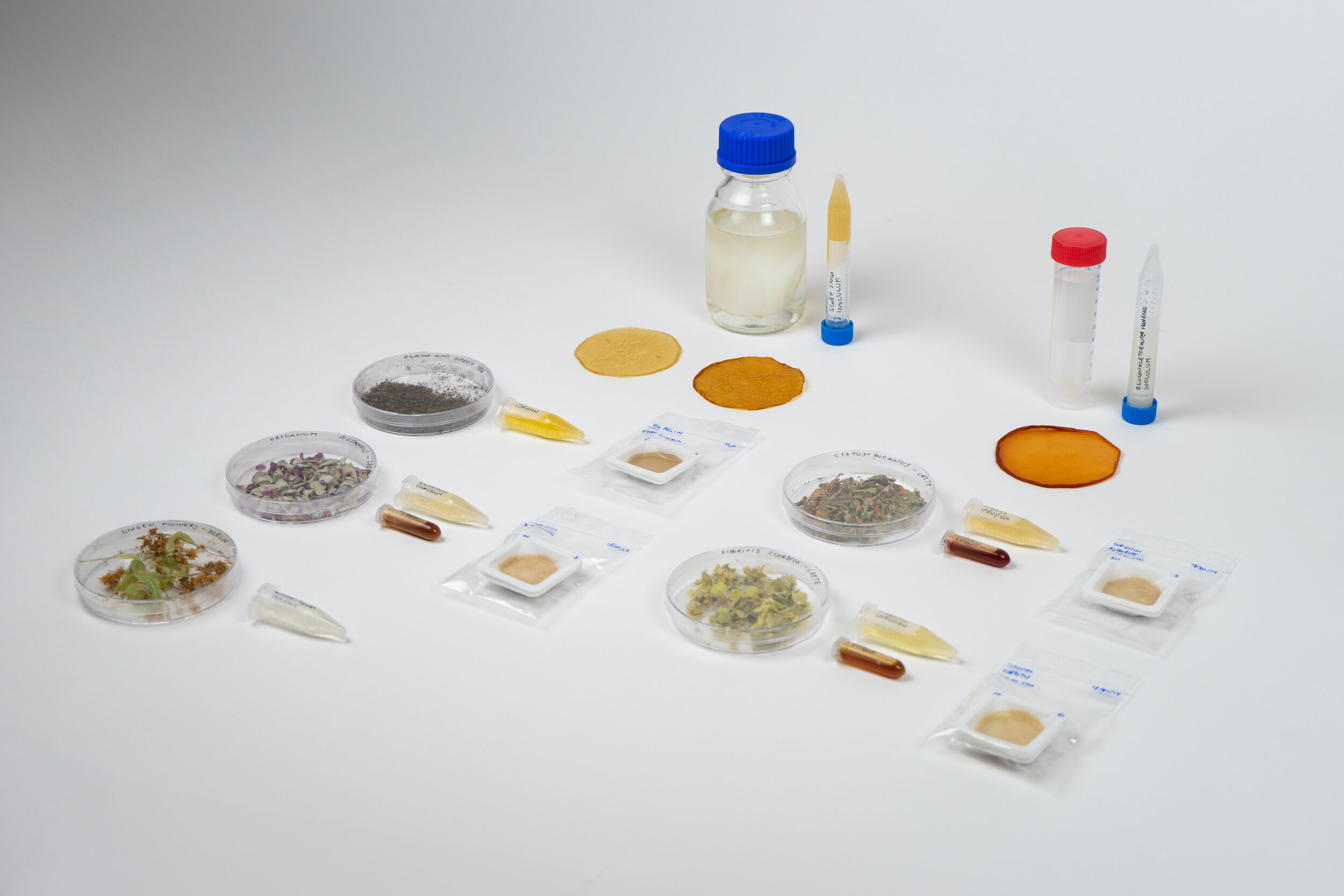
Working with living microbes for a new materiality of design and architecture allows for new form-giving processes as well as new material qualities. In order to explore these potentials, we have to bridge the gap between lab and workshop, between microbiology and architecture, and their respective scales. This approach extends conventional ways of designing and making and calls for new tools, processes, and an awareness to co-design with the living.
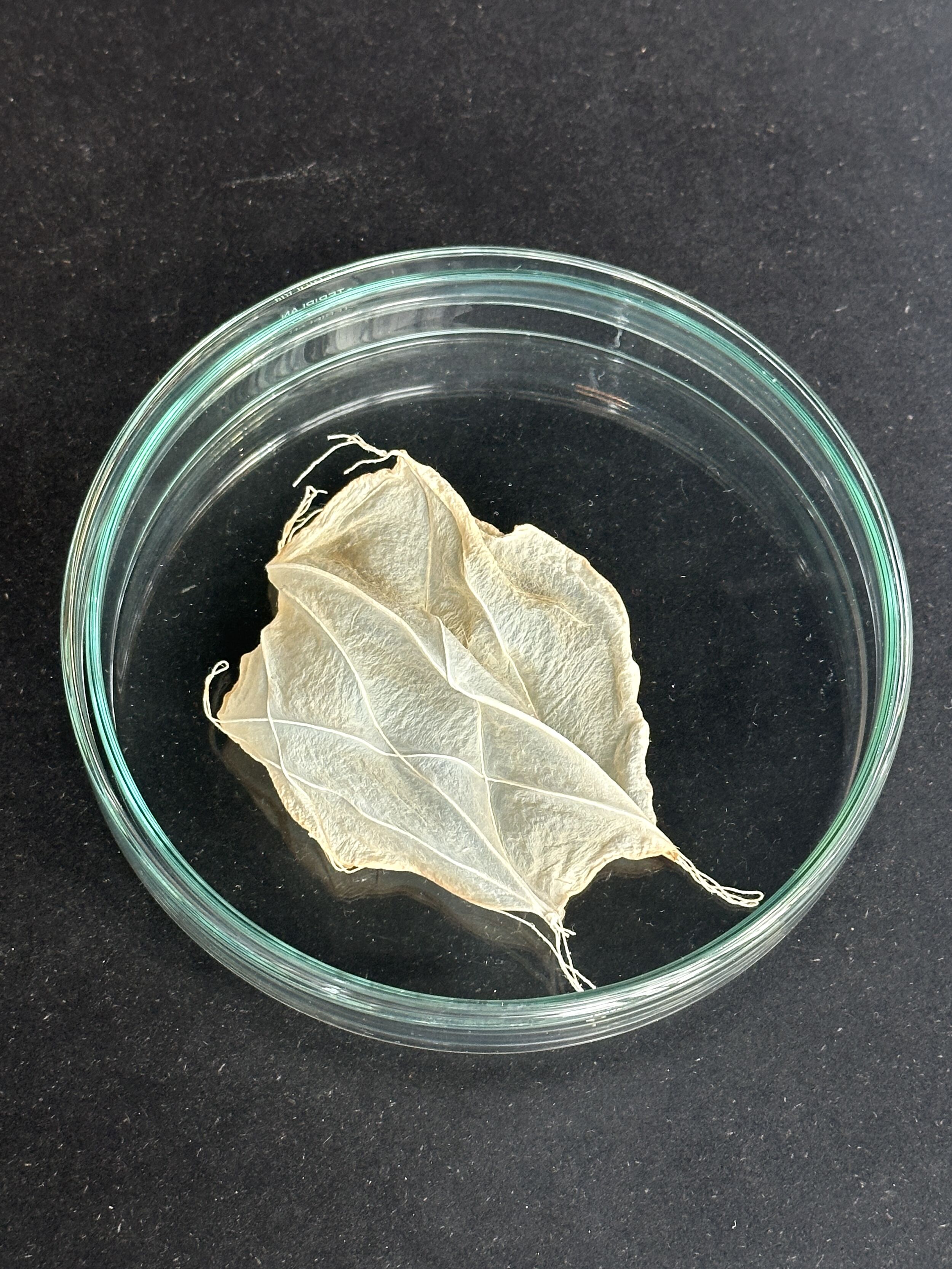
Bacterial biofilms are adaptive and responsive micro-ecologies. They consist of multicellular aggregates held together by a fibrous matrix, in which cellulose serves as a structural scaffold. Some bacteria even produce a matrix of pure cellulose. As a growing material, we investigate bacterial cellulose from the perspectives of biology, material engineering, design, and architecture. The interdependency between the micro-architecture of the matrix, the bacterial cells perceiving their micro-environments, and spatial constraints shape the biofilm. This may result in macroscopic tissue-like wrinkling and folding, which in principle can be described by hyperbolic geometry. Designing with living microbes means conceptualizing and handling milieus of growth, care, and mediation, but it can also include (re)designing genetic code using synthetic biology approaches.
Through a close collaboration between microbiology and design, we developed a series of prototypes and exhibition pieces that explore the intersections of biological processes and spatial design. As part of a cross-MoA initiative with the projects MATERIAL FORM FUNCTION and OBJECT SPACE AGENCY, we realized the Active Curtain Installation at the Humboldt Forum in Berlin, featuring objects cultivated from bacterial cellulose.
This work was followed by the installation Bacterial Cellulose – Co-Weaving Biofilms for the 2021 Milano Design Triennale »Unknown Unknowns«, comprising approximately 200 individual pieces grown from bacterial cellulose. Building upon the conceptual and material groundwork of the Milan installation, a significantly expanded version was created for the Bauhaus Museum Dessau. Presented as part of the exhibition Bauhaus Ecologies (2025), this installation includes around 750 individual cellulose components, demonstrating the evolution of the project at scale. These installations investigate the dynamic relationship between biological growth and design. Central to the work is the interplay between a living biofilm and a network of textile threads. Unlike the organically forming biofilm, the secondary textile network is based on a pre-designed macro-scale pattern, functioning as a scaffold for the growth of the biofilm. Positioned at the air-liquid interface, this textile structure not only enables the two systems to physically intersect, but also influences the growth behavior of the biofilm through its fibrous microstructure, actively shaping the formation of the material.
Furthermore, controlled growth and potential applications of cellulose-producing SCOBY (Symbiotic Communities of Bacteria and Yeast) are systematically studied in the project. This doctoral research aims at integrating situated diversification into microbial materials. The experimental research on SCOBY fermentation is conducted in laboratories and fieldwork in Germany, Crete, and Thailand. The project results in the development of protocols for expanding the material and functional potential of microbial cellulosic substances from and with diverse plant-based matters. In doing so, bacterial cellulose also acts as a medium that weaves together academic and situated knowledges, enabling relational entanglements between humans, plants, and microbes. By emphasizing the nutritional, health-promoting, and functional potentials of microbial materials, this research advocates for pluralistic, decentralized biodesign practices rooted in multispecies co-creation.

Rackov, N., Janßen, N., Akkache, A., Drotleff, B., Beyer, B., Scoppola, E., Vrana, N. E., Hengge, R., Bidan, C. M., Hathroubi, S. 2025. »Bacterial cellulose: Enhancing productivity and material properties through repeated harvest.« Biofilm, 9: 100276.
https://doi.org/10.1016/j.bioflm.2025.100276
Hengge, R., Evans, M. E. 2024. »Buckling, Wrinkling, and Folding: Microstructure, Active Matter Behavior, and Geometric Modeling of Bacterial Biofilms.« In Toward a New Culture of the Material, edited by Bauer, F., Kim, Y., Marienberg, S., Schäffner, W. Berlin: De Gruyter, 109-120.
https://doi.org/10.1515/9783110714883-009
Beyer, B., Rešetar, I. 2024. »Entangled Scales: Structures and Environments of Cellulose Biofilms.« In Toward a New Culture of the Material, edited by Bauer, F., Kim, Y., Marienberg, S., Schäffner, W.
https://doi.org/10.1515/9783110714883-010
Cohen, N., Sicher, E., Ayala-Garcia, C., Merino Sanchez-Fayos, I., Conterno, L., Ugur Yavuz, S. 2023. »Innocell Bioreactor: An Open-Source Development to Produce Biomaterials for Food and Packaging Based on Fermentation Processes.« In Modeling Methods for Fermentation Processes, special issue. Fermentation 2023.
https://doi.org/10.3390/fermentation9100915
Beyer, B. 2022. »Bacterial Loom.« In Architectures of Weaving, edited by Sauer, C., Stoll, M., Fransén Waldhör, E., Schneider, M. Berlin: Jovis, 29-31.
Serra, D. O., Hengge, R. 2021. »Bacterial Multicellularity: The Biology of Escherichia coli Building Large-Scale Biofilm Communities.« Annual Review of Microbiology, 75 (1): 269-290.
https://doi.org/10.1146/annurev-micro-031921-055801
Hathroubi, S., Beyer, B. 2021. »La récolte des biofilms.« In MàJ Design, environnements techniques & pratiques exploratoires, edited by Bertrand, G., Favard, M., Lartigaud, D.O. Saint-Etienne: Cité du Design, 9-10.
Cohen, N., Sicher, E., Uğur Yavuz, S. 2020. »Designing with microbial cellulose to feed new biological cycles.« International Journal of Food Design, 4 (2): 155-171.
https://doi.org/10.1386/ijfd_00003_1
Serra, D. O., Hengge, R. 2019. »Cellulose in Bacterial Biofilms.« Cham: Springer International Publishing, 355-392.
https://doi.org/10.1007/978-3-030-12919-4_8
Thongsomboon, W., Serra, D. O., Possling, A., Hadjineophytou, C., Hengge, R., Cegelski, L. 2018. »Phosphoethanolamine cellulose: A naturally produced chemically modified cellulose.« Science, 359 (6373): 334-338.
https://doi.org/10.1126/science.aao4096