On Water. WasserWissen in Berlin
Exhibition at Humboldt Lab shows works by Dimitra Almpani-Lekka and Rasa Weber

Key Visual On Water Ausstellung, Humboldt Lab 2025. Copyright: Berlin University Alliance
Water is ubiquitous – We drink it, bathe in it, experience it as rain, ice, or a river. And yet it remains contradictory, as it is both familiar and at the same time unpredictable. Sometimes there is too much of it, sometimes too little. Sometimes it flows, sometimes it’s lacking, sometimes it floods entire stretches of land.
As a result of climate change, urban growth, and global inequality, water has become a significant challenge. It cannot be controlled easily and raises questions about established practices. Water is not a passive object, but instead a dynamic element that demands new scientific perspectives and social negotiation. The On Water: WasserWissen in Berlin exhibition showcases Berlin University Alliance (BUA) research projects that explore water from diverse perspectives. They all aim to learn from its properties – such as its cycles, its adaptability, and its binding force – to find solutions for the future. The audio track provides deeper insights into the interplay between humans and water. In it, scientists explain why it makes sense to listen to water, as it knows more than we think.
The exhibition will give insights into two projects undertaken by MoA members Dimitra Almpani-Lekka and Rasa Weber:
Cheimarros
Dimitra Almpani-Lekka, 2025
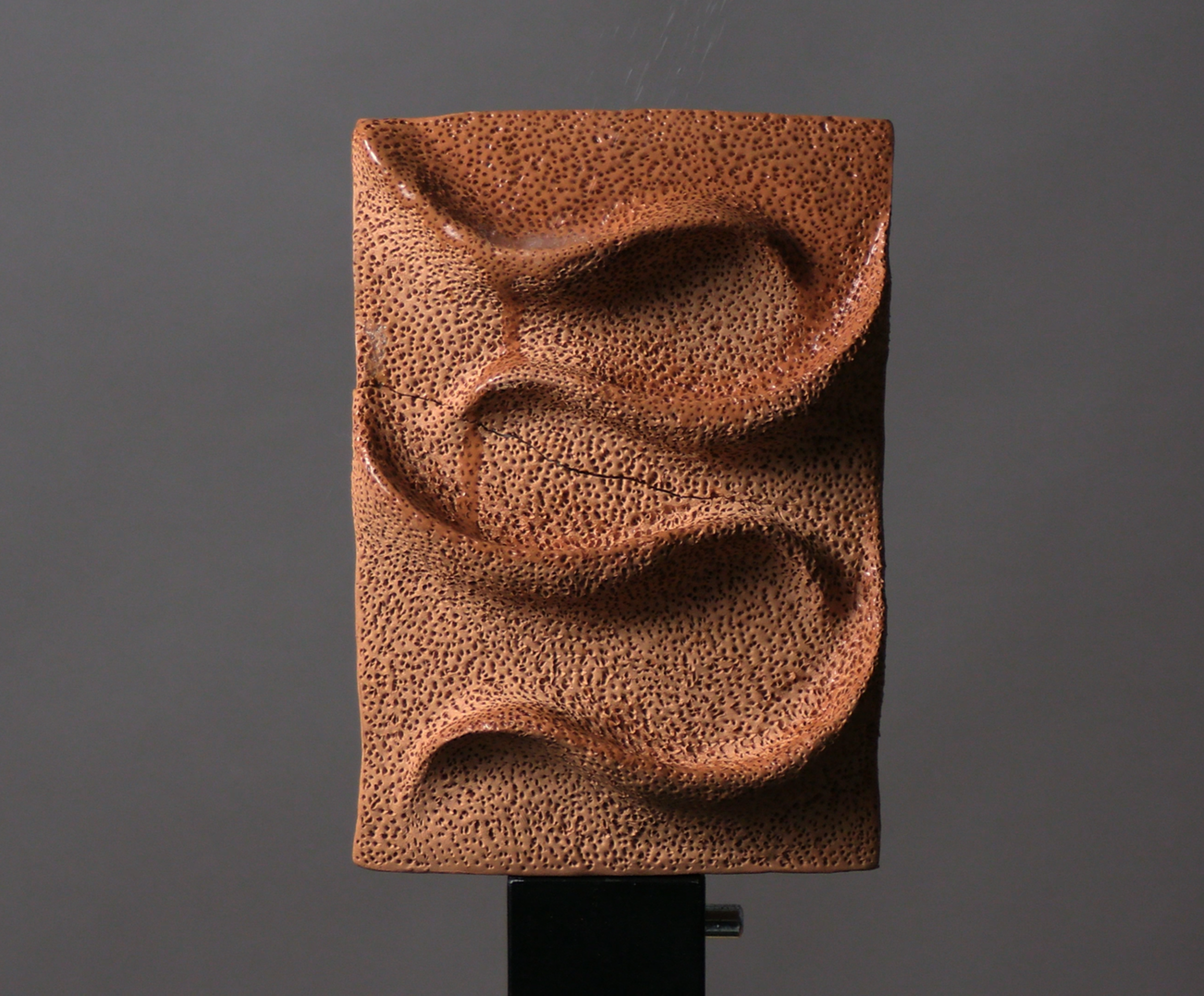
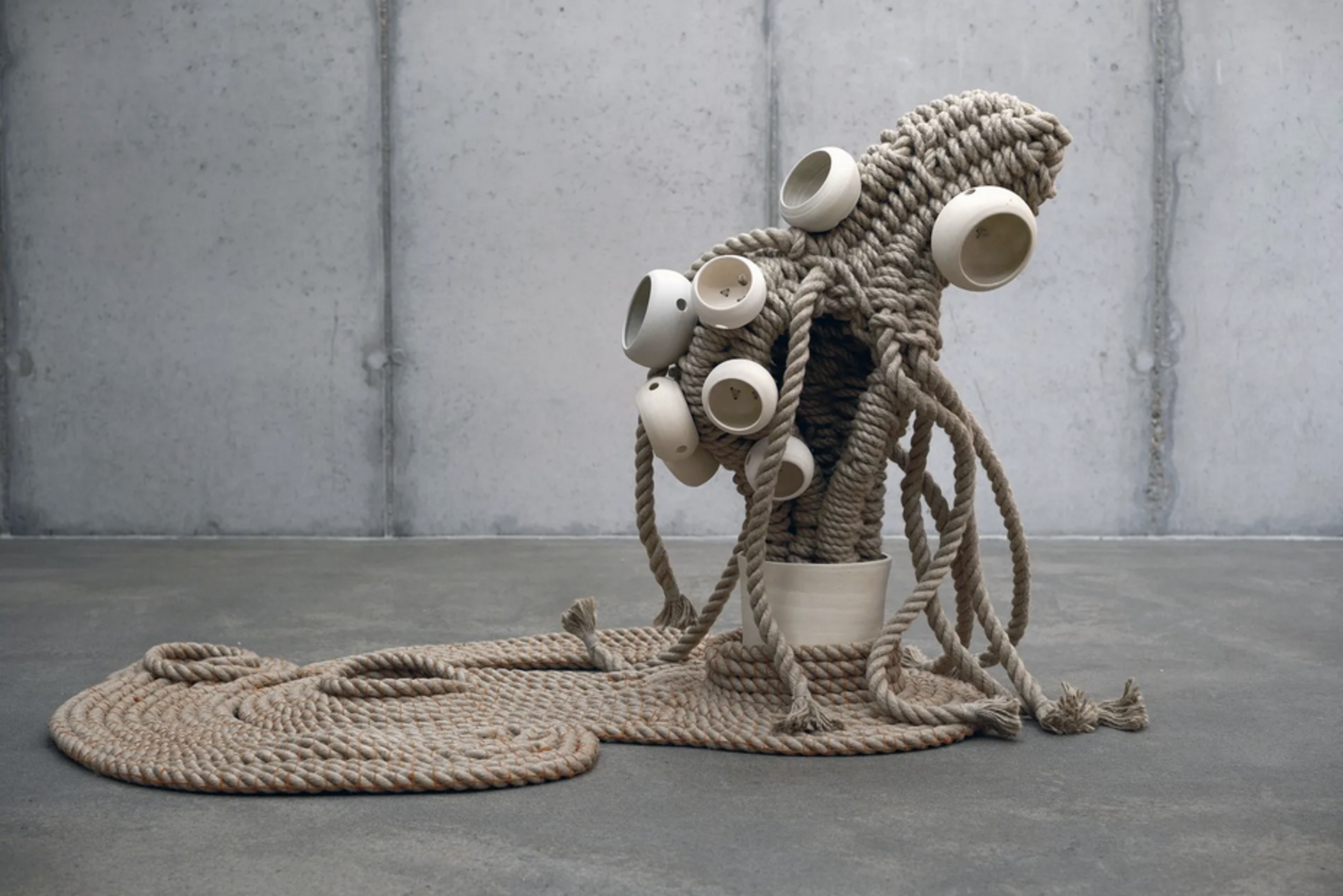
Cheimarros is a ceramics installation that explores vertical water harvesting, absorption, and circulation, addressing urban water scarcity and the chain of effects it has on living species. The prototypes serve as a method of asking questions, revealing challenges, and evoking empirical knowledge relevant to design strategies for the built environment to transform greywater to a means of supporting urban biodiversity and biological growth.
The Greek word ›cheimarros‹ stands for a river that dries out during hot seasons, leaving an exposed engraving on the ground surface. When water accumulates during the winter months, it acts as the primary guide of the water cycle, running off high altitudes and journeying towards the sea. The forms of the installation draw from elements of different scales, spanning filter-feeding organisms and landscapes shaped through friction with water, particularly the dry islands of the Dodecanese, and their diversely sculptural and porous geological formations.


Syntopolis
Rasa Weber
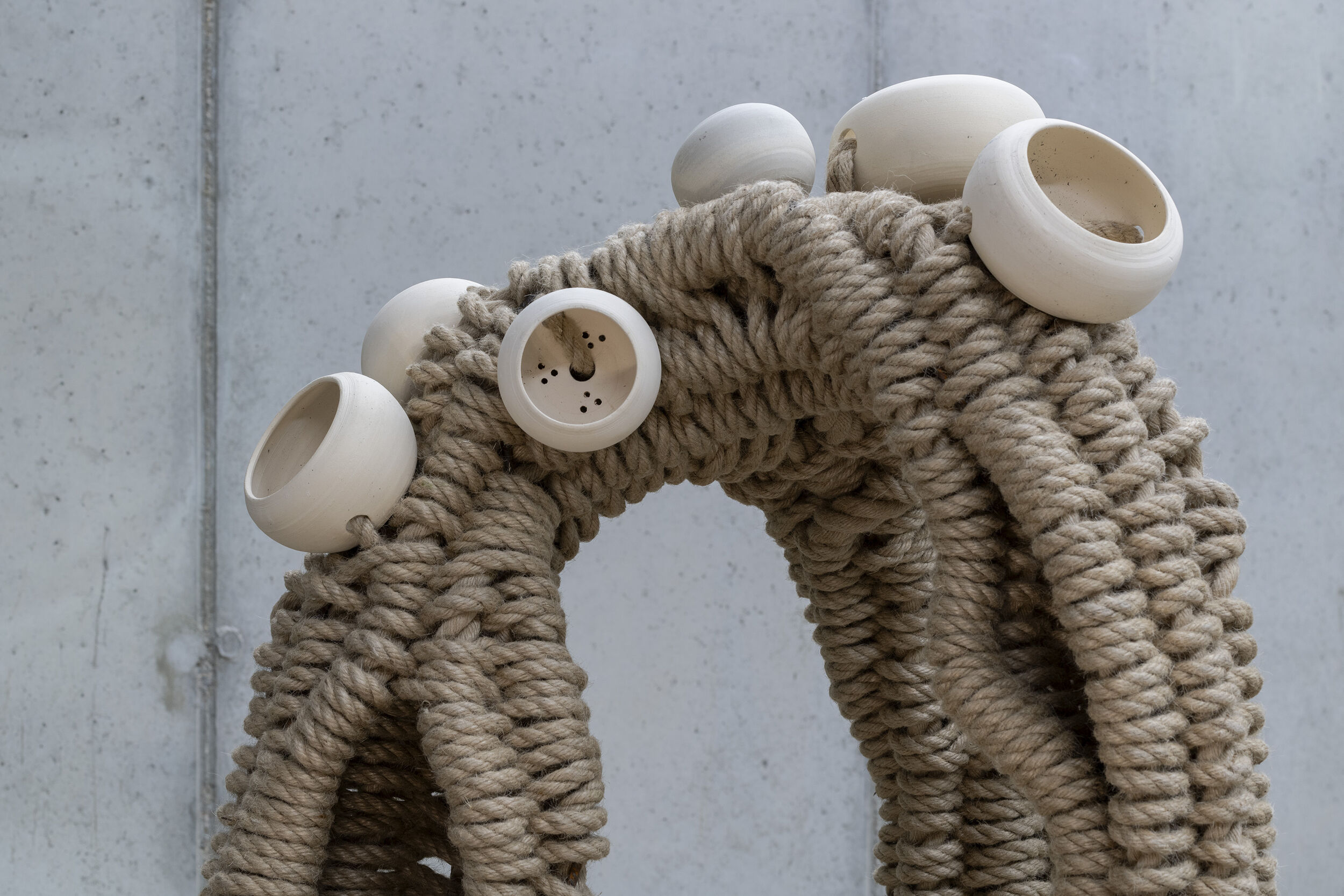
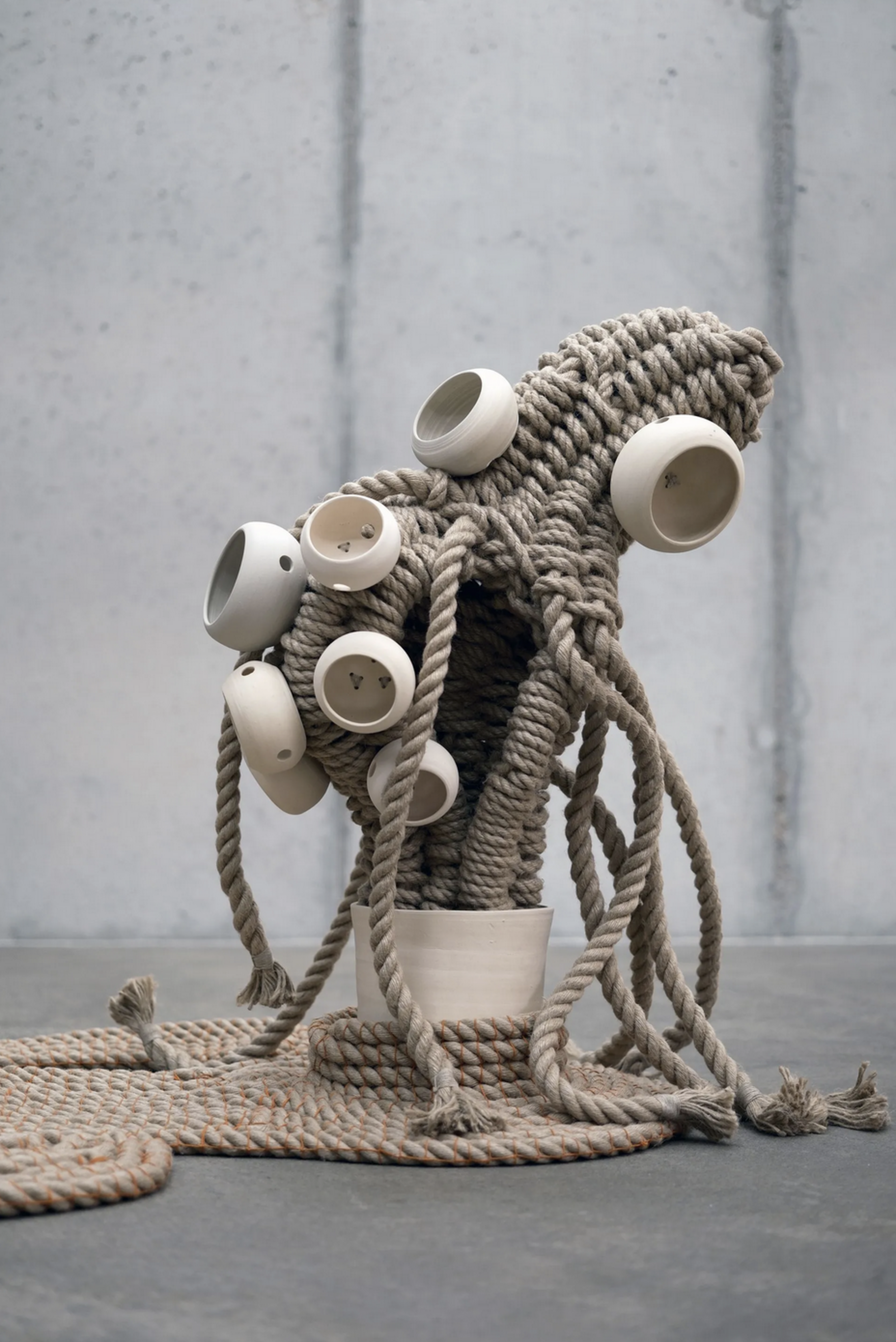
Design researcher and diver Rasa Weber creates artificial reefs. Created in collaboration with local artisans, the reefs lowly become a new ecological habitat for various life forms. The exhibition features the twin of the reef that was placed in the Spree River in May 2025.
Humboldt Lab
at Humboldt Forum
Schloßplatz
10178 Berlin