»Hydroweave« at the Raumprobe Material Award 2020
The Work was Realized at weißensee school of art and design berlin Within the Framework of the MoA Design Studio
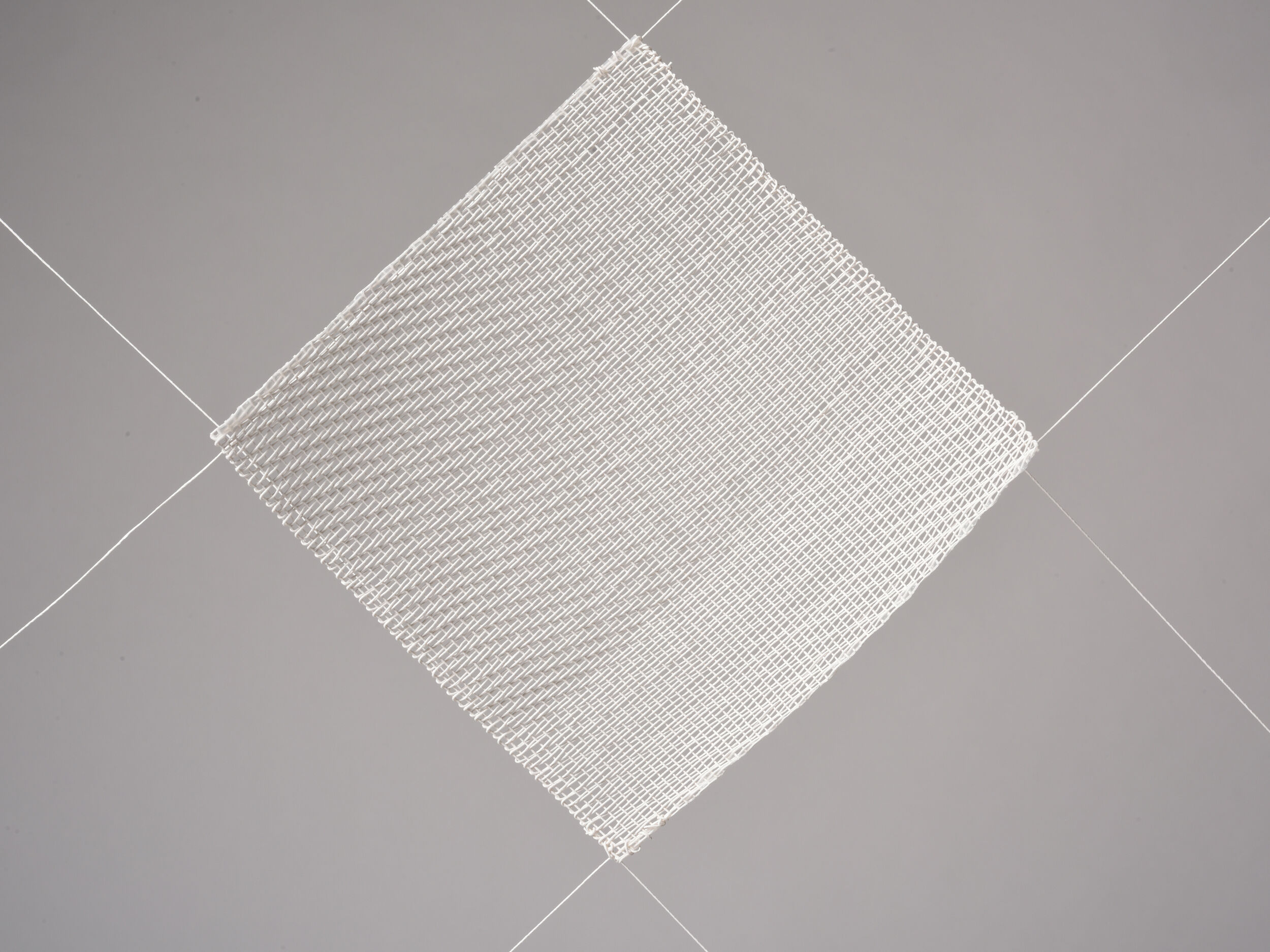
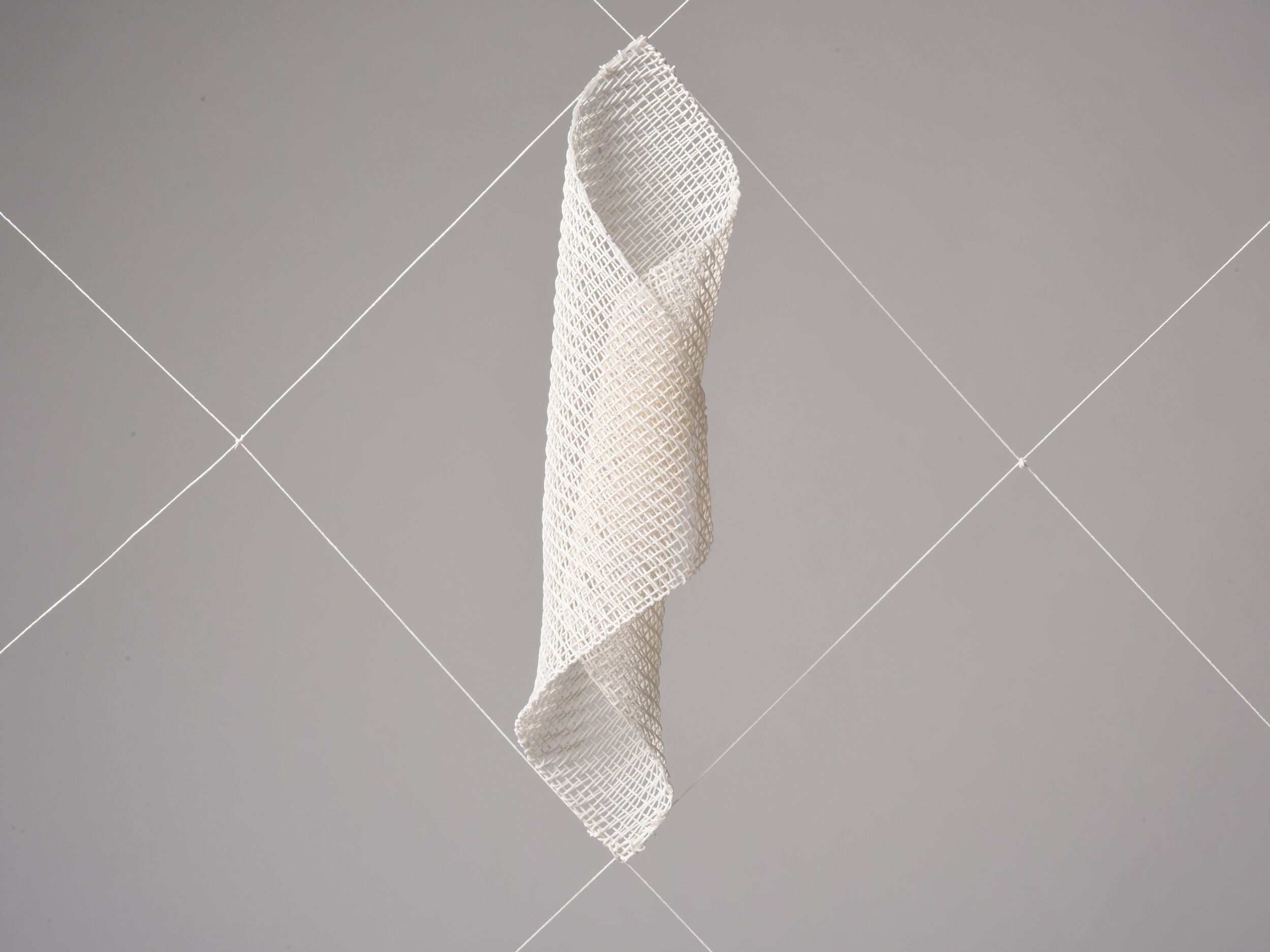
»Hydroweave« by Stefanie Eichler and Juni Neyenhuys was awarded a recognition in the field of »Study« at the Raumprobe Material Award 2020. The project, which centers on a research-based design approach, was created in 2019 at weißensee school of art and design berlin as part of the MoA Design Studio Scaling Nature (1): Wrinkles under the direction of Prof. Christiane Sauer.
Since 2005, Raumprobe has been a constantly growing online material database and physical material exhibition in Stuttgart. Raumprobe has been awarding the prestigious Material Prize annually since 2013, recognizing special materials. The prize is awarded in 8 categories, including design, innovation, ecology, study and process. The jury consists of an interdisciplinary panel of experts and is reconstituted each year.
The winning entry in the study category, »Hydroweave«, is a research-based design project and introduces an innovative system — cellulose-based woven modules that respond to moisture. The result is an adaptive membrane that responds to the environment in a special way, with no technical actuators or sensors at all. When water vapor develops, the modules curve or stretch their woven structure accordingly, creating surfaces that open or close adaptively, for example to ventilate or separate areas. The modules are also made entirely from biodegradable and renewable raw materials. The design project in the Department of Textile and Surface Design took place with the participation of researchers from the Cluster, weißensee school of art and design berlin and the Max Planck Institute of Colloids and Interfaces Golm, Department of Biomaterials: Ebba Fransén Waldhör, Maxie Schneider, Khashayar Razghandi, Lorenzo Guiducci, Peter Fratzl and Cécile Bidan.
Congratulations!