• Matters of Activity
  • About Us
    • Directors
    • Scientific Advisory Board
    • Partners
    • Equal Opportunity
    • Open Science
    • Contact
  • Members
  • Research
    • Projects
      • Weaving
      • Filtering
      • Cutting
      • Material Form Function
      • Object Space Agency
      • Symbolic Material
    • (Junior) Research Groups
      • Adaptive Fibrous Materials
    • Laboratories and Displays
  • Activities
  • Early Career Support
  • Publications
  • Jobs
  • Virtual Cluster Space
  • Building with Insect-damaged Timber
Material Form Function | Doctoral Program | Wood | Forest

Building with Insect-damaged Timber

PhD Project Pelin Asa

Physical damage on the tree due to beetles and fungus. Left: Bark beetle galleries and larvae under the bark of a spruce tree. Middle: Bark beetle galleries on the sapwood of a spruce tree. Right: Other insect holes and brown rot streaks on spruce wood. Pelin Asa, MPICI, 2023.

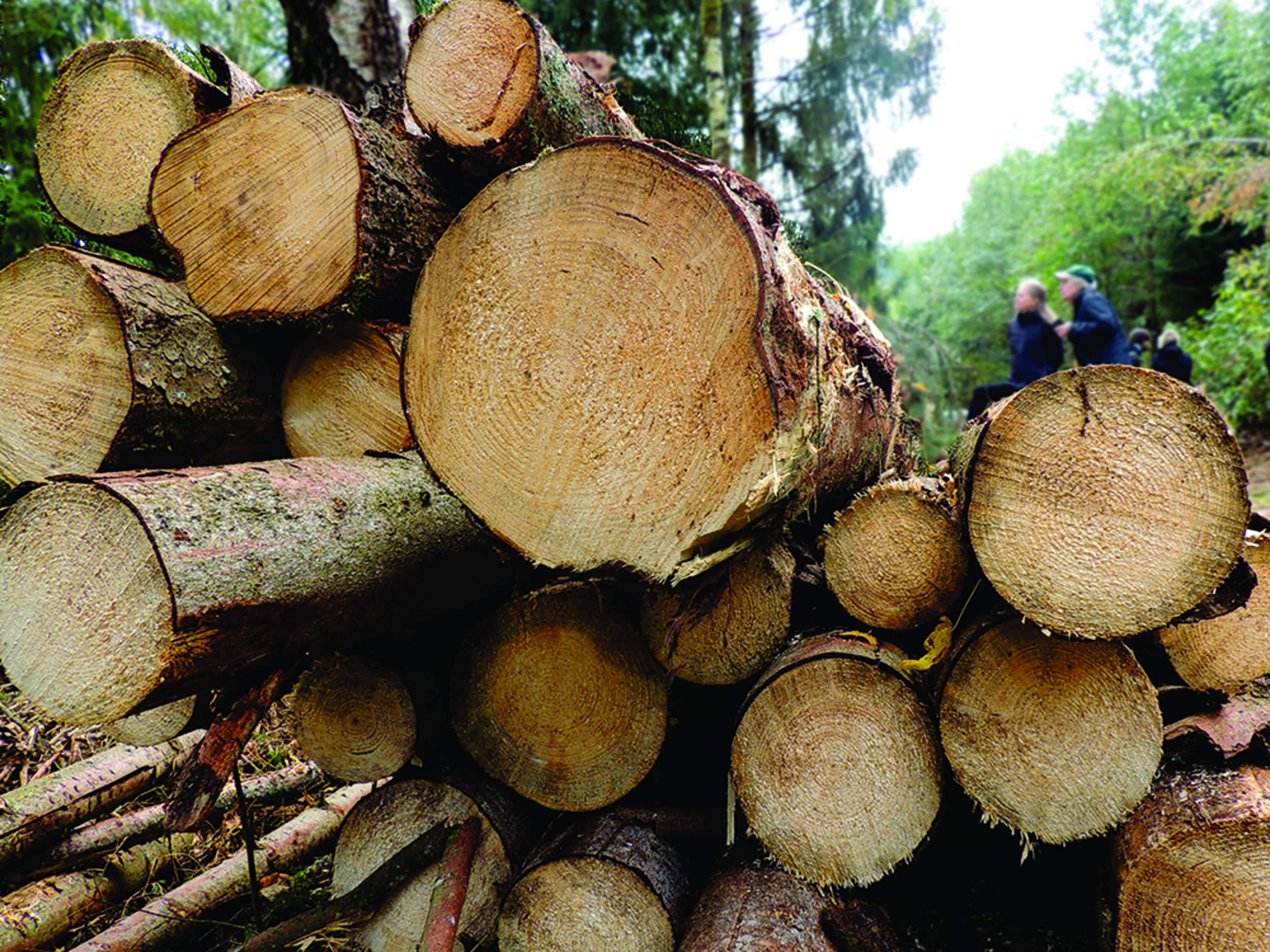
Spruce logs cut due to bark beetle spread. Pelin Asa, MPICI, 2023.

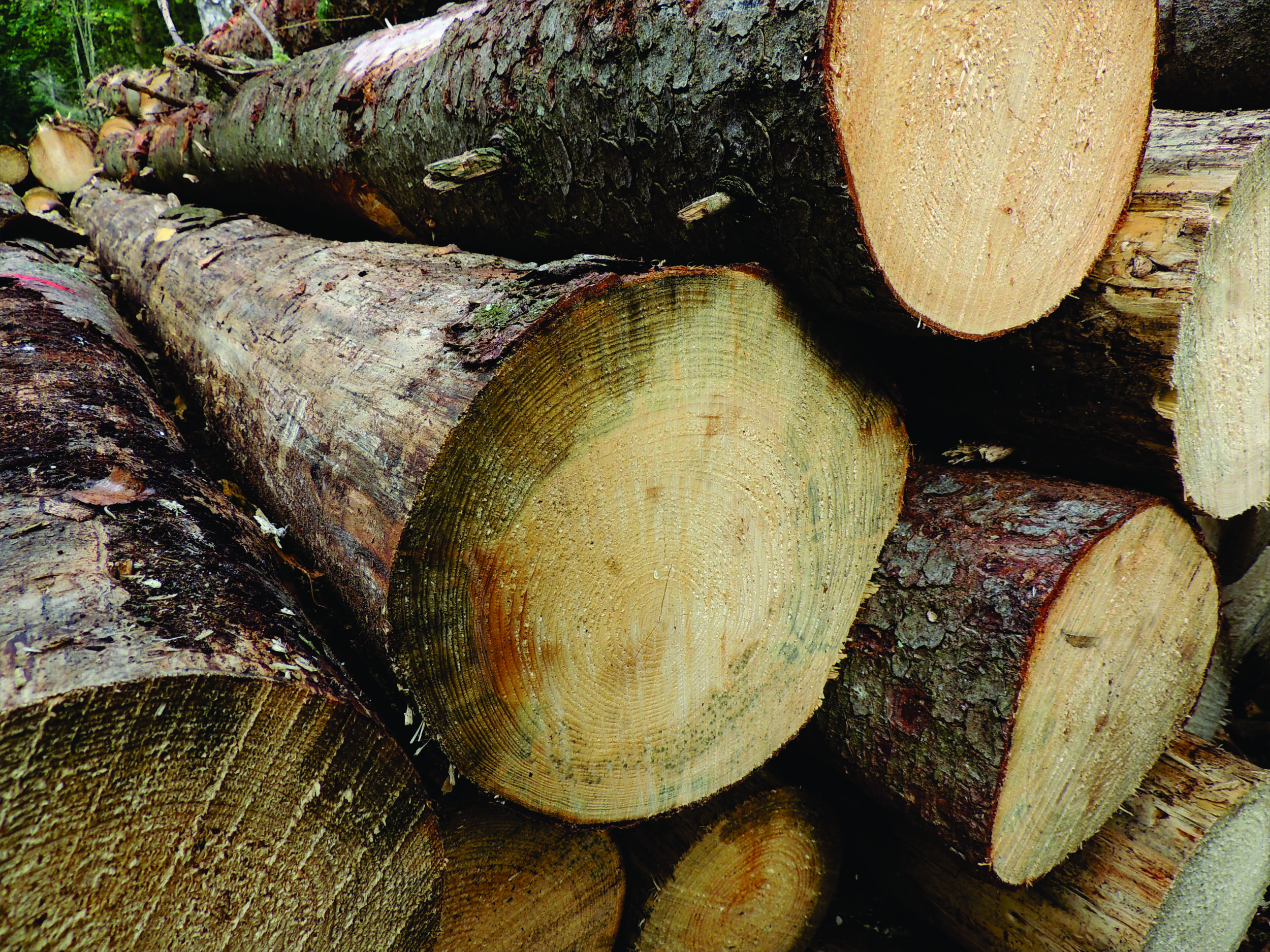
Discolouration due to blue-stain fungus on a bark beetle-infested spruce tree. Pelin Asa, MPICI, 2023.

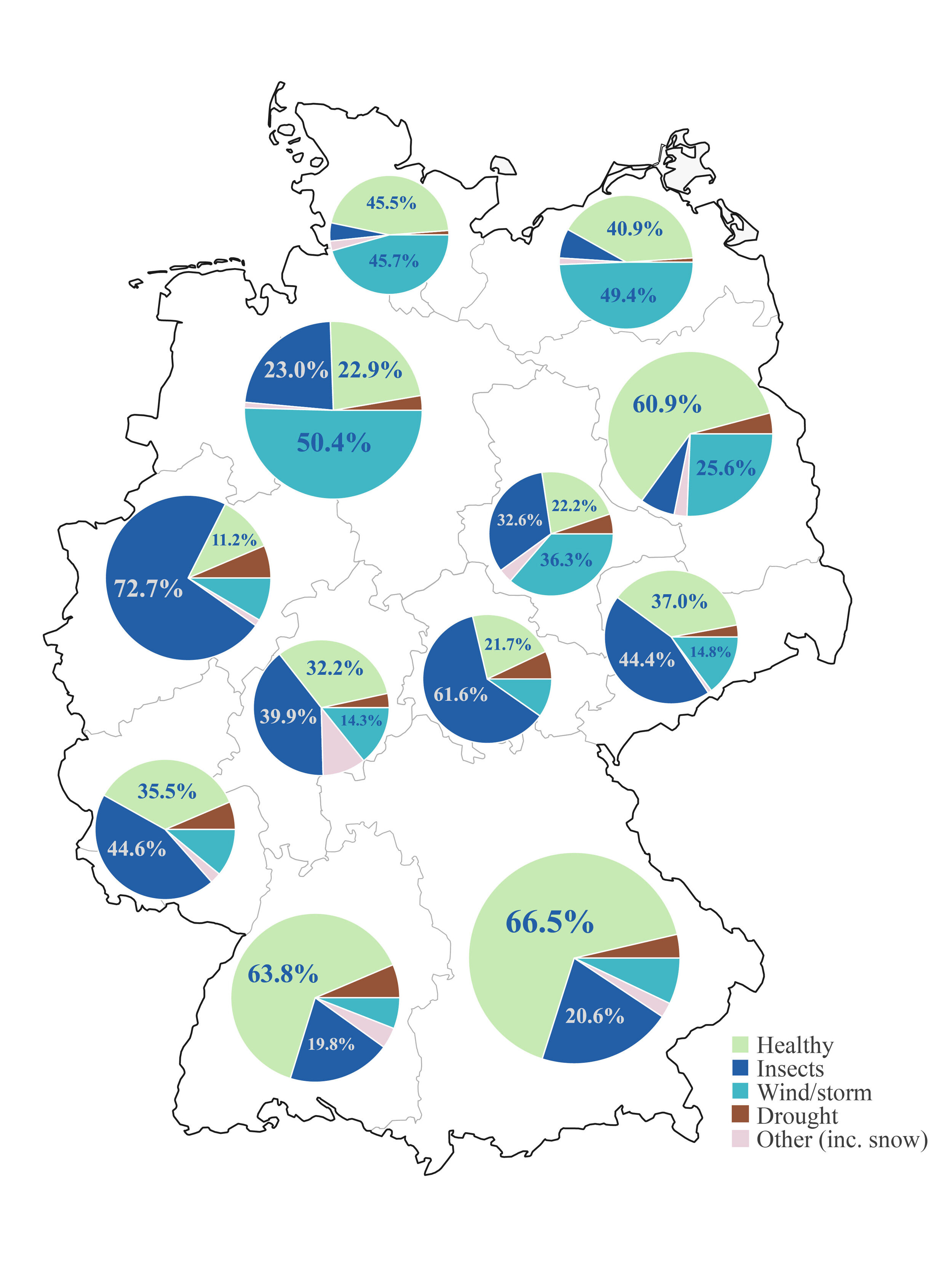
Logging causes of all tree species in 2022 by state in Germany. Diagram by Pelin Asa based on data from Statistisches Bundesamt, 2023.

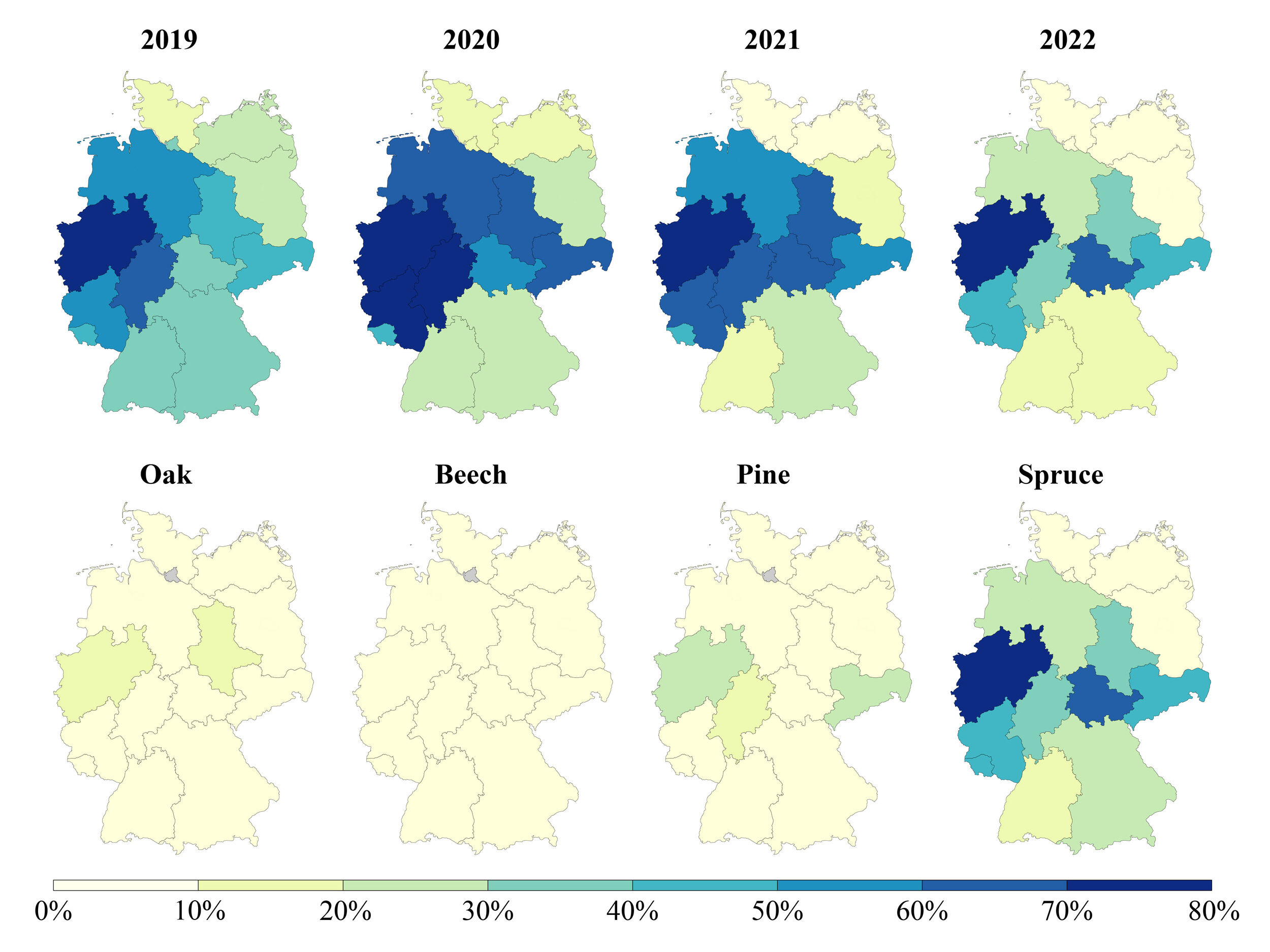
Annual ratio of logging of all tree species due to insect damage in Germany. Bottom: Logging due to insect damage by tree species in Germany in 2022. Diagram by Pelin Asa based on data from Statistisches Bundesamt, 2023.

Spruce forests in Europe face significant challenges from increasing bark beetle attacks, partly attributed to droughts and extreme weather conditions.

Drawing from field research conducted in Feldbuch, Germany, this project analyses factors that lead to bark beetle outbreaks and their impact on the trees, local forests, and communities. As bark beetle infestations escalate, there is a growing focus on understanding their impact on trees and forests, yet research into beetle-affected wood and its potential applications in architecture and digital fabrication remains limited. This research aims to address this gap by identifying key questions surrounding beetle-infested wood and showcasing its potential for valorisation.

While bark beetle damage is mostly superficial, mutual attacks by fungi cause mass loss, weakened mechanical properties, and altered appearance- and thus infected wood currently is mostly for short lifespan applications such as burning for energy or packaging. This project proposes a modular construction method of interlocking units designed according to the heterogeneities and material characterisation of infected wood to facilitate the adaptable and optimal utilisation of this resource. These units serve as possible modules for architectural construction as a failure-tolerant method that can accommodate beetle-induced irregularities and strength variations and enhance overall structural integrity.

DESIGN & RESEARCH

Pelin Asa

HOSTING UNIVERSITY

Technical University of Munich

RESEARCH ASSOC.

Matters of Activity. Cluster of Excellence ⁄ Humboldt Universität zu Berlin

Max Planck Institute of Colloids and Interfaces (MPICI)

Supervision

Prof. Dr. Karola Dierichs | MPICI, khb
Dr. Michaela Eder | MPICI
Prof. Dr. Kathrin Dörfler | TUM

Collaborators

Benedikt Trojer | khb
Prof. Dr.-Ing. Kerstin Wolff | TU Berlin
Stephan Neuhäuser | Fraunhofer Institute for High-Speed Dynamics, EMI/SIRIOS
Prof. Dr. Inka Mai | TU Berlin
Sakiko Noda | TU Berlin

RESEARCH PROJECT

Syntopic Architectures

RESEARCH PERIOD

2023 – ongoing

Contact
Cluster of Excellence
Matters of Activity
Image Space Material

Humboldt-Universität zu Berlin
Unter den Linden 6
10099 Berlin
Newsletter

You can subscribe to our Newsletter here. By subscribing, you agree to our Privacy Policy.

Links
  • → For Members
  • → _matter Festival 2025
  • → Legal Notice
  • → Privacy Policy
  • Contact
  • Newsletter
  • For Members
  • _matter Festival 2025
  • Legal Notice
  • Privacy Policy