• Matters of Activity
  • About Us
    • Directors
    • Scientific Advisory Board
    • Partners
    • Equal Opportunity
    • Open Science
    • Contact
  • Members
  • Research
    • Projects
      • Weaving
      • Filtering
      • Cutting
      • Material Form Function
      • Object Space Agency
      • Symbolic Material
    • (Junior) Research Groups
      • Adaptive Fibrous Materials
    • Laboratories and Displays
  • Activities
  • Early Career Support
  • Publications
  • Jobs
  • Virtual Cluster Space
  • Designing Matter 1

Designing Matter 1

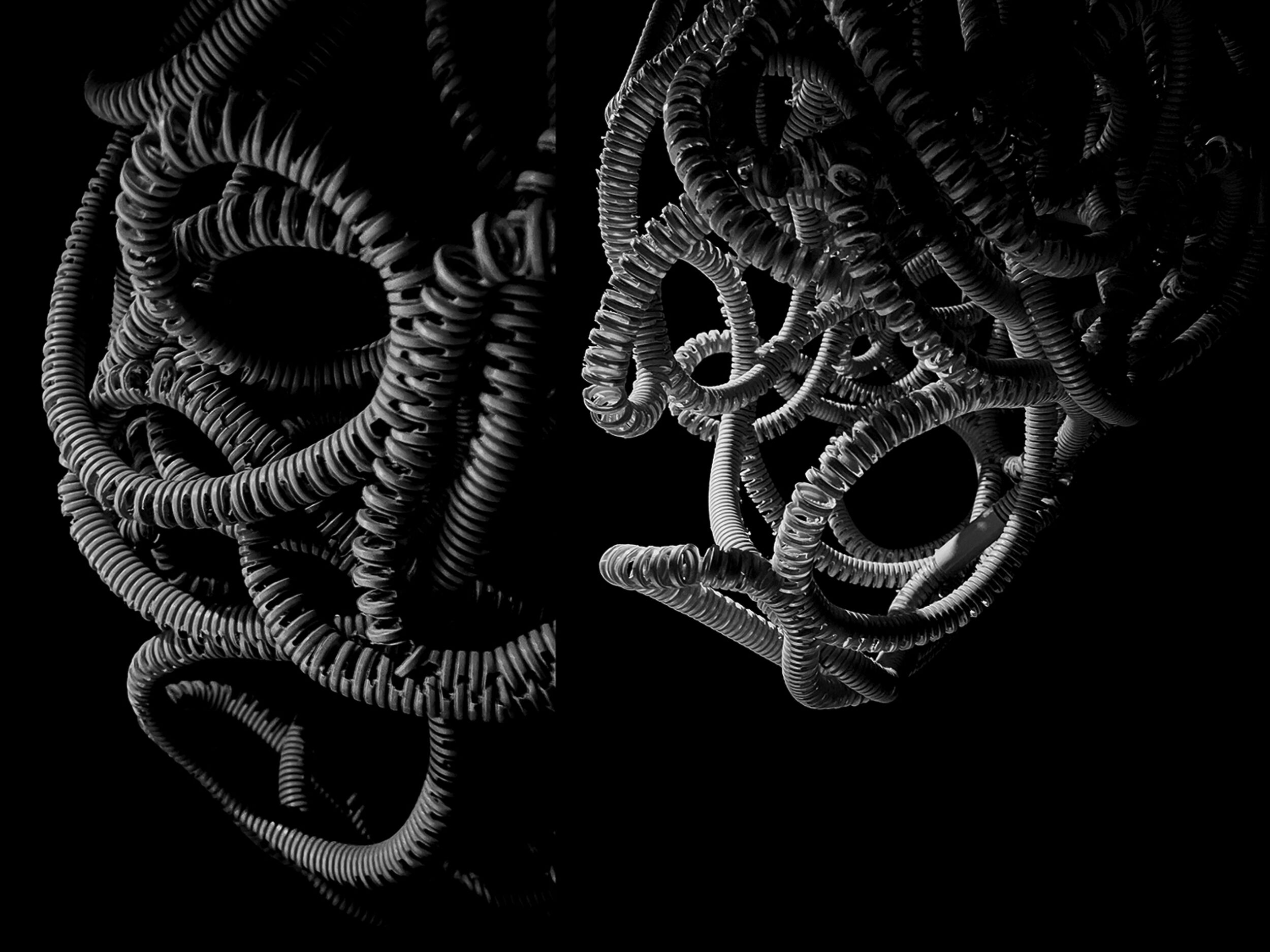
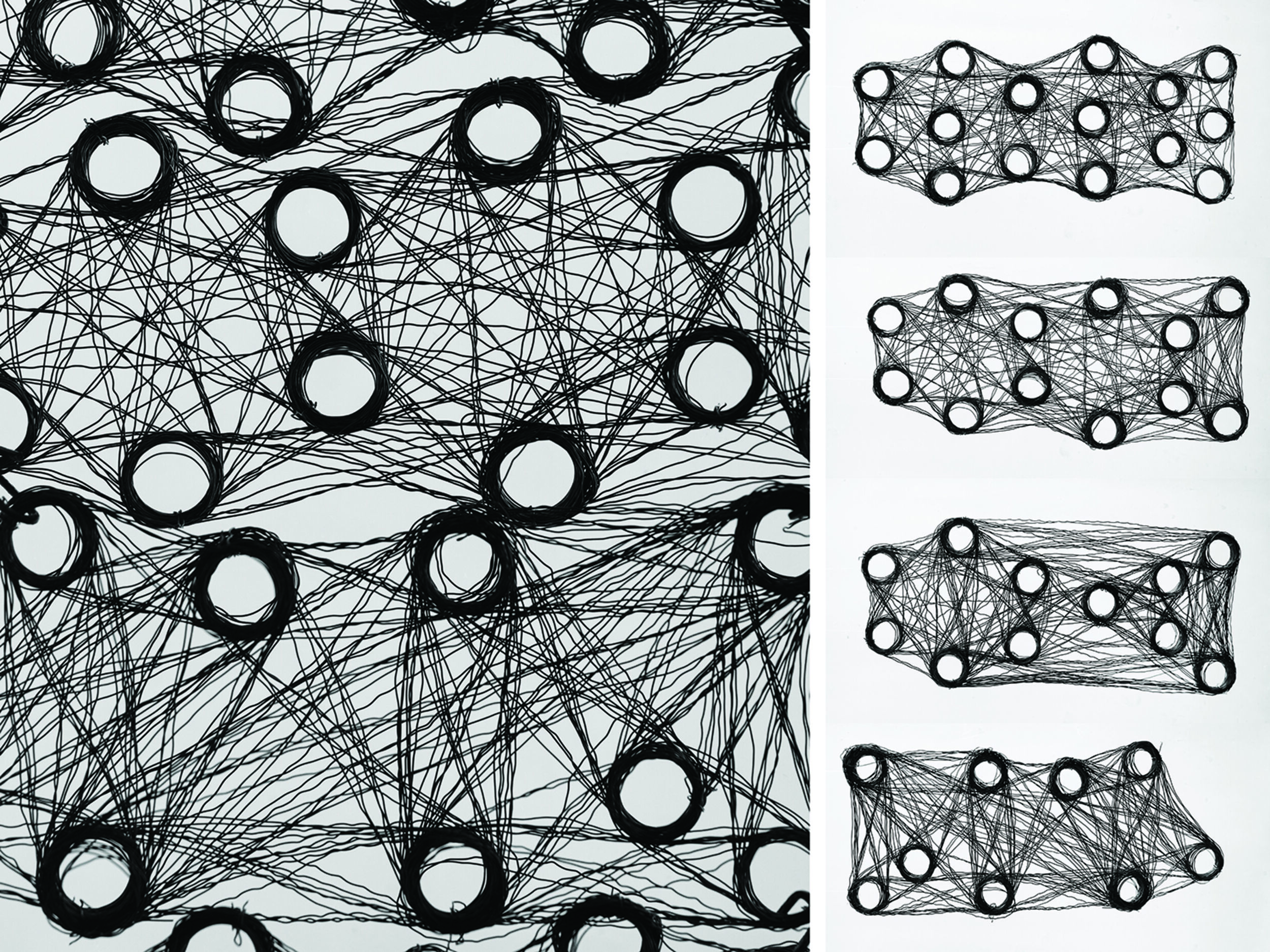
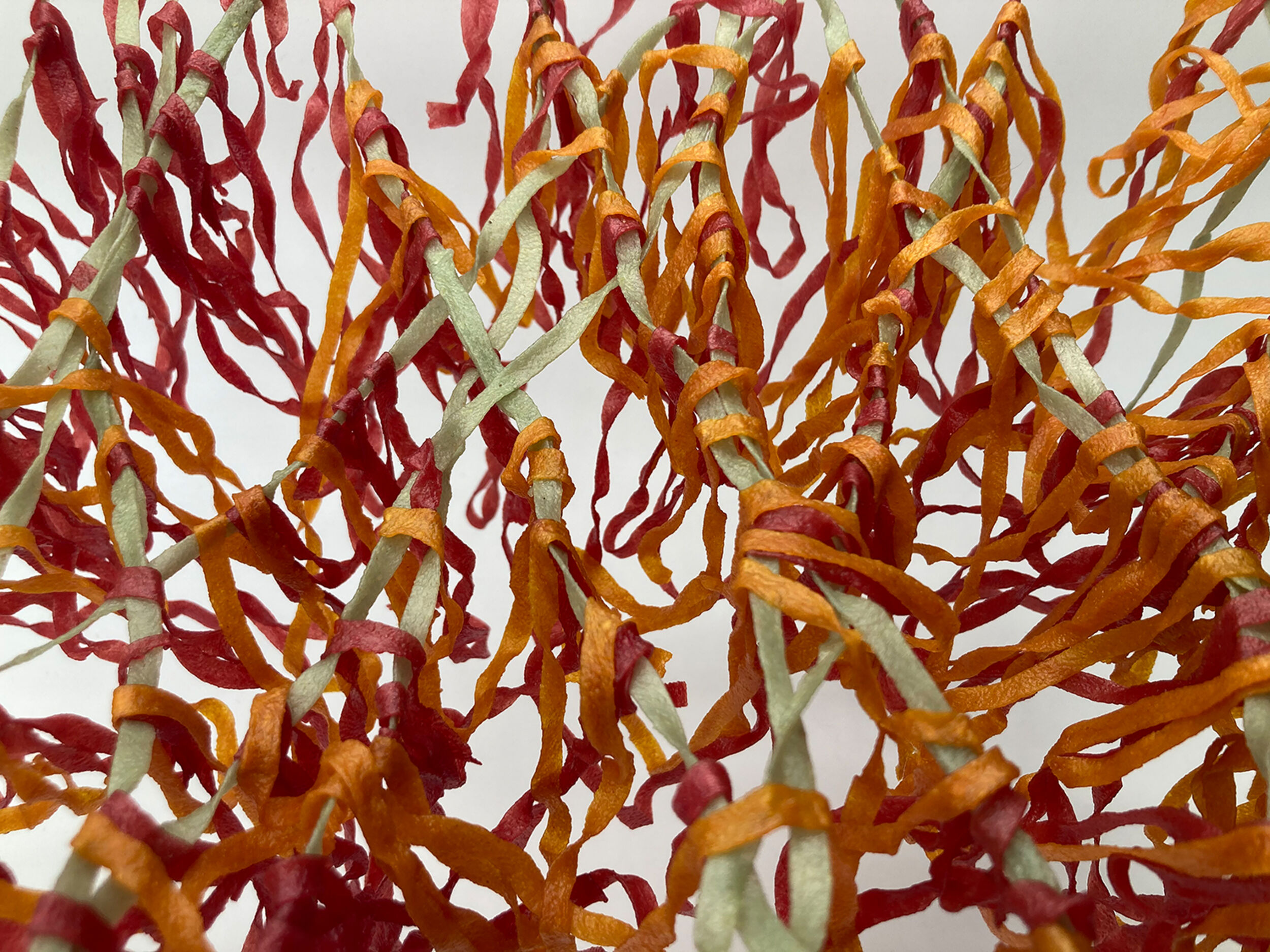
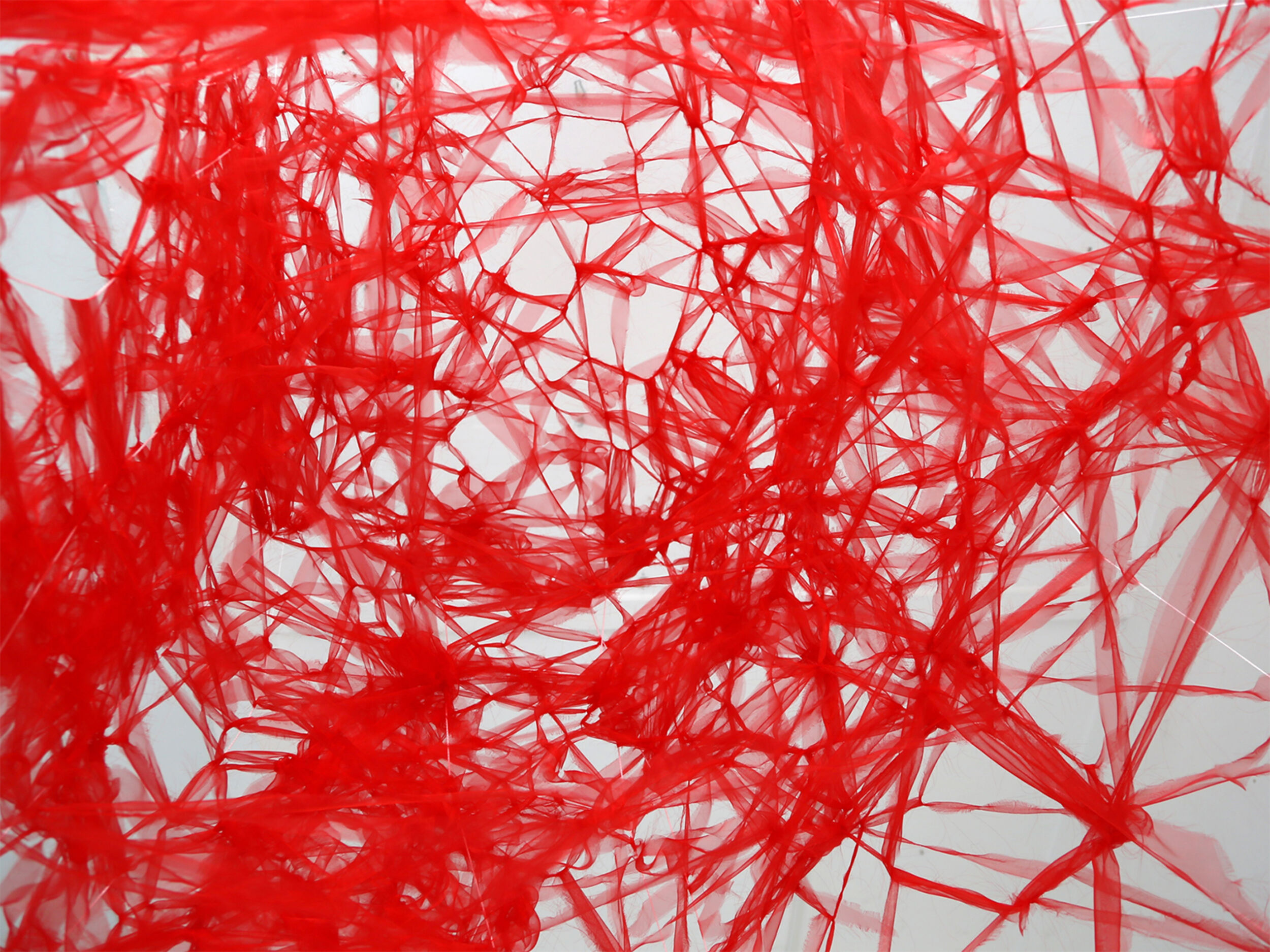
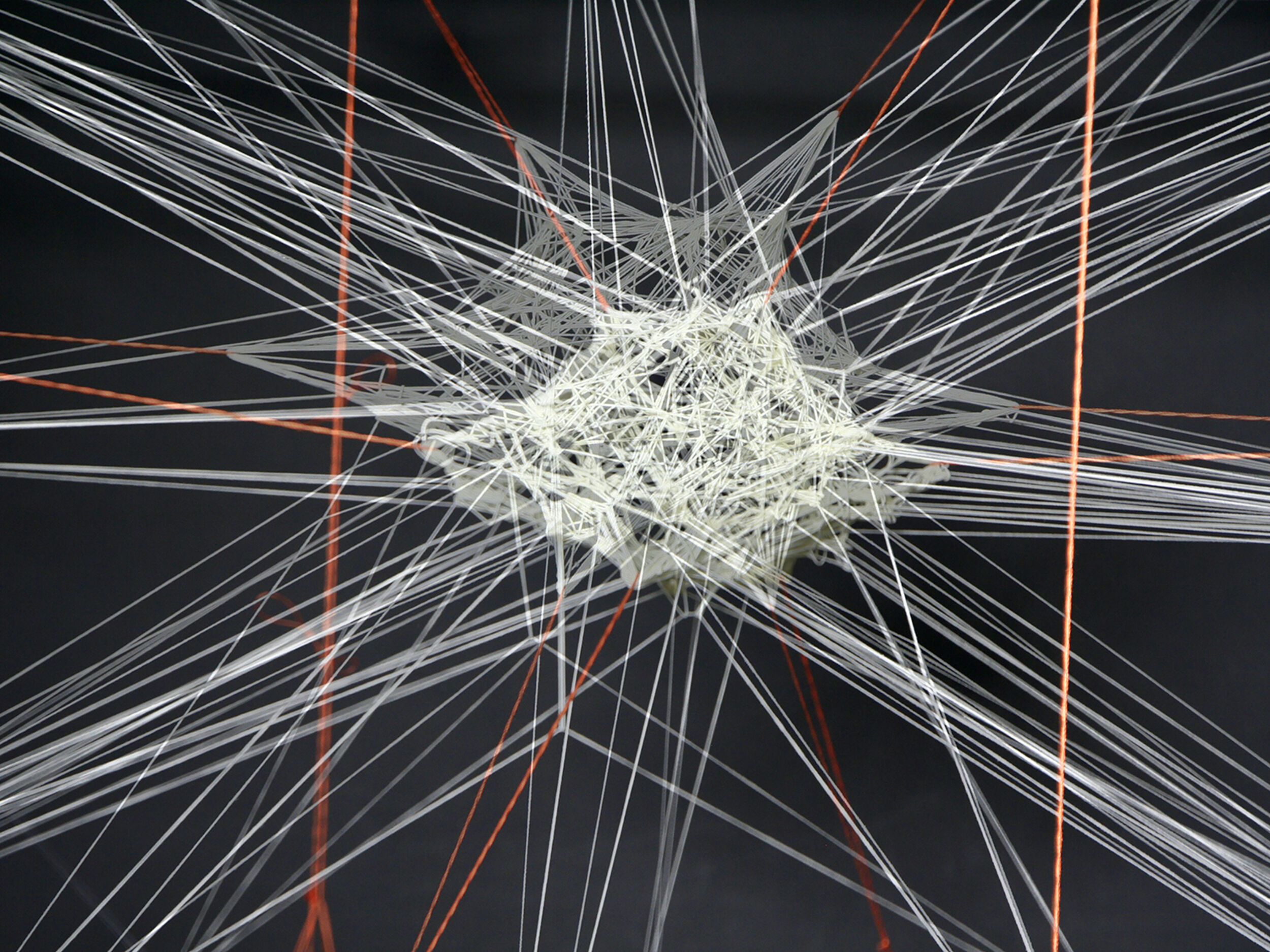
The MoA Design Research Studio »Designing Matter 1« investigated designed filaments and fabrics as architectural material systems.

»Designing matter« denotes the definition of the form and the materiality for the component elements of a material in order achieve a specific functionality. This process allows to utilize and enhance the inherent properties of a given material and ultimately to generate novel ones. Codes – either analogue or digital – are used to implement the design of the material by means of a systematization of this form-function interrelationship. In this context the MoA Design Research Studio made relevant contributions with respect to the development of designed filaments and the close adherence of the architectural designed fabrics to the production sequences and patterns observed in silk-cocoons.

The MoA Design Research Studio was structured in five phases. In phase 1 silk-cocoons, which can be considered non-wovens occurring in nature, were introduced from the perspective of Anthropology, Biology and Materials Science. Phase 2 and 3 focused on the design of filaments and spinning patterns which are suited for architecture-scale material systems. In phase 4 the notion of an architectural material system was introduced and participants developed design principles for a spatial installation based on the designed material they developed in the previous phases. In the fifth and final phase participants integrated the design research developed in the previous ones into a coherent thesis argument. This was supported by the overarching phase X on writing, documenting and archiving.
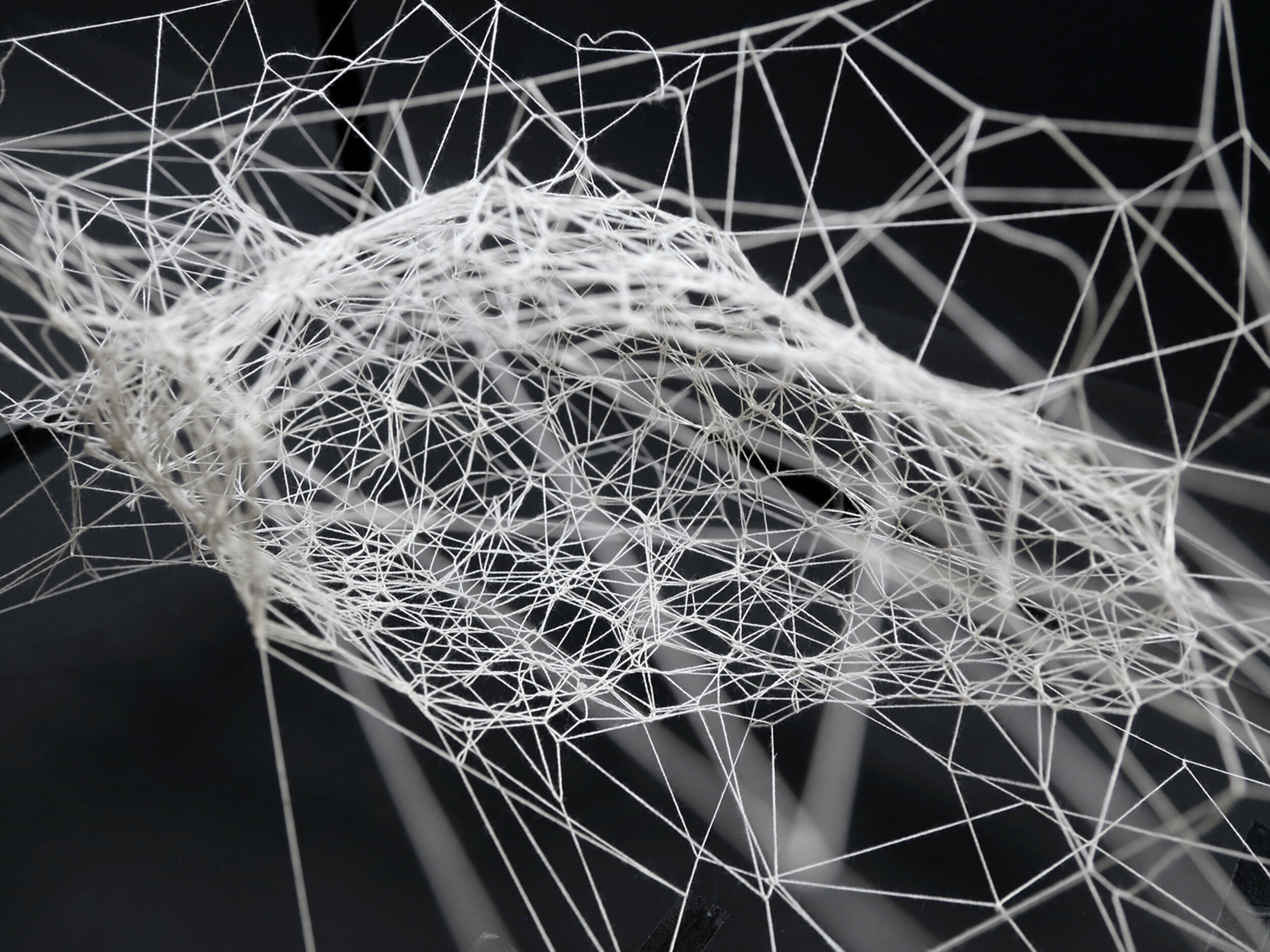
Spinning Spaces. Copyright: Sara Hassoune / weißensee school of art and design berlin

Expanding View. Copyright: Saskia Buch / weißensee school of art and design berlin

Memento Mori. Copyright: Gifty Amoateng / weißensee school of art and design berlin

Boşluk. Copyright: Melis Kiran / weißensee school of art and design berlin

Dynamic Spaces. Copyright: Lea Lüdtke / weißensee school of art and design berlin

Schlaufen Lassen. Copyright: Eva Eckert / weißensee school of art and design berlin

Intermediary. Copyright: Lara Rocho / weißensee school of art and design berlin; Photo: Karola Dierichs / weißensee school of art and design berlin

Responsible Persons and Contributors

Matters of Activity, Humboldt-Universität zu Berlin /weißensee school of art and design berlin

Professor Dr.-Ing. Karola Dierichs
Jessica Farmer, BA
Dr. Mareike Stoll

Matters of Activity, Humboldt-Universität zu Berlin/ Max Planck Institute of Colloids and Interfaces

Dr. Laurence Douny
Dr. Michaela Eder
Nikolai Rosenthal, MSc

weißensee school of art and design berlin

Elaine Bonavia, MSc
Alexandre Mballa-Ekobena, MSc

Students, BA Textile- and Surface Design

Madleen Albrecht
Gifty Amoateng
Katharina Birkmann
Saskia Buch
Vera Castelijns
Sara Hassoune
Lea Lüdtke
Sebastián Plaza Kutzbach
Jasmin Sermonet
Louise Verstraete
Melis Kiran
Elisa Martignoni
Eva Eckert
Lara Rocho

Contact
Cluster of Excellence
Matters of Activity
Image Space Material

Humboldt-Universität zu Berlin
Unter den Linden 6
10099 Berlin
Newsletter

You can subscribe to our Newsletter here. By subscribing, you agree to our Privacy Policy.

Links
  • → For Members
  • → _matter Festival 2025
  • → Legal Notice
  • → Privacy Policy
  • Contact
  • Newsletter
  • For Members
  • _matter Festival 2025
  • Legal Notice
  • Privacy Policy