Mnemonia
PhD Project Emilia Tikka

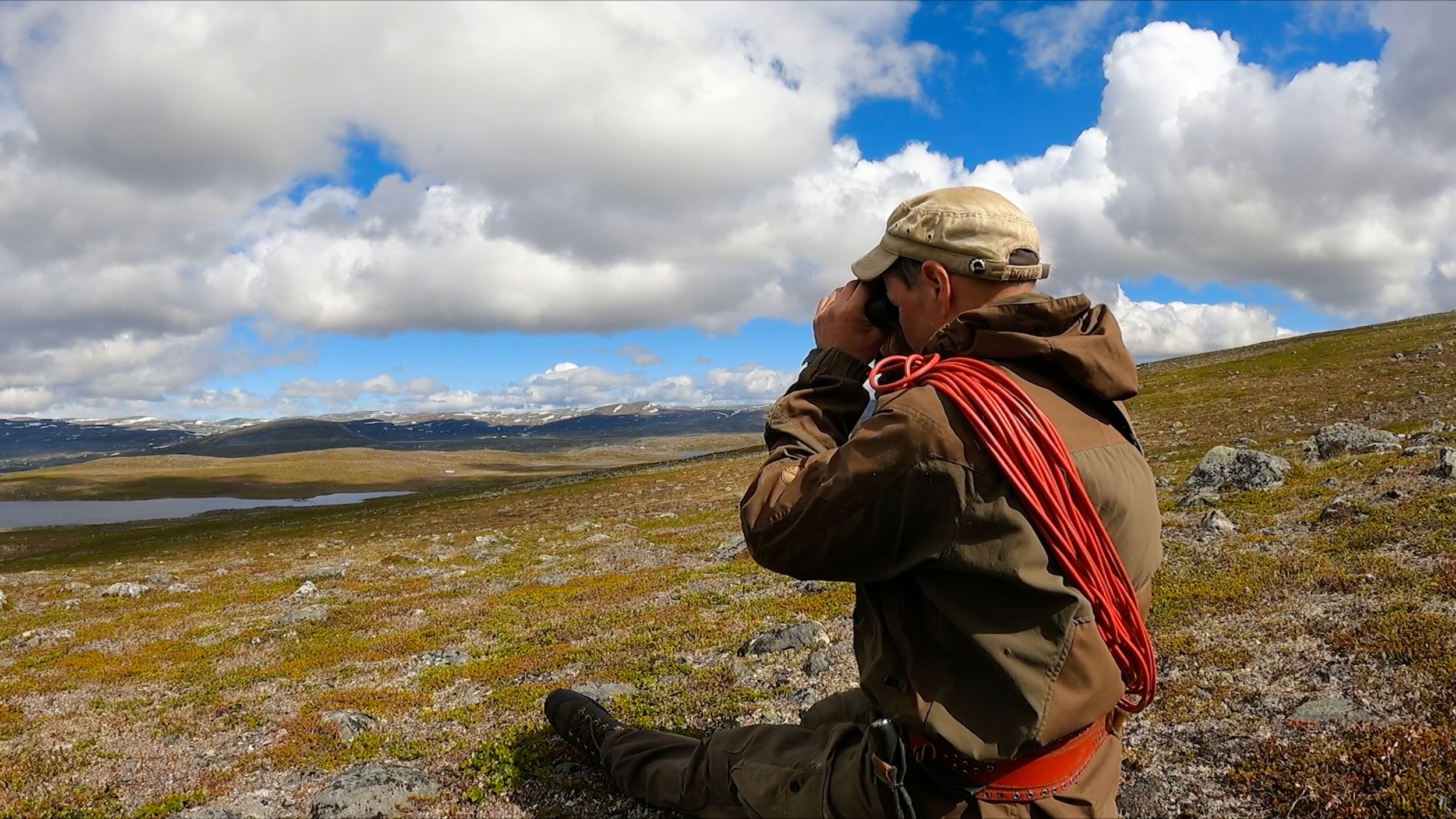

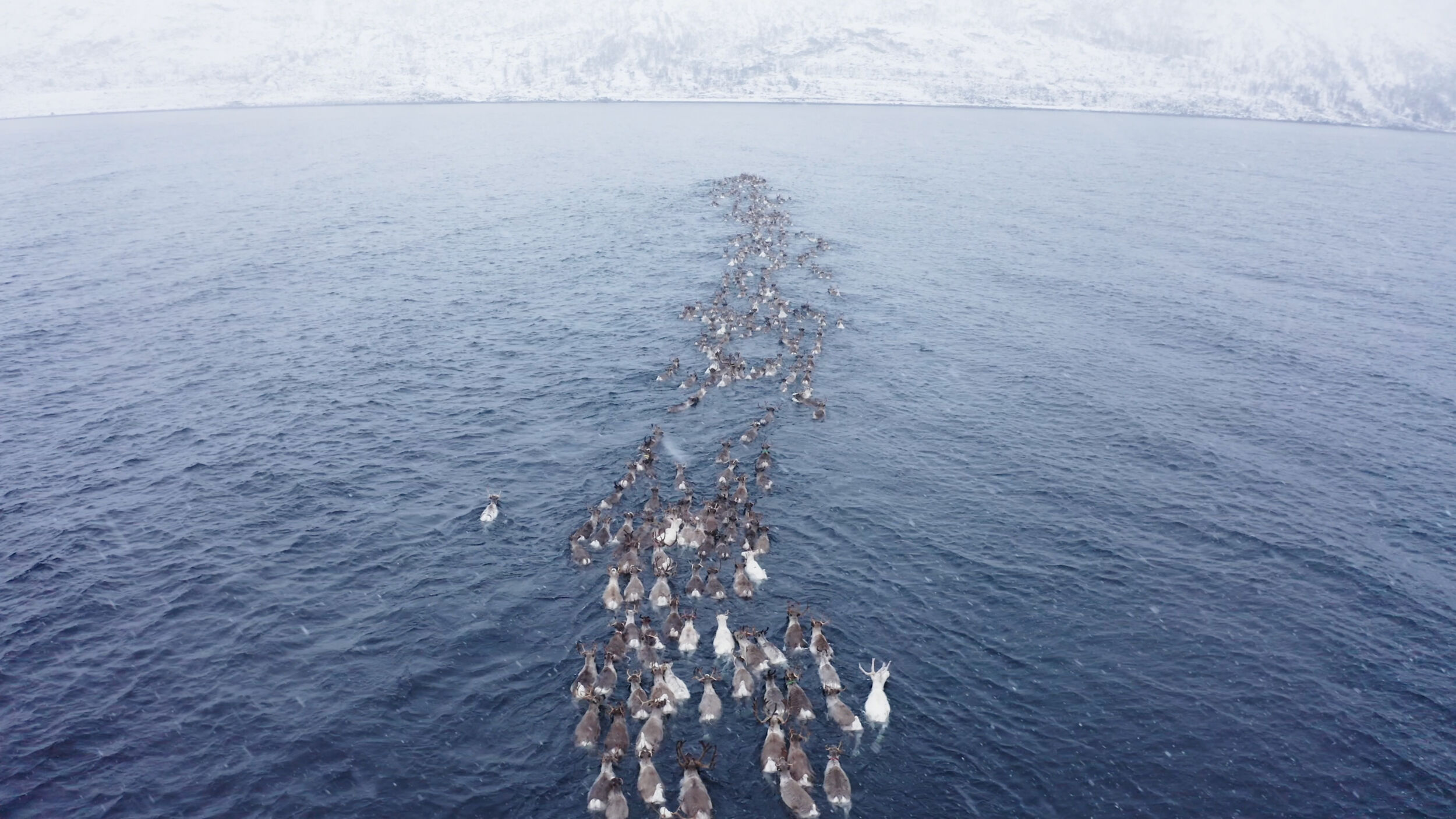
The future of the Arctic is highly contested. How to account for the vanishing of cultures and natures in the Sápmi lands? Global technoscientific projects are using the land as a testing ground for their geo-engineering experiments [1]. Entire villages are being relocated to make way for new forms of mining to extract rare materials.[2] Meanwhile, the expanding tourist industry is presenting the area as a nostalgic wilderness. In between, there is diminishing space for the nomadic reindeer herders who have lived in the area for centuries.
This project takes a perspective of a reindeer herder to imagine different kind of technoscientific futures.[3] While some may see the land as ›empty‹ space or ›pristine‹ nature, this research is situated in reindeer worlds, where contemporary technologies are intertwined with ancestral practices. The PhD project is based on an ongoing artistic collaboration (since 2021) between designer and researcher Emilia Tikka, reindeer herder Oula A. Valkeapää and artist-researcher Leena Valkeapää. The artwork called »Johtingeaidnu - The Path Within« is a speculation on new relations to the land, that stem from negotiations between technosciences and reindeer cosmologies. Moving beyond binaries of ›pure‹ nature or nostalgia for the past, the project proposes stories of »hope in the ruins«[4], bringing together transdisciplinary research on bioscience, design, anthropology and practices of tacit knowledge.
»Mnemonia« materializes a speculative knowledge system that emerges from »partial connections« [5] between: the living relations of reindeer worlds and contemporary bioscience research on transgenerational epigenetic memories. The living relations are based on a condition of becoming with the land through living in the movement of the reindeer.[6] Contemporary epigenetics, on the other hand, proposes a narrative of post-genetic [7] belonging with the land based on shared embodied memories of life in migration. »Mnemonia« weaves these relations into imaginaries of interspecies histories, futures, and proposes new techniques to remember.
The practice-based research additionally aims to develop nuanced methodologies for artistic collaborations between different knowledge cultures: including on how to work with »being-in-Ayllu« drawing from Marisol de la Cadena`s work [8], and on how to become sensitive towards power relations within the collaboration.[9] In her thesis, Emilia Tikka develops new methodological approaches through practice, informed by postcolonial and feminist science and technology studies (STS).
Emilia Tikka is a Research Associate and PhD Candidate at Aalto University, School of Art, Design and Architecture. In addition to working with Oula A. and Leena Valkeapää, she collaborates with several leading bioscientists focusing on epigenetic research in Germany and abroad. Emilia Tikka has been awarded a full PhD scholarship by the Finnish Kone Foundation.
Emilia Tikka's dissertation is co-supervised by Prof. Dr. Mianna Meskus, a scholar of feminist STS with a focus on contemporary biomedicine, and Prof. Dr. Julia Lohmann, whose practice and work is based on collaborative design.
Emilia Tikka
Aalto University, School of Art, Design and Architecture
Cluster of Excellence »Matters of Activity« / Humboldt-Universität zu Berlin, research group Material Form Function, Tampere University, Department of Social Sciences, Valda Research Group
Mianna Meskus (Social Science and STS) & Julia Lohmann (Collaborative Design)
Oula A. Valkeapää and Leena Valkeapää. The project has been additionally consulted by various scientists from fields of epigenetics and climate research.
Kone Foundation
since 2020 ongoing
[1] Kevin McGwin, ›Sámi Join Call to Cancel a Geoengineering Technology Test in Northern Sweden‹, Arctic Today, link.
[2] Jennifer Rankin, ›Why a Swedish Town Is on the Move – One Building at a Time‹, The Guardian, 2 May 2023, link.
[3] Sandra G. Harding, Sciences from below: Feminisms, Postcolonialities, and Modernities, Next Wave (Durham: Duke University Press, 2008).
[4] Anna Lowenhaupt Tsing, The Mushroom at the End of the World: On the Possibility of Life in Capitalist Ruins (Princeton: Princeton University Press, 2015).
[5] Marisol de la Cadena, Earth Beings: Ecologies of Practice across Andean Worlds, The Lewis Henry Morgan Lectures, 2011 (Durham: Duke University Press, 2015), p. 31. Here Cadena draws on Marilyn Strathern.
[6] Tim Ingold, Being Alive: Essays on Movement, Knowledge and Description, New edition (London: Routledge, 2022), chap. 5.
[7] Maurizio Meloni, Impressionable Biologies: From the Archaeology of Plasticity to the Sociology of Epigenetics (New York, NY London: Routledge, 2019).
[8] Cadena, p. 44.
[9] Linda Tuhiwai Smith, Decolonizing Methodologies: Research and Indigenous Peoples, Third edition (London New York Oxford New Delhi Sydney: Bloomsbury Academic, 2022).